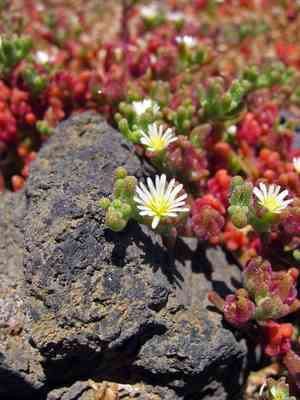
Ice plants (Mesembryanthemum) (Mesembryanthemum)
Also known as: Ice Plant, Fig Marigold
Ice plants, scientifically known as Mesembryanthemum, are a diverse group of low-growing, flowering succulents. Their name derives from their unique look rather than their environment; the leaves and stems often appear to be covered in tiny ice crystals due to glistening water vesicles. These hardy plants produce small, vibrant flowers and are popular as ornamental ground covers.
In This Article
Attributes of Ice plants (Mesembryanthemum)
Lifespan
Annual, Perennial
Plant Height
15-30 cm
Spread
30-60 cm
Leaf Color
Green, sometimes with a reddish tint
Flower Size
2-5 cm
Flower Color
Variety of colors including pink, yellow, red, orange, and white
Images of Ice plants (Mesembryanthemum)
Quickly Identify Ice plants (Mesembryanthemum)
1
Look for succulent, fleshy leaves often covered with small, sparkling, bladder-like cells; daisy-like flowers that open in the sun and close in the evening or during cloudy weather.
Scientific Classification of Ice plants (Mesembryanthemum)
Phylum
Magnoliophyta
Class
Magnoliopsida
Order
Caryophyllales
Family
Aizoaceae
Genus
Mesembryanthemum
Planting and Growing of Ice plants (Mesembryanthemum)
Care Difficulty
Easy
Watering Schedule
Every 2 days
Sunlight Requirements
Full sun
Sunshine Duration
6-10 hours
Ideal Temperature
60-75℉
Soil Type
Potting Mix, Peat Mix
Soil pH
6.5-7.5
Fertilizer Type
Balanced
Pruning Season
Spring, Summer
Pruning Area
Branches, Leaves
Pruning Frequency
2 times a year
Repotting Season
Spring
Pot Type
Ceramic, Plastic
 How to Water Ice plants (Mesembryanthemum)?
Watering Mesembryanthemum means balancing moisture with the plant's arid native habitat. You should water them deeply but infrequently, allowing the soil to dry out completely between waterings. Aim for about 100ml, ensuring the topsoil is dry to the touch before watering.
What are the symptoms of an underwatered Ice plants (Mesembryanthemum)?
›
What should I do if my Ice plants (Mesembryanthemum) is not getting enough water?
›
What are the symptoms of an overwatered Ice plants (Mesembryanthemum)?
›
How to save an overwatered Ice plants (Mesembryanthemum)?
›
 What Are the Sunlight Requirements for Ice plants (Mesembryanthemum)?
Mesembryanthemum thrives under full sun with periods of partial sun. Ideal lighting promotes lush foliage and prolific blooms, enhancing resilience and aesthetic appeal.
What is the best light condition for Mesembryanthemum?
›
How can I provide ideal lighting for Mesembryanthemum?
›
What are benefits of ideal lighting for Mesembryanthemum?
›
 What Is the Ideal Temperature Range for Ice plants (Mesembryanthemum)?
For Mesembryanthemum plants, the ideal temperature range lies between 60°F and 75°F. This temperature range sufficient warmth for optimal growth and flowering. It is important to maintain consistency within this range to ensure plant vitality and avoid stress-induced conditions.
 What Soil is Best for Ice plants (Mesembryanthemum)?
Mesembryanthemum thrives in well-draining soil, which ensures that excess water doesn't linger around the roots. This prevents root rot and other moisture-related issues, allowing the plant to flourish uninterrupted in its natural growth cycle. Interestingly, Mesembryanthemum doesn't require nutrient-rich soil. It actually does better in nutrient-poor environments, reflecting its adaptation to arid habitats. This makes it perfect for gardeners with less-than-perfect soil conditions. The plant prefers soil with a slightly alkaline to neutral pH. Maintaining this pH range helps facilitate nutrient uptake without the risks commonly associated with more acidic substrates.
 How to Fertilize Ice plants (Mesembryanthemum)?
The Mesembryanthemum generally requires a balanced approach to fertilization. For liquid fertilizer, use a diluted solution with a ratio of 10-10-10 NPK, ensuring not to exceed one teaspoon per gallon of water. For granular or slow-release fertilizers, apply at a rate of about one tablespoon per square foot around the plant's base annually.
 How to Prune Ice plants (Mesembryanthemum)?
Start by assessing the plant for dead or damaged stems, which should be removed first. Focus on thinning out congested areas to allow better airflow and light penetration. Once the dead parts are removed, shape the plant to encourage symmetry and healthy outward growth. After pruning, water the plant adequately but ensure roots are not waterlogged. Fertilizing with a balanced mix can help in recovery and boosting new growth. Monitor the plant for any signs of stress or disease in the weeks following pruning.
 How to Propagate Ice plants (Mesembryanthemum) plant?
1
Begin by collecting mature seeds from the dried flower heads of Mesembryanthemum. Ensure seeds are fully ripe to enhance viability. Store them in a cool, dry place before sowing.
2
Select healthy, non-flowering stems for cuttings. Cut them about 5-10 cm long, just below a node, ensuring they are free from any disease or pest damage.
3
For seed propagation, sow seeds in a well-draining mix, barely covering them with soil. For cuttings, insert them into the soil after dipping in a rooting hormone to boost root initiation.
 How to Repot Ice plants (Mesembryanthemum) plant?
1
Mesembryanthemum plants signal the need for repotting when their roots start to outgrow the current pot, or when water consistently pools on the surface instead of draining. Spring and early summer are ideal times, as the plant is in active growth.
2
Choose a pot that's slightly larger than the current one, with adequate drainage holes. A ceramic or terracotta pot is preferable as it promotes air circulation to the roots, preventing issues related to root rot.
3
Opt for a well-draining cactus or succulent mix. This type of soil prevents waterlogging, which is critical for Mesembryanthemum to avoid root rot and ensures that the plant has the right balance of moisture and aeration.

