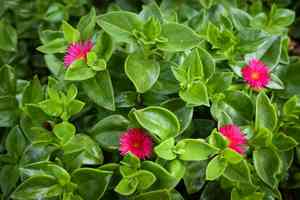
Baby sun rose (Mesembryanthemum cordifolium)
Also known as: Red aptenia
The **Ice Plant (Carpobrotus edulis)** is a succulent species indigenous to South Africa. Widely cultivated for its ornamental appeal, it is commonly used as ground cover in gardens and urban environments. This species grows rapidly and is favored for its vibrant, daisy-like flowers. It can be easily propagated from cuttings and is effective in suppressing weed growth in the areas it covers.
In This Article
Attributes of Baby sun rose
Lifespan
Perennial
Plant Type
Succulent, Herb
Plant Height
15 cm
Spread
58 cm
Leaf Color
Green
Flower Size
1 cm
Flower Color
Purple Red Yellow Pink White Orange
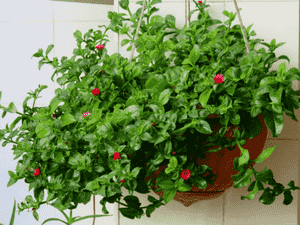
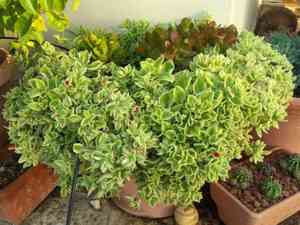
Images of Baby sun rose
Quickly Identify Baby sun rose
1
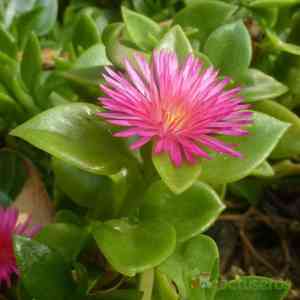
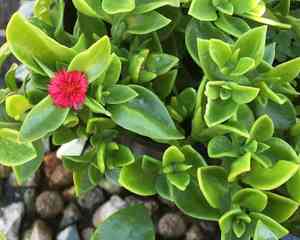
To identify Mesembryanthemum cordifolium, look for heart-shaped, fleshy leaves that are bright green and sometimes tinged with red. The plant produces small, daisy-like flowers that are usually pink or magenta.
Scientific Classification of Baby sun rose
Phylum
Vascular plants
Class
Dicotyledons
Order
Pinks, cacti, and allies
Family
Fig-marigold
Genus
Ice plants
Species
Baby sun rose
Planting and Growing of Baby sun rose
Care Difficulty
Easy
Watering Schedule
Every 3 days
Sunlight Requirements
Full sun
Sunshine Duration
6-10 hours
Ideal Temperature
65-75℉
Soil Type
Potting Mix, Peat Mix
Soil pH
6-7.5
Fertilizer Type
Balanced
Pruning Season
Spring, Summer
Pruning Area
Branches, Leaves
Pruning Frequency
2 times a year
Repotting Season
Spring
Pot Type
Ceramic, Plastic
 How to Water Baby sun rose?
For Mesembryanthemum cordifolium, you should water with approximately 150 ml of water per session. It’s crucial to ensure that the soil is completely dry before the next watering to avoid root rot. The soil should be moist but not soggy, mimicking the plant's natural desert environment.
More About Watering Techniques→
What are the symptoms of an underwatered Baby sun rose?
›
What should I do if my Baby sun rose is not getting enough water?
›
What are the symptoms of an overwatered Baby sun rose?
›
How to save an overwatered Baby sun rose?
›
 What Are the Sunlight Requirements for Baby sun rose?
Mesembryanthemum cordifolium thrives best under full sun to partial sun conditions. An ideal light exposure helps the plant exhibit its full potential through robust growth and vibrant colors, aiding in well-rounded photosynthesis and nutrient uptake.
More About Sunlight Requirements Techniques→
How much sunlight does Mesembryanthemum cordifolium need?
›
What if ideal light is not available naturally?
›
What's the benefit of ideal lighting for this plant?
›
 What Is the Ideal Temperature Range for Baby sun rose?
The ideal temperature for growing Mesembryanthemum cordifolium, commonly known as heartleaf ice plant, ranges between 65°F to 75°F. In this temperature range, the plant finds optimal conditions for photosynthesis, nutrient absorption, and growth, providing a healthy balance for thriving foliage and flowering. Ensuring the plant remains within this range promotes better blooming and vivid colors.
 What Soil is Best for Baby sun rose?
Mesembryanthemum cordifolium thrives in soils that provide excellent drainage, ensuring that excess water doesn't lead to root rot. The sandy and loamy textures help prevent waterlogging, a common issue in less porous soils. While adaptable, this plant benefits from a nutrient-rich soil that promotes vibrant blooms and healthy foliage. Incorporating organic matter enhances fertility, giving the plant access to essential nutrients. The soil needs to retain some moisture to prevent the plant from drying out, particularly in hot climates. A background blend of loam assists in holding necessary moisture between waterings.
More About Soil→
 How to Fertilize Baby sun rose?
Mesembryanthemum cordifolium, also known as heartleaf ice plant, has modest fertilization needs. It's advisable to apply a half-strength solution of a balanced liquid fertilizer every two weeks. Ensure that the fertilizer is well-diluted, as concentrated solutions can harm its succulent leaves and roots.
 How to Prune Baby sun rose?
Begin by identifying any stems that have grown excessively long or look leggy. These are typically less attractive and can be removed to maintain the plant's compact shape. Use your shears to trim away any dead, diseased, or damaged foliage. Removing these parts helps improve air circulation and directs the plant's energy toward healthy growth. Gently trim the edges of the plant to maintain its desired shape. Whether you prefer a rounded or a more spread-out form, consistency in trimming will help the plant maintain this appearance. After pruning, make sure to water the plant moderately and consider using a gentle, balanced fertilizer to encourage healthy new growth and abundant flowering.
 How to Propagate Baby sun rose plant?
1
Choose healthy, semi-hardwood stems to take cuttings from. Cut them using sterile pruning shears and ensure that each cutting is 5-10 cm long. Remove the lower leaves to prevent them from rotting in soil.
2
Fill seed trays with a well-draining potting mix. Scatter seeds on the surface and cover with a thin layer of soil. Lightly water the surface and place the trays in a warm, sunny location for germination.
3
Dip the base of each cutting into rooting hormone to enhance root formation. Plant cuttings in pots filled with a mix of perlite and peat. Maintain humidity by covering with a plastic bag until roots develop.
 How to Repot Baby sun rose plant?
1
Monitor your Mesembryanthemum cordifolium for any signs of being root-bound, such as roots emerging from drainage holes or slowed growth. Spring and summer are optimal times, as the plant is actively growing and can recover more swiftly from any root disturbances.
2
Select a pot that is 1-2 inches larger in diameter than the current one. Ensure it has sufficient drainage holes to prevent waterlogging, which helps prevent root rot—a common issue with succulents. A clay pot is often ideal as it allows for better soil aeration.
3
Opt for a cactus or succulent soil mix that provides excellent drainage, crucial for avoiding root rot. The blend should include components like perlite or sand to facilitate quick water drainage and air circulation around the roots.



