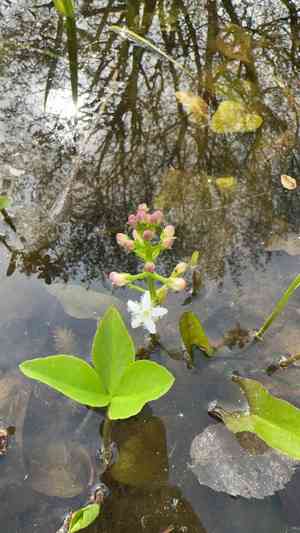
Bogbean (Menyanthes) (Menyanthes)
Also known as: Bogbean, Buckbean, Marsh Trefoil
Menyanthes trifoliata, also known as bogbean, is the sole species in its monotypic genus within the Menyanthaceae family.
**Characteristics:**
- It features a creeping rhizome and leaves that are divided into three leaflets.
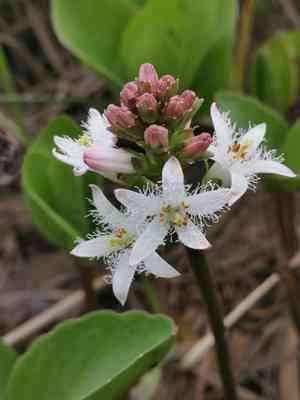
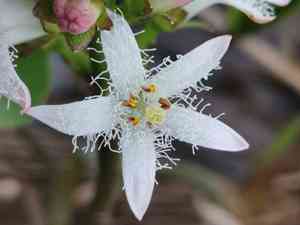
- The plant showcases upright clusters of white or pinkish flowers with fringed edges.
- It can form dense mats with its robust root system.
**Habitat:**
- Bogbean thrives in wetland environments such as marshes, fens, and peat bogs.
- It is prevalent in temperate regions across Asia, Europe, and North America.
These attributes enable bogbean to flourish in waterlogged, nutrient-deficient soils.
In This Article
Attributes of Bogbean (Menyanthes)
Lifespan
Perennial
Plant Height
15-30 cm
Spread
Not applicable as the plant forms mats or clusters rather than a singular crown
Leaf Color
Green
Flower Size
1-2 cm
Flower Color
White to pale pink with a fringed edge
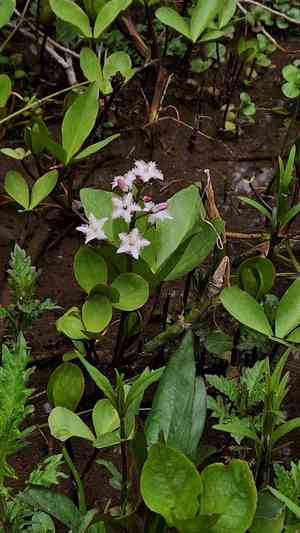
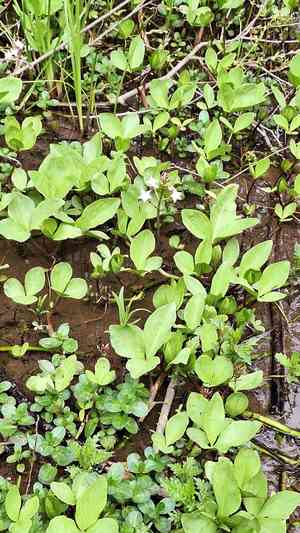
Images of Bogbean (Menyanthes)
Quickly Identify Bogbean (Menyanthes)
1
Menyanthes can be identified by its trifoliate leaves, where each leaf is composed of three leaflets. The plant produces clusters of distinctive white or pinkish flowers with hairy fringes on the lobes.
Scientific Classification of Bogbean (Menyanthes)
Phylum
Magnoliophyta
Class
Magnoliopsida
Order
Asterales
Family
Menyanthaceae
Genus
Menyanthes
Planting and Growing of Bogbean (Menyanthes)
Care Difficulty
Moderate
Watering Schedule
Every 8 days
Sunlight Requirements
Partial sun
Sunshine Duration
6-10 hours
Ideal Temperature
68-77℉
Soil Type
Potting Mix, Peat Mix
Soil pH
5.5-7
Fertilizer Type
Balanced
Pruning Season
Spring, Summer
Pruning Area
Branches, Leaves
Pruning Frequency
2 times a year
Repotting Season
Spring
Pot Type
Plastic, Ceramic
 How to Water Bogbean (Menyanthes)?
The plant, Menyanthes, requires watering that thoroughly drench the soil but does not leave the roots waterlogged. Use approximately 500 ml of water each time, ensuring the soil remains consistently moist without becoming waterlogged. Aim to keep the soil evenly moist, reflecting its natural habitat in marshy areas.
What are the symptoms of an underwatered Bogbean (Menyanthes)?
›
What should I do if my Bogbean (Menyanthes) is not getting enough water?
›
What are the symptoms of an overwatered Bogbean (Menyanthes)?
›
How to save an overwatered Bogbean (Menyanthes)?
›
 What Are the Sunlight Requirements for Bogbean (Menyanthes)?
Menyanthes benefits from partial sun conditions, ideally receiving 4 to 6 hours of sunlight daily. This light range is essential to facilitate essential photosynthetic processes, leading to healthy foliage and robust blooms, which support the plant's growth cycle efficiently.
What is the ideal exposure for Menyanthes?
›
How to ensure optimal lighting for Menyanthes?
›
Benefits of optimal light for Menyanthes?
›
 What Is the Ideal Temperature Range for Bogbean (Menyanthes)?
The ideal temperature range for Menyanthes is crucial for its growth and development. Typically, it thrives at temperatures between 68°F and 77°F. Maintaining this temperature ensures optimal metabolic processes and overall health for the plant.
 What Soil is Best for Bogbean (Menyanthes)?
Menyanthes thrives in nutrient-rich soils that provide essential minerals for growth. These nutrients support the plant's vibrant foliage and robust flowering, making it resilient against environmental stresses. The plant prefers soils with good moisture retention capabilities to mimic its natural wetland habitat. Consistent moisture availability is crucial for maintaining its health and preventing wilting, especially during dry spells. An acidic soil environment with a pH range of 5.5 to 7.0 helps Menyanthes to absorb nutrients effectively. This pH condition supports optimum growth and prevents nutrient lock-up.
 How to Fertilize Bogbean (Menyanthes)?
Menyanthes, also known as bogbean, thrives in nutrient-rich environments but requires careful fertilization. For liquid fertilizers, use a diluted mix with a ratio of 10-15-10, applying approximately 1/4 cup per plant every other week. For slow-release fertilizers, apply 1/2 to 1 ounce per plant annually, ensuring slow and steady nutrient release throughout the growing season.
 How to Prune Bogbean (Menyanthes)?
Start by identifying any dead, dying, or damaged leaves or stems on the plant. These should be the first to remove, as they do not contribute to the plant's health and can harbor pests or diseases. Always use sharp and clean pruning scissors or shears to make your cuts. Dull or dirty tools can cause damage to the plant and increase the risk of infection. Prune with the aim to maintain an attractive shape. Selectively trim back the outer growth to encourage a fuller, bushier appearance and prevent the plant from becoming too leggy. After pruning, new shoots are encouraged. Ensure to provide adequate water and nutrients to support this phase of growth, which is essential for the plant to thrive.
 How to Propagate Bogbean (Menyanthes) plant?
1
Before sowing seeds or dividing plants, prepare a suitable soil mixture. Menyanthes prefers moist, rich, and well-draining soil. A mix of loam and sand often works well to mimic natural conditions.
2
Scatter the seeds evenly across the surface of the soil in seed trays. Lightly cover them with a thin layer of soil or vermiculite to ensure they are not buried too deeply, as they require light for germination.
3
Carefully dig up established Menyanthes plants and separate them into sections with a healthy root system. Make sure each division has adequate roots and shoots before replanting them at the same depth they were growing previously.
 How to Repot Bogbean (Menyanthes) plant?
1
Menyanthes needs repotting when the roots begin to outgrow the current pot, often noticeable through roots poking out of drainage holes or the plant appearing top-heavy. Springtime is ideal, as the plant is emerging from dormancy and will establish quickly in its new home.
2
Select a pot that is only slightly larger than the current one; too large a pot encourages waterlogging. A pot with drainage holes is essential, as this prevents root rot by allowing excess water to escape. Using a ceramic pot can help maintain the necessary soil moisture due to its insulating properties.
3
A peaty, well-drained soil is perfect for Menyanthes, as it mimics their natural swampy habitat. Such soil retains adequate moisture while preventing the roots from sitting in stagnant water, which is crucial for healthy growth and preventing root diseases.
Toxicity
ingestion
WARNING
The judgment on toxicity and danger is for reference only. We DO NOT GUARANTEE any accuracy of such judgment. Therefore, you SHALL NOT rely on such judgment. It is IMPORTANT TO SEEK PROFESSIONAL ADVICE in advance when necessary.
Learn More About Bogbean (Menyanthes) Diseases
Anthracnose
Bacterial Leaf Spot
Bacterial Soft Rot
Bacterial Wilt
Chemical Injury
Damping-off
Downy Mildew
Drought Stress
Fusarium Wilt
Gray Mold
Leaf Spot
Mosaic
Nutrient Deficiency
Nutrient Toxicity
Powdery Mildew
Root Rot
Root-knot Nematode
Rusts
Sooty Mold
Spider Mites
Temperature Stress
Thrips Damage
White Mold

