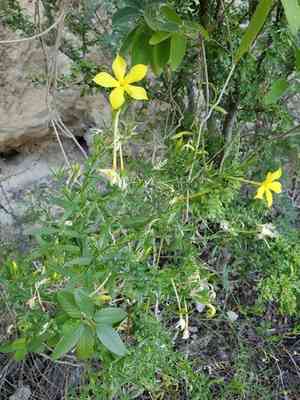
Showy menodora (Menodora longiflora)
Also known as: Long-flowered Menodora
The showy menodora (Menodora scabra) is a resilient perennial well-suited to arid regions. It features slender stems and narrow, linear leaves. Blooming from spring to early summer, it displays striking yellow, star-shaped flowers that attract various pollinators. This sun-loving plant prospers in well-drained soils, with its deep taproots reaching far below the surface to access underground moisture, demonstrating its excellent adaptation to desert environments.
In This Article
Attributes of Showy menodora
Lifespan
Perennial
Plant Type
Herb
Plant Height
30 cm to 91 cm
Spread
Not typically measured due to its small size
Leaf Color
Green
Flower Size
2-3 cm (0.8-1.2 inches)
Flower Color
White or pale yellow
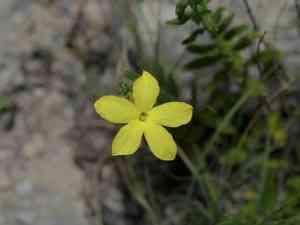
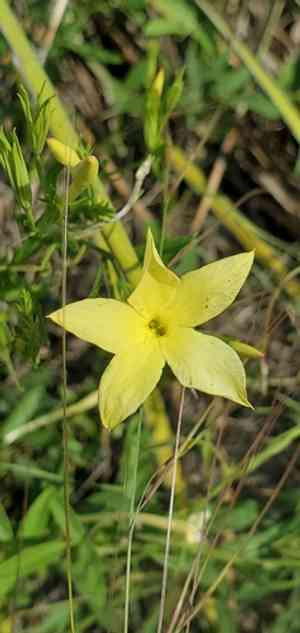
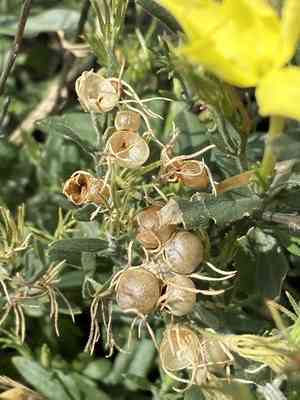
Images of Showy menodora
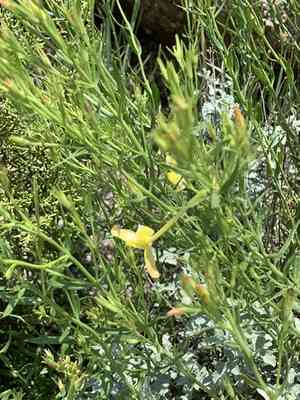
Quickly Identify Showy menodora
1
Menodora longiflora can be identified by its long, trumpet-shaped flowers, typically white or pale yellow, and its narrow, linear leaves. It often grows in dry, rocky habitats.
Scientific Classification of Showy menodora
Phylum
Vascular plants
Class
Dicotyledons
Order
Lamiales
Family
Olive
Genus
Menodora
Species
Showy menodora
Planting and Growing of Showy menodora
Care Difficulty
Moderate
Watering Schedule
Every 2 days
Sunlight Requirements
Full sun
Sunshine Duration
6-10 hours
Ideal Temperature
60-75℉
Soil Type
Potting Mix, Peat Mix
Soil pH
6.5-7.5
Fertilizer Type
Balanced
Pruning Season
Spring, Summer
Pruning Area
Branches, Leaves
Pruning Frequency
2 times a year
Repotting Season
Spring
Pot Type
Terracotta, Plastic
 How to Water Showy menodora?
Menodora longiflora thrives when watered moderately, about 150 milliliters per session. This amount ensures the soil is slightly moist but never waterlogged, as the roots need to breathe to promote healthy growth and avoid rot.
What are the symptoms of an underwatered Showy menodora?
›
What should I do if my Showy menodora is not getting enough water?
›
What are the symptoms of an overwatered Showy menodora?
›
How to save an overwatered Showy menodora?
›
 What Are the Sunlight Requirements for Showy menodora?
Preferred in full sun environments, Menodora longiflora benefits from bright light exposure, enhancing its blossoming and health.
What type of sunlight does Menodora longiflora require?
›
How can you create optimal lighting conditions for this plant indoors?
›
What benefits does Menodora longiflora gain from receiving ideal light?
›
 What Is the Ideal Temperature Range for Showy menodora?
An ideal temperature range for growing Menodora longiflora lies between 60 to 75 °F. This range offers optimal conditions for photosynthesis, respiration, and enzymatic functions, resulting in healthy growth. The plants thrive under moderate temperatures, enjoying balanced heat without experiencing stress from excessive cold or heat. This climate also supports ideal soil moisture levels, maintaining root health and promoting vigorous foliage.
 What Soil is Best for Showy menodora?
Menodora longiflora thrives in well-drained soil to prevent root rot and other moisture-related diseases. Good drainage ensures that the roots receive adequate oxygen, fostering healthy plant growth and blooming. This plant prefers soil that is rich in nutrients, supporting vibrant foliage and abundant flowering. Incorporating organic matter such as compost can enhance the soil's nutrient profile, benefiting the plant's overall vigor. The soil should have the capacity to retain moderate moisture, ensuring that the plant receives consistent hydration without becoming waterlogged. This balance is crucial for sustaining its delicate floral structures.
 How to Fertilize Showy menodora?
For Menodora longiflora, you should apply a balanced liquid fertilizer at half the strength recommended by the manufacturer. This plant does not require heavy feeding, so moderation is key to avoiding root damage and promoting healthy growth.
 How to Prune Showy menodora?
Begin by identifying and removing branches that are either dead or showing signs of disease. This not only enhances the plant’s appearance but also prevents the spread of disease. Trim branches selectively to shape the Menodora longiflora as desired, keeping an eye on maintaining its natural form. Use the cuts to guide new growth in the desired direction for a fuller appearance. To improve air circulation, occasionally thin out the interior branches. This helps reduce the risk of fungal diseases and ensures that sunlight reaches the innermost parts of the plant. After making initial cuts, step back and assess the plant. This helps you visualize the overall plant shape and make any additional necessary adjustments for a balanced appearance.
More About Pruning Techniques→
 How to Propagate Showy menodora plant?
1
Begin by soaking Menodora longiflora seeds in lukewarm water for 24 hours to enhance germination. Use a well-draining soil mix, such as a blend of sand and peat moss, and sow seeds on the surface. Lightly press them into the soil without covering them, as light aids their germination.
2
Select healthy, non-flowering stems from the parent plant for cuttings. Cut each stem to about 4-6 inches in length, ensuring that there are several leaf nodes present. Remove the leaves from the lower half of the cutting to prevent rot and dip the cut end in rooting hormone powder before planting.
3
For both seed propagation and cuttings, plant in a pot with a damp, well-draining medium. Maintain humidity by covering with a plastic dome or clear plastic bag, and ensure the medium remains moist but not soggy. Place in a location with indirect sunlight to promote rooting and growth.
 How to Repot Showy menodora plant?
1
Look for indicators such as roots growing out of drainage holes or the plant showing signs of stress and stunted growth. A noticeable resistance to watering could also mean that the soil is compacted and ready for replacement. These are signals that it's time to repot Menodora longiflora.
2
When selecting a pot, ensure it's just one size larger than the current one. This gives roots new space to grow without overwhelming the plant. A pot with good drainage is crucial to avoid waterlogged soil, which could lead to root rot.
3
Opt for well-draining sandy soil mixed with some organic matter. This combination provides the nutrients needed while ensuring that excess water drains away efficiently. Such soil replicates the plant's natural habitat conditions.
Learn More About Showy menodora Diseases
Anthracnose
Bacterial Leaf Spot
Chemical Injury
Crown Gall
Cyst Nematode
Damping-off
Downy Mildew
Drought Stress
Fusarium Wilt
Gray Mold
Leaf Curl
Leaf Spot
Mosaic
Nutrient Deficiency
Nutrient Toxicity
Powdery Mildew
Root Rot
Root-knot Nematode
Rusts
Sooty Mold
Spider Mites
Temperature Stress
Thrips Damage
White Mold



