Common moonseed(Menispermum canadense)

Common moonseed (Menispermum canadense)

Also known as: Yellow parilla, Moonseed

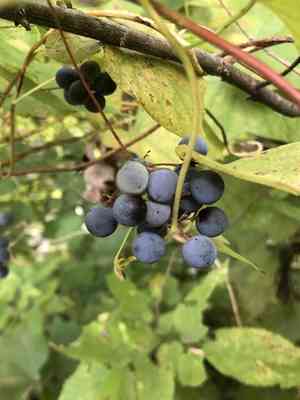
Common moonseed (Menispermum canadense) is a plant native to eastern North America whose fruit closely resembles grapes. However, every part of moonseed is toxic to humans. To tell them apart, look at the seeds: moonseed fruit contains a single crescent-shaped seed, whereas grapes have multiple round seeds.

Attributes of Common moonseed

Lifespan
Perennial
Plant Type
Vine
Plant Height
3.5 m to 11 m
Spread
90 cm to 1.8 m
Leaf Color
Green
Flower Size
8 cm to 15 cm
Flower Color
Green White Yellow

PlantJoy - Identify plants with a snap

Identify and diagnose plants, get toxicity alerts, and explore safety guides for all types of fungi.

Try for Free

Images of Common moonseed

Common moonseed(Menispermum canadense)

Quickly Identify Common moonseed

1
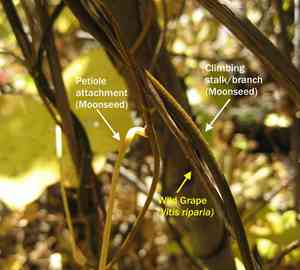
Twining stems lack tendrils, distinguishing it from climbers
2
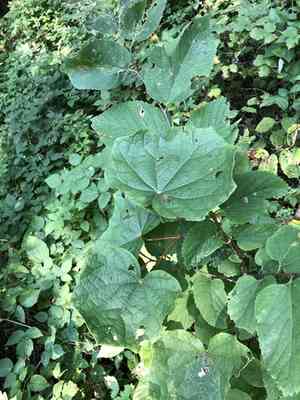
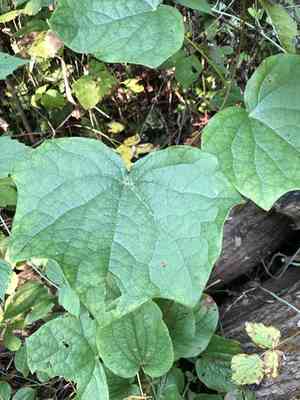
Palmately lobed leaves with a vibrant green top surface
3
Downward-hanging panicles with separate male and female flowers
4
Fruit in grape-like clusters with crescent-shaped seeds
5
Distinct stem transitions from green to woody with sparse branching

Scientific Classification of Common moonseed

Phylum
Vascular plants
Class
Dicotyledons
Order
Ranunculales
Family
Moonseed
Genus
Moonseeds
Species
Common moonseed

Planting and Growing of Common moonseed

Care Difficulty
Easy
Watering Schedule
Every 2 days
Sunlight Requirements
Partial sun
Sunshine Duration
6-10 hours
Ideal Temperature
68-77℉
Soil Type
Potting Mix, Peat Mix
Soil pH
6.5-7.5
Fertilizer Type
Balanced
Pruning Season
Spring, Summer
Pruning Area
Branches, Leaves
Pruning Frequency
2 times a year
Repotting Season
Spring
Pot Type
Plastic, Terracotta

water icon How to Water Common moonseed?

When watering Menispermum canadense, aim to thoroughly soak the soil until water drains out from the bottom of the pot. Ensure the soil does not become soggy, as it should reach a moist but not oversaturated state.
What are the symptoms of an underwatered Common moonseed?
What should I do if my Common moonseed is not getting enough water?
What are the symptoms of an overwatered Common moonseed?
How to save an overwatered Common moonseed?

sunlight icon What Are the Sunlight Requirements for Common moonseed?

Sunlight Requirements: Partial sun
Duration of light: 4 to 6 hours
Menispermum canadense benefits from partial shade conditions; this ensures it receives enough light for photosynthesis while avoiding harsh conditions. Ideal light promotes vibrant foliage and optimal growth.
What is the optimal sun exposure for Menispermum canadense?
How can I achieve the ideal lighting conditions for Menispermum canadense?
What benefits will the plant experience with ideal lighting?
More About Sunlight Requirements Techniques

temperature icon What Is the Ideal Temperature Range for Common moonseed?

Ideal Temperature: 68 ~ 77℉
For optimal growth, Menispermum canadense thrives in a temperature range of 68°F to 77°F. This range ensures that the plant can photosynthesize effectively and absorb nutrients efficiently, facilitating healthy growth and development.

soil icon What Soil is Best for Common moonseed?

Soil type: Loam, Sandy loam
Soil PH: 6.5 ~ 7.5
Menispermum canadense thrives in well-drained soil, which prevents waterlogging and root rot. This soil type enhances aeration and allows roots to absorb nutrients efficiently, promoting healthy plant growth. While Menispermum canadense doesn’t require overly rich soil, a moderately fertile substrate provides essential nutrients that help it grow robustly. Nutrient-rich loam supports its foliage development and flowering. This plant benefits from soil that retains some moisture without becoming soggy. Consistent moisture availability supports its natural habitat conditions, ensuring the plant remains lush and vigorous.

fertilize icon How to Fertilize Common moonseed?

Fertilizer type: Balanced
Menispermum canadense does not require heavy feeding. For liquid fertilizers, use a balanced, water-soluble fertilizer diluted to half the recommended strength. When using slow-release fertilizers, apply a small amount evenly around the base of the plant, ensuring it is not directly touching the stems or leaves.

prune icon How to Prune Common moonseed?

Pruning Time: Spring, Summer
Begin your pruning process by observing the growth pattern of Menispermum canadense. This plant is a climbing vine, so focus on controlling excessive spread and ensuring a balanced, pleasing shape. Trim back any wayward vines to prevent them from overwhelming nearby plants or structures. Inspect the plant for any signs of damage or disease. Cut away dead or damaged stems and leaves to prevent any potential spread of disease and stimulate healthier growth. This should be done with clean, sharp pruning tools to make precise cuts. Prune back some of the older growth to encourage the plant to produce more branches, which will result in a fuller appearance. Focus on cutting just above a leaf node, as this stimulates new growth. Regularly checking and pruning spent flowers can also promote a more extended blooming period. More About Pruning Techniques

propagate icon How to Propagate Common moonseed plant?

Propagate Time: Spring, Early spring
1
Harvest seeds from mature Menispermum canadense berries during the late summer. Clean and dry them thoroughly before storing them in a cool, dry place until you're ready to plant.
2
Select healthy stems for cuttings. Cut about 4 to 6 inches with a pair of sharp, sterile pruning shears. Remove any flowers or fruit from the cutting to focus the plant’s energy on root production.
3
Fill the seed tray with a mixture of potting soil and compost. Sow the seeds about a quarter-inch deep. Keep the soil consistently moist but not waterlogged and maintain a temperature around 70°F for ideal germination.
More About Propagating Techniques

repot icon How to Repot Common moonseed plant?

Repotting frequency: Every 2-3 years
1
Menispermum canadense should be repotted when you notice its roots growing out of the drainage holes or when the plant's growth has slowed significantly. Spring is the ideal time for repotting as the plant is actively growing and can recover more quickly from the root disturbance.
2
Choose a pot that is one size larger than the current one, with sufficient drainage holes to prevent waterlogging. Unglazed clay pots are beneficial as they allow the soil to breathe, reducing the chances of root rot and supporting healthy root systems.
3
Select a well-draining, loamy soil mix to ensure adequate aeration and moisture retention without becoming waterlogged. This type of soil will support healthy root growth and provide the necessary nutrients for your plant to thrive after repotting.

PlantJoy - Identify plants with a snap

Find the best spots for them to optimize their health, simply using your phone.

Try for Free

Toxicity of Common moonseed

Is Common moonseed toxic to humans?

Common moonseed is extremely toxic to all animal species, as every part of the tree encompasses the poisonous alkaloid dauricine. Even a small amount ingested can lead to poisoning and may result in death.

Is Common moonseed toxic to cat?

Common moonseed presents a significant risk to the health of felines. Exposure happens when cats consume the toxic components, particularly the seeds. Following ingestion, a cat might show clear signs of distress, which can appear as symptoms of bodily discomfort or illness, thereby requiring urgent veterinary care. Due to the gravity of common moonseed's potential effects, cat owners need to be vigilant in preventing their pets from interacting with this dangerous plant. If accidental ingestion occurs, swift treatment at a veterinary facility is essential to alleviate the risks linked to common moonseed.

Is Common moonseed toxic to dog?

The common moonseed plant species presents a serious toxicity threat to dogs, mainly due to ingestion. When dogs consume any part of this plant, particularly its seeds, they face a high likelihood of poisoning. Symptoms of this poisoning can differ but may include vomiting, diarrhea, abdominal pain, kidney failure, and in extreme situations, seizures or even death. It is imperative for dog owners to prevent their pets from coming into contact with any portion of the common moonseed, especially its seeds. Should there be any suspicion that a dog has ingested any part of common moonseed, prompt veterinary attention is crucial to address the symptoms and increase the chances of recovery.

Identify toxic plants for your safety

Learn which plants are harmful to you and your pets, and make informed choices for a safer home!

Try for Free
WARNING
The judgment on toxicity and danger is for reference only. We DO NOT GUARANTEE any accuracy of such judgment. Therefore, you SHALL NOT rely on such judgment. It is IMPORTANT TO SEEK PROFESSIONAL ADVICE in advance when necessary.
More About Toxic Techniques