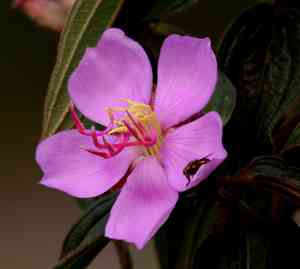
Melastoma (Melastoma) (Melastoma)
Also known as: Indian rhododendron, Malabar melastome, Singapore rhododendron
Certain species of the Melastoma genus are listed as Federal Noxious Weeds in North America because they pose significant ecological and agricultural threats. While they are often used as bush food in their native regions and are popular in gardens, their introduction to North America has led to problems. These plants produce berries and seeds that can spread easily, contaminating agricultural crops and disrupting local ecosystems by outcompeting native species.
In This Article
Attributes of Melastoma (Melastoma)
Lifespan
Perennial
Plant Height
1.5 to 4 meters
Spread
Approximately 1 to 3 meters
Leaf Color
Dark green
Flower Size
4 to 6 centimeters
Flower Color
Purple or pink
Images of Melastoma (Melastoma)
Quickly Identify Melastoma (Melastoma)
1
Melastoma plants can be identified by their purple or pink flowers with five petals, wavy-edged leaves, and distinctive fruit that splits open to reveal a sweet, edible pulp.
Scientific Classification of Melastoma (Melastoma)
Phylum
Magnoliophyta
Class
Magnoliopsida
Order
Myrtales
Family
Melastomataceae
Genus
Melastoma
Planting and Growing of Melastoma (Melastoma)
Care Difficulty
Easy
Watering Schedule
Every 8 days
Sunlight Requirements
Partial sun
Sunshine Duration
4-8 hours
Ideal Temperature
65-77℉
Soil Type
Potting Mix, Peat Mix
Soil pH
4.5-6.5
Fertilizer Type
Balanced
Pruning Season
Spring, Summer
Pruning Area
Branches, Leaves
Pruning Frequency
2 times a year
Repotting Season
Spring
Pot Type
Plastic, Ceramic
 How to Water Melastoma (Melastoma)?
For Melastoma, water thoroughly but make sure the soil is well-drained to prevent waterlogging. Ensure that the top inch of soil is dry before the next watering to maintain the ideal moisture balance.
What are the symptoms of an underwatered Melastoma (Melastoma)?
›
What should I do if my Melastoma (Melastoma) is not getting enough water?
›
What are the symptoms of an overwatered Melastoma (Melastoma)?
›
How to save an overwatered Melastoma (Melastoma)?
›
 What Are the Sunlight Requirements for Melastoma (Melastoma)?
Partial sun to full sun allows Melastoma to maintain vigorous growth. Ideal light exposure enhances photosynthesis, resulting in richer leaf coloration and increased blooming, crucial for the plant's visual and ecological contributions.
What is the ideal lighting condition for Melastoma?
›
How can I achieve ideal lighting for Melastoma?
›
What benefits does ideal lighting provide to Melastoma?
›
 What Is the Ideal Temperature Range for Melastoma (Melastoma)?
The ideal temperature range for Melastoma is between 65°F and 77°F. This range promotes optimal growth and flowering by ensuring that metabolic processes function smoothly. It is essential for achieving vibrant foliage and ample blooms. Maintaining temperatures within this range helps to mimic the natural habitat of Melastoma, supporting its physiological needs. The consistent warmth aids in nutrient uptake and overall plant health, preventing thermal stress that could otherwise lead to stunted growth or poor flowering.
 What Soil is Best for Melastoma (Melastoma)?
Melastoma thrives in nutrient-rich soils, which provide the essential minerals and organic matter needed for robust growth. An abundance of nutrients supports strong root systems and vibrant, healthy foliage. It's crucial for Melastoma to have well-drained soil to prevent water-logging, which can lead to root rot. Proper drainage ensures that the roots receive adequate oxygen and reduces the risks of pathogens. Soil that retains moisture without becoming soggy is ideal for Melastoma. Consistent moisture availability supports steady growth and vibrant flowering, delivering a lush, aesthetically pleasing appearance.
 How to Fertilize Melastoma (Melastoma)?
Melastoma prefers a balanced fertilizer regime. During the growing season, apply a diluted liquid fertilizer every two weeks. Ensure the liquid solution is one part fertilizer to five parts water to avoid root burn.
 How to Prune Melastoma (Melastoma)?
The first step is to examine the plant for any dead, diseased, or damaged branches. These should be removed promptly to prevent any potential spread of disease and to enhance the plant's overall appearance. Carefully trim back overgrown branches to maintain a balanced shape and size. This keeps the plant compact and aesthetically pleasing while allowing for adequate sunlight penetration and air circulation. To encourage blooming, prune faded flowers. This redirects the plant's energy towards producing new buds and keeps it from expending resources on old flowers, resulting in a more vibrant display.
 How to Propagate Melastoma (Melastoma) plant?
1
Begin by soaking Melastoma seeds in warm water for a few hours. This helps to soften the seed coat and improve germination rates. After soaking, place them on a moist paper towel and keep them in a warm, light location.
2
Select healthy stems from the parent plant for cutting propagation. Each cutting should be 4-6 inches long with at least two leaf nodes. Remove any lower leaves to prevent them from rotting when planted.
3
For division propagation, carefully remove the Melastoma plant from its pot and gently divide the rootball into sections. Each section should have roots and shoots for successful replanting. Water the divided plants thoroughly after planting to help them settle in.
 How to Repot Melastoma (Melastoma) plant?
1
Melastoma should be repotted when you notice its roots start crowding the pot or growing out of the drainage holes. Other signs include reduced growth or water not draining properly, indicating it's time for a larger home.
2
Select a pot that is one size larger than the current one, ensuring it has adequate drainage holes. This size will provide the growing roots with enough space while allowing for proper water drainage, keeping roots healthy.
3
Opt for a well-draining, acidic soil mix enriched with organic matter. This soil type supports moisture retention without water-logging, promoting vibrant growth and mitigating the risk of root rot in Melastoma.
Learn More About Melastoma (Melastoma) Diseases
Anthracnose
Bacterial Leaf Spot
Black Spot
Chemical Injury
Damping-off
Downy Mildew
Drought Stress
Fusarium Wilt
Gray Mold
Leaf Curl
Leaf Spot
Mosaic
Nutrient Deficiency
Nutrient Toxicity
Powdery Mildew
Root Rot
Root-knot Nematode
Rusts
Sooty Mold
Spider Mites
Temperature Stress
Thrips Damage
White Mold

