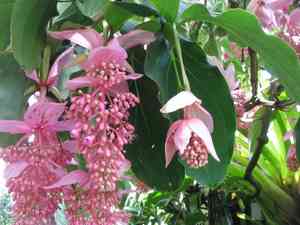
Showy medinilla (Medinilla magnifica)
Also known as: Pink lantern, Medinilla
The showy medinilla (Medinilla magnifica) is a perennial shrub admired for its striking pink-purple flowers that hang in clusters. Originating from rainforest environments, it prefers partial shade and high humidity. This plant grows best in warm temperatures (65-80°F or 18-27°C) and well-draining soil. Regular pruning helps maintain its health and promote vigorous growth. Direct sunlight should be avoided to prevent leaf burn.
In This Article
Attributes of Showy medinilla
Lifespan
Perennial
Plant Type
Shrub
Plant Height
61 cm to 1.2 m
Spread
1.5 m
Leaf Color
Green
Flower Size
2.5 cm
Flower Color
Pink
Images of Showy medinilla
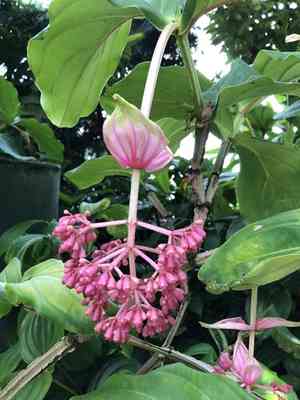
Quickly Identify Showy medinilla
1
Identify Medinilla magnifica by its large, leathery, dark green leaves with prominent veins, and its cascading clusters of pink flowers that hang down from long stems. The flowers are often accompanied by bright pink bracts.
Scientific Classification of Showy medinilla
Phylum
Vascular plants
Class
Dicotyledons
Order
Myrtales
Family
Melastome
Genus
Showy Medinilla
Species
Showy medinilla
Planting and Growing of Showy medinilla
Care Difficulty
Hard
Watering Schedule
Every 3 days
Sunlight Requirements
Partial sun
Sunshine Duration
6-10 hours
Ideal Temperature
65-75℉
Soil Type
Potting Mix, Peat Mix
Soil pH
6.5-7.5
Fertilizer Type
Balanced
Pruning Season
Spring, Summer
Pruning Area
Branches, Leaves
Pruning Frequency
2 times a year
Repotting Season
Spring
Pot Type
Plastic, Ceramic
 How to Water Showy medinilla?
Medinilla magnifica requires moderate watering. Ensure the soil is evenly moist but not waterlogged. Water until you see a slight trickle from the bottom of the pot, indicating thorough watering.
More About Watering Techniques→
What are the symptoms of an underwatered Showy medinilla?
›
What should I do if my Showy medinilla is not getting enough water?
›
What are the symptoms of an overwatered Showy medinilla?
›
How to save an overwatered Showy medinilla?
›
 What Are the Sunlight Requirements for Showy medinilla?
Partial sun suits Medinilla magnifica best, as it mimics the dappled sunlight in its natural habitat. Ideal light aids in maintaining lush foliage, encouraging vibrant blooms, and promoting overall plant health and longevity.
More About Sunlight Requirements Techniques→
What is the ideal lighting for Medinilla magnifica?
›
How can one ensure Medinilla magnifica gets the right light?
›
What are the benefits of optimal light for Medinilla magnifica?
›
 What Is the Ideal Temperature Range for Showy medinilla?
Medinilla magnifica thrives best within a temperature range of 65°F to 75°F. This range replicates the plant's natural tropical environment, promoting healthy growth and vibrant blooms. Ensuring a consistent temperature within this range minimizes stress on the plant and supports its overall vitality.
 What Soil is Best for Showy medinilla?
Medinilla magnifica thrives in well-drained soil conditions to prevent waterlogging, which can lead to root rot. Choosing loam or sandy loam ensures the plant gets the necessary drainage, promoting healthy root growth and overall vitality. While Medinilla magnifica requires good drainage, it also benefits from soil that retains moisture without becoming soggy. Peat soil helps maintain the right balance of moisture, supporting consistent growth and lush, vibrant leaves. This plant flourishes in soil rich in organic matter, providing essential nutrients for robust flowering and foliage. Incorporating compost into loam or sandy loam enriches the medium, enhancing the plant's blooming potential and overall health.
More About Soil→
 How to Fertilize Showy medinilla?
Medinilla magnifica responds best to moderate fertilization. When using liquid fertilizer, ensure to dilute it to half strength, typically around 1/4 teaspoon per gallon of water to avoid nutrient burn while providing adequate nutrients.
More About Fertilizing Techniques→
 How to Prune Showy medinilla?
Begin by visualizing the desired shape for your Medinilla magnifica. With purposeful cuts, trim back leggy growths to encourage a fuller, bushier appearance. Pay attention to maintaining the plant’s natural form while enhancing its aesthetic appeal. Focus on cutting back stems just above a node, where leaves join the stem. This promotes new growth that can lead to more flowers. Be cautious not to over-prune, as excessive cutting can reduce blooming.
More About Pruning Techniques→
 How to Propagate Showy medinilla plant?
1
Choose a healthy Medinilla magnifica plant with no signs of disease or pests. Cuttings taken from a vigorous parent plant are more likely to root successfully and grow into strong plants.
2
Using sterile shears, cut a 4-6 inches stem section from a non-flowering branch. Ensure there are at least 2-3 nodes on the cutting. Remove leaves from the lower half to prevent rot during rooting.
3
Dip the cut end in rooting hormone powder to encourage root growth. Plant the cutting in a pot filled with the prepared potting medium, ensuring it's firm and stable in the soil.
 How to Repot Showy medinilla plant?
1
Medinilla magnifica should be repotted when its roots start to emerge from the bottom drainage holes. This typically indicates that the plant has outgrown its current container and needs more space. Additionally, if you notice water not draining properly or the soil compacted, it might be time to repot. These signals ensure the plant gets ample room and nutrients for healthy growth.
2
Choose a pot that is one size larger than the current pot, with good drainage holes to prevent waterlogging. A pot that is too large can retain excess water, leading to root rot. Opting for a breathable material like terracotta can help regulate soil moisture and offer a healthy environment for your Medinilla magnifica.
3
Use a well-draining, rich soil mix such as one containing peat moss, perlite, and orchid bark. This blend ensures good aeration and prevents water stagnation, which is crucial for preventing root rot and supplying the plant with sufficient nutrients. The right soil also supports the plant's epiphytic nature, mimicking its natural habitat.



