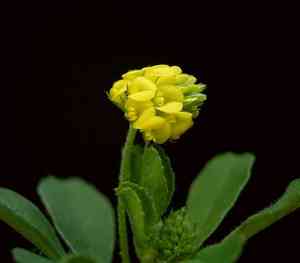
Black medick (Medicago lupulina)
Also known as: Hop clover, Nonesuch
Black medick (Medicago lupulina) grows to a height ranging from 15 to 79 cm. Initially, its stems lie flat but gradually become erect. This plant is notable for producing high-quality honey and is often cultivated for this reason. Additionally, black medick serves as a valuable pasture plant for livestock, although it is not highly favored by cattle.
In This Article
Attributes of Black medick
Lifespan
Annual, Perennial, Biennial
Plant Type
Herb
Plant Height
10 cm to 51 cm
Spread
15 cm to 30 cm
Leaf Color
Green
Flower Size
2.5 cm
Flower Color
Yellow
Images of Black medick
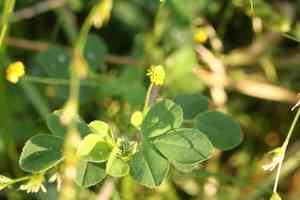
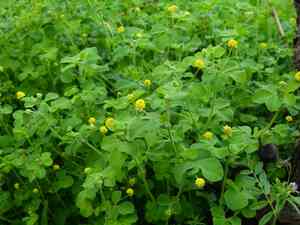
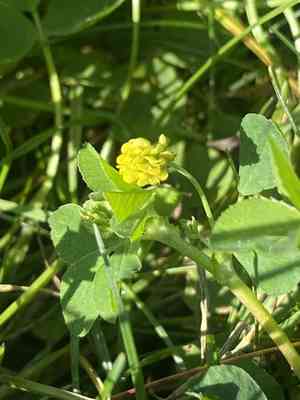
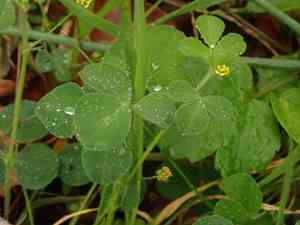
Quickly Identify Black medick
1
Trifoliate leaves with central leaflet bearing a spur
2
Bright yellow flowers in small rounded clusters
3
Kidney-shaped, coiled seed pods with single seed
4
Compound leaves with oval shape and serrated edge
5
Stem grows up to 30 inches with color varying from green to reddish-green
Scientific Classification of Black medick
Phylum
Vascular plants
Class
Dicotyledons
Order
Legumes, milkworts and allies
Family
Legume
Genus
Medicks
Species
Black medick
Planting and Growing of Black medick
Care Difficulty
Easy
Watering Schedule
Every 4 days
Sunlight Requirements
Full sun
Sunshine Duration
4-8 hours
Ideal Temperature
60-75℉
Soil Type
Potting Mix, Peat Mix
Soil pH
6-7.5
Fertilizer Type
Balanced
Pruning Season
Spring, Summer
Pruning Area
Branches, Leaves
Pruning Frequency
2 times a year
Repotting Season
Spring
Pot Type
Plastic, Ceramic
 How to Water Black medick?
For Medicago lupulina, water until the soil is moist but not waterlogged. Aim for about 250 milliliters per watering session. The soil should feel damp at a depth of about two inches. This ensures the roots have sufficient moisture access without drowning the plant.
What are the symptoms of an underwatered Black medick?
›
What should I do if my Black medick is not getting enough water?
›
What are the symptoms of an overwatered Black medick?
›
How to save an overwatered Black medick?
›
 What Are the Sunlight Requirements for Black medick?
Medicago lupulina benefits greatly from full to partial sun exposure, which aids in its vigorous growth and enhances blooms. The sunlight range of 4 to 8 hours a day optimizes its physiological processes and boosts long-term resilience.
What is the ideal sun exposure for Medicago lupulina?
›
How can I achieve ideal lighting conditions for Medicago lupulina?
›
What are the benefits of ideal lighting for Medicago lupulina?
›
 What Is the Ideal Temperature Range for Black medick?
Medicago lupulina thrives best in temperatures ranging from 60°F to 75°F. This range supports optimal growth and development, providing the necessary thermal environment for active photosynthesis and metabolism. Such conditions are generally found during late spring and early summer in temperate regions.
 What Soil is Best for Black medick?
Medicago lupulina thrives in well-drained soil, which prevents waterlogging and root rot. This type of soil allows for adequate air flow, promoting healthy root development, crucial for nutrient uptake and plant growth. A nutrient-rich soil provides essential minerals and nutrients that support the robust growth of Medicago lupulina. This ensures the plant remains vigorous and productive, especially during its flowering and seed-setting stages. The ideal soil for Medicago lupulina keeps moderate moisture, ensuring the roots have access to water without causing over-saturation. This balance is essential for sustained plant health and resilience against drought.
 How to Fertilize Black medick?
Medicago lupulina, commonly known as black medic, has modest fertilization needs. A general-purpose liquid fertilizer diluted to half strength is sufficient. For slow-release fertilizers, use around 50 grams per square meter once every six months to provide a consistent nutrient supply without overwhelming the plant.
 How to Prune Black medick?
Start by removing any dead or yellowing leaves to improve plant health and aesthetics. Trim back any overly long or unruly stems to shape the plant. Aim to cut just above a leaf node to encourage new growth. Always prune with sharp, clean tools to make clean cuts and reduce plant stress.
 How to Propagate Black medick plant?
1
Begin by sourcing quality Medicago lupulina seeds. It can increase germination rates to soak them in lukewarm water overnight, as it softens the seed coat and promotes faster sprouting.
2
Fill a seed tray with a well-draining seed-starting mix. Sow the seeds on the surface, pressing them into the soil gently. Cover with a thin layer of soil to protect the seeds and provide the necessary darkness for germination.
3
Ensure that the soil stays consistently moist by misting it with water. It's important not to overwater or let the soil dry out, both of which can hinder seedling development.
 How to Repot Black medick plant?
1
Signs that Medicago lupulina needs repotting include slowed growth and roots growing out of drainage holes. The best time to repot is during the growing seasons of spring or autumn when the plant is actively growing and can recover quickly.
2
Select a pot that is one size larger than the current one, ensuring it has good drainage holes to prevent water logging. A slightly larger pot provides roots with enough space to spread, promoting healthy growth and reducing the risk of root rot.
3
Choose well-draining loamy soil, rich in organic matter. Such soil supports healthy root growth and ensures the plant receives adequate nutrients, while also preventing water retention issues that can lead to root diseases.
Learn More About Black medick Diseases
Anthracnose
Bacterial Leaf Spot
Bacterial Wilt
Crown Gall
Cyst Nematode
Damping-off
Downy Mildew
Drought Stress
Fusarium Wilt
Gray Mold
Leaf Spot
Mosaic
Nutrient Deficiency
Nutrient Toxicity
Powdery Mildew
Root Rot
Root-knot Nematode
Rusts
Sooty Mold
Spider Mites
Temperature Stress
Thrips Damage
White Mold



