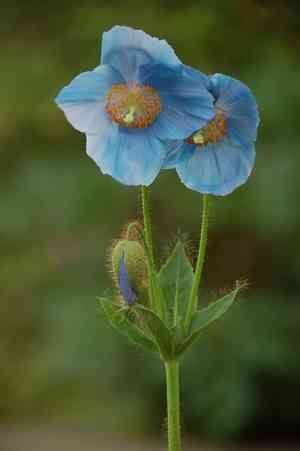
Himalayan poppy (Meconopsis) (Meconopsis)
Also known as: Himalayan Poppy, Blue Poppy
The Himalayan poppy, belonging to the genus Meconopsis in the family Papaveraceae, is predominantly found in the high-altitude regions of the Himalayas, encompassing areas like Nepal, Bhutan, Tibet, and northern India.
In This Article
Attributes of Himalayan poppy (Meconopsis)
Lifespan
Perennial
Plant Height
1.2 m
Spread
50 cm
Leaf Color
Green
Flower Size
8 - 10 cm
Flower Color
Blue, purple
Images of Himalayan poppy (Meconopsis)
Quickly Identify Himalayan poppy (Meconopsis)
1
Meconopsis can be identified by its large, vibrant blue or purple flowers that have delicate, papery petals. The leaves are typically large, lobed, and hairy. The plant tends to have a rosette form at the base, with flower stalks rising above.
Scientific Classification of Himalayan poppy (Meconopsis)
Phylum
Magnoliophyta
Class
Magnoliopsida
Order
Ranunculales
Family
Papaveraceae
Genus
Meconopsis
Planting and Growing of Himalayan poppy (Meconopsis)
Care Difficulty
Hard
Watering Schedule
Every 4 days
Sunlight Requirements
Partial sun
Sunshine Duration
4-8 hours
Ideal Temperature
50-60℉
Soil Type
Potting Mix, Peat Mix
Soil pH
5.5-6.5
Fertilizer Type
Balanced
Pruning Season
Spring, Summer
Pruning Area
Branches, Leaves
Pruning Frequency
Once a year
Repotting Season
Spring
Pot Type
Plastic, Ceramic
 How to Water Himalayan poppy (Meconopsis)?
Meconopsis appreciates moderate watering. Ensure the soil remains consistently moist but not waterlogged. You should aim for about 250 ml each time. The goal is to provide enough water to reach the roots without causing standing water in the pot or garden bed.
What are the symptoms of an underwatered Himalayan poppy (Meconopsis)?
›
What should I do if my Himalayan poppy (Meconopsis) is not getting enough water?
›
What are the symptoms of an overwatered Himalayan poppy (Meconopsis)?
›
How to save an overwatered Himalayan poppy (Meconopsis)?
›
 What Are the Sunlight Requirements for Himalayan poppy (Meconopsis)?
Partial sun or dappled shade is ideal, mimicking their natural alpine habitats. This lighting condition enhances the vividness of their distinctive blooms and maintains healthy, lush leaf structures.
What is the ideal lighting environment for Meconopsis?
›
How to achieve ideal light conditions for Meconopsis?
›
What benefits does ideal lighting offer to Meconopsis?
›
 What Is the Ideal Temperature Range for Himalayan poppy (Meconopsis)?
The ideal temperature range for growing Meconopsis is typically between 50°F and 60°F. This cool climate condition mimics the plant's native habitats, often found in mountainous regions. A steady temperature within this range ensures optimal growth, flowering, and overall plant health, as it allows the plant to maintain its natural physiological processes without experiencing stress from excessive heat or cold.
 What Soil is Best for Himalayan poppy (Meconopsis)?
Meconopsis prefers soil that retains moisture well without becoming waterlogged. This is crucial for its growth, as the plant's roots need consistent moisture but can rot if they sit in water. Loamy soil with good drainage offers an ideal balance, ensuring the roots are always hydrated. This plant thrives best in soil that is rich in organic matter. Incorporating compost or well-rotted manure can provide essential nutrients, promoting healthy foliage and vibrant blooms. The natural fertility of nutrient-rich soil supports the plant's demanding growth needs. Meconopsis favors mildly acidic soil, which enhances its ability to absorb necessary minerals. The acidity helps in micronutrient availability, thus avoiding nutritional deficiencies that can hinder growth. Soil pH ranging from 5.5 to 6.5 is optimal for its development.
 How to Fertilize Himalayan poppy (Meconopsis)?
Meconopsis, commonly known as the Himalayan poppy, requires careful fertilization. Apply approximately 250-300 ml of liquid fertilizer per application to ensure healthy growth. For slow-release fertilizers, use around 100-150 grams evenly distributed around the base of the plant.
 How to Prune Himalayan poppy (Meconopsis)?
Regularly remove spent flowers, especially after the bloom period. This not only keeps the plant looking tidy but also channels the plant's energy into producing more blooms rather than seed. Use your fingers or scissors to snap off the dead flowers just above the first set of healthy leaves. Trim back any damaged or yellowed leaves during the growing season. This helps the plant maintain a beautiful appearance and can also reduce the risk of diseases. Cut the leaves back to the base of the plant, leaving healthy foliage intact.
 How to Propagate Himalayan poppy (Meconopsis) plant?
1
Sow Meconopsis seeds in seed trays filled with a moist seed-starting mix. Cover lightly with a thin layer of soil, as they require light to germinate. Maintain moisture by misting regularly until germination occurs.
2
In early spring or late autumn, carefully lift mature Meconopsis plants to divide them. Use a sharp knife to separate the plants into clumps, ensuring each has roots attached. Replant immediately in prepared soil.
3
Take root cuttings in late autumn by cutting 2-3 inch sections of root from the parent plant. Place them horizontally in a tray with seed-starting mix, cover lightly, and keep the medium moist until shoots appear.
 How to Repot Himalayan poppy (Meconopsis) plant?
1
You should consider repotting Meconopsis when you notice the roots are tightly packed, circling the base of the pot, or when plant growth has slowed significantly. Another signal is water sitting on the surface of the soil, indicating poor drainage. The best time to repot is during the growing seasons of spring or early autumn, when the plant can quickly recover.
2
Select a pot that is just one to two sizes larger than the current pot. A pot too big can lead to excessive moisture retention and root rot. Ensure the pot has proper drainage holes to prevent waterlogging. The material of the pot, whether clay or plastic, should suit your watering habits and climate, with clay being best for humid areas and plastic for dry environments.
3
Opt for a rich, well-draining organic soil mix. A blend that includes peat moss, perlite, and some compost works well, as it allows for adequate drainage while providing sufficient nutrients. This mix replicates the plant's natural habitat, ensuring good air flow to the roots and preventing water accumulation.
Learn More About Himalayan poppy (Meconopsis) Diseases
Anthracnose
Bacterial Leaf Spot
Bacterial Wilt
Black Spot
Chemical Injury
Crown Gall
Cyst Nematode
Damping-off
Downy Mildew
Drought Stress
Fusarium Wilt
Gray Mold
Leaf Curl
Leaf Spot
Mosaic
Nutrient Deficiency
Nutrient Toxicity
Powdery Mildew
Root Rot
Root-knot Nematode
Rusts
Sooty Mold
Spider Mites
Temperature Stress
Thrips Damage
White Mold

