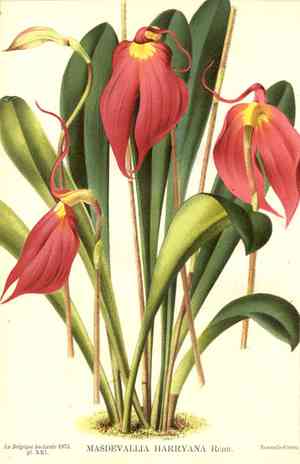
Masdevallia coccinea (Masdevallia coccinea)
Also known as: Scarlet Masdevallia, Colombian Masdevallia
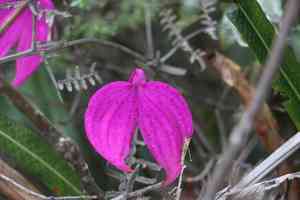
Masdevallia coccinea is renowned for its vivid red blooms that perch on delicate stems, creating a striking contrast in the cool, moist highland regions it calls home. The flowers' triangular petals form a unique, pouch-like structure, protecting the plant's reproductive parts from the humid cloud forest environment. The orchid's bright colors and distinctive floral shape make it particularly enchanting, cementing its status as a true gem among orchid species.
In This Article
Attributes of Masdevallia coccinea
Lifespan
Perennial
Plant Height
10-20 cm
Spread
10-15 cm
Leaf Color
Dark green
Flower Size
5-7 cm
Flower Color
Scarlet red
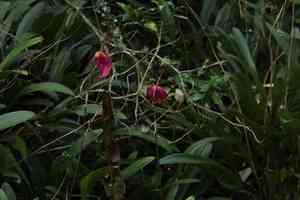
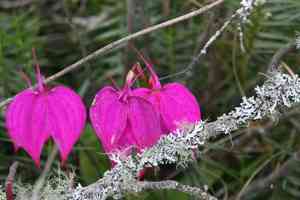
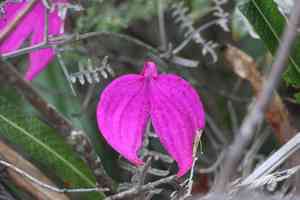
Images of Masdevallia coccinea
Quickly Identify Masdevallia coccinea
1
Masdevallia coccinea can be identified by its striking scarlet flowers, which are often triangular in shape due to the three sepals. The leaves are slender, elongated, and typically dark green. The plant grows in a compact clump, usually no more than 10-20 cm in height.
Scientific Classification of Masdevallia coccinea
Phylum
Vascular plants
Class
Monocotyledons
Order
Asparagales
Family
Orchid
Genus
Masdevallia
Species
Masdevallia coccinea
Planting and Growing of Masdevallia coccinea
Care Difficulty
Hard
Watering Schedule
Every 6 days
Sunlight Requirements
Partial sun
Sunshine Duration
6-10 hours
Ideal Temperature
65-75℉
Soil Type
Potting Mix, Peat Mix
Soil pH
5.5-6.5
Fertilizer Type
Balanced
Pruning Season
Spring, Summer
Pruning Area
Branches, Leaves
Pruning Frequency
2 times a year
Repotting Season
Spring
Pot Type
Plastic, Ceramic
 How to Water Masdevallia coccinea?
When watering Masdevallia coccinea, aim to provide approximately 150 ml of water each time. This plant thrives in an environment where the potting mix is kept evenly moist but not overly saturated. The principle to follow is to water until you notice the moisture reaching the bottom of the container without the mix becoming waterlogged.
What are the symptoms of an underwatered Masdevallia coccinea?
›
What should I do if my Masdevallia coccinea is not getting enough water?
›
What are the symptoms of an overwatered Masdevallia coccinea?
›
How to save an overwatered Masdevallia coccinea?
›
 What Are the Sunlight Requirements for Masdevallia coccinea?
Partial sun exposure provides enough energy for photosynthesis while preventing overstimulation. This ideal condition aids in vibrant blooming and prevents dehydration.
How much light does it need?
›
How to achieve the ideal light?
›
What are the benefits of ideal light exposure?
›
 What Is the Ideal Temperature Range for Masdevallia coccinea?
The ideal temperature range for Masdevallia coccinea is between 65°F to 75°F. This temperature range provides an optimal environment for the plant's physiological processes, including photosynthesis and nutrient absorption. Maintaining this range encourages healthy growth and vibrant blooming.
 What Soil is Best for Masdevallia coccinea?
Masdevallia coccinea thrives in soil that retains moisture but allows for adequate drainage. This helps to ensure that the roots are moist but not waterlogged, preventing root rot. The soil should be rich in organic matter to supply essential nutrients. Well-fertilized soil encourages robust growth and vibrant blooms in Masdevallia coccinea. An airy soil structure is crucial for Masdevallia coccinea to facilitate root respiration and prevent compaction. This promotes healthy root growth and overall plant vitality.
 How to Fertilize Masdevallia coccinea?
For Masdevallia coccinea, the fertilizer amount should be precise to avoid overfeeding. Use a balanced, diluted liquid fertilizer with a 20-20-20 ratio. During the active growing season, apply approximately 1/4 teaspoon per gallon of water when watering the plant.
 How to Prune Masdevallia coccinea?
When pruning Masdevallia coccinea, start by sterilizing your pruning shears or scissors to prevent infections. Gently assess the plant for any dead, damaged, or diseased leaves and stems. Use the shears to carefully remove these parts, making clean cuts to encourage healthy growth. Remember to cut at the base of the stem, close to the plant without harming the main body. After pruning, properly dispose of the removed parts to avoid any potential disease spreading.
More About Pruning Techniques→
 How to Propagate Masdevallia coccinea plant?
1
During spring or early summer, carefully remove the Masdevallia coccinea from its pot and gently separate the pseudobulbs. Each division should have at least three healthy bulblets for successful propagation.
2
Trim away any dead or damaged roots using sterilized tools, and dust the cuts with fungicide to prevent infections. Allow the divisions to dry for a few hours before planting.
3
Place the divisions in slightly moistened orchid potting mix, ensuring that the roots are well-covered and secure. Water sparingly to prevent rot while they establish.
 How to Repot Masdevallia coccinea plant?
1
Masdevallia coccinea needs repotting when roots outgrow the pot, or the potting medium breaks down. Spring and autumn provide mild conditions that minimize stress, perfect for repotting.
2
Select a pot with ample drainage holes to prevent root rot. It should be only slightly larger than the current one, promoting healthy root spread without overwhelming the plant.
3
Choose a well-draining orchid mix, preferably containing bark, perlite, and charcoal. This blend provides aeration, supporting healthy root growth and preventing waterlogging.
Learn More About Masdevallia coccinea Diseases
Anthracnose
Bacterial Leaf Spot
Bacterial Soft Rot
Black Spot
Chemical Injury
Damping-off
Downy Mildew
Drought Stress
Fusarium Wilt
Gray Mold
Leaf Curl
Leaf Spot
Mosaic
Nutrient Deficiency
Nutrient Toxicity
Powdery Mildew
Root Rot
Root-knot Nematode
Rusts
Sooty Mold
Spider Mites
Temperature Stress
Thrips Damage
White Mold



