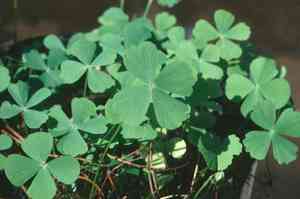
Dwarf waterclover(Marsilea minuta)

Dwarf waterclover (Marsilea minuta)

Also known as: Small water clover, Pepperwort

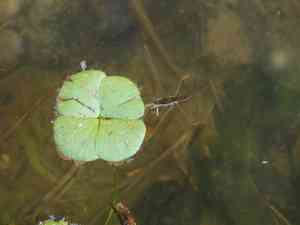
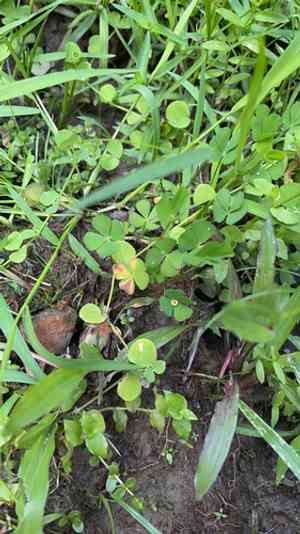
M. minuta, or the minute duckweed, displays notable differences in appearance depending on whether it is found on land or in water:

**On Land:**
- **Growth Form**: Appears cushion-like, forming compact, dense mats.
- **Rhizome**: Light brown to green, 0.4–0.8 mm thick, with short tan hairs.
- **Petioles and Leaves**: Erect petioles, 5–13 cm long, supporting leaflets that are 0.8–1.7 cm by 1.2–2 cm, mostly smooth, and shaped either cuneate or flabellate.
- **Reproduction**: Fertile leaves with up to four sporocarps each, at the base of the petiole. Sporocarps are 2.6–4.1 mm long, 2.4–3.1 mm wide, and 1.3–1.7 mm thick, with a distinct raphe.

**In Water:**
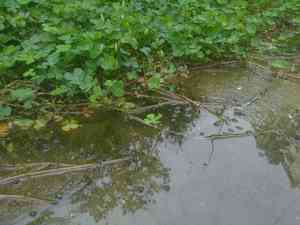
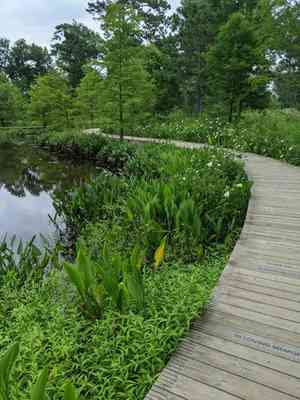
- **Growth Form**: Creeping and spreading, not typically floating but emergent from the water.
- **Juvenile Phase**: Submerged juvenile stage, transitioning to terrestrial as adults.
- **Leaves**: Emergent leaves, not floating, adapted for water environments.
- **Reproduction**: Sporocarps mature above ground, distinguishing them from certain Marsilea species.

These differences enable M. minuta to thrive in varying habitats, showcasing its adaptability.

Attributes of Dwarf waterclover

Lifespan
Perennial, Annual
Plant Type
Fern
Plant Height
30 cm
Spread
10-20 cm
Leaf Color
Green
Flower Size
N/A - It is a fern and does not produce flowers.
Flower Color
N/A - It is a fern and does not produce flowers.

ForwardPlant - Identify plants with a snap

Identify and diagnose plants, get toxicity alerts, and explore safety guides for all types of fungi.

Try for Free

Images of Dwarf waterclover

Dwarf waterclover(Marsilea minuta)

Quickly Identify Dwarf waterclover

1
Clover-like leaflets with unique variegation: light oval base and dark inner dot.
2
4 triangular erect leaflets with smooth texture and visible vein pattern.
3
Creeping rhizome stem, pale brown to light green, with firm texture.
4
Rhizome thickness of 0.1 to 0.2 inches (2.5 to 5 mm) with regular frond intervals.
5
Resilient to cold temperatures, tolerating up to 20 degrees Fahrenheit (-6.67 degrees Celsius).

Scientific Classification of Dwarf waterclover

Phylum
Vascular plants
Class
Ferns
Order
Salviniales
Family
Water-clover
Genus
Water clover
Species
Dwarf waterclover

Planting and Growing of Dwarf waterclover

Care Difficulty
Easy
Watering Schedule
Every 12 days
Sunlight Requirements
Partial sun
Sunshine Duration
10-12 hours
Ideal Temperature
68-77℉
Soil Type
Potting Mix, Peat Mix
Soil pH
6.5-7.5
Fertilizer Type
Balanced
Pruning Season
Spring, Summer
Pruning Area
Branches, Leaves
Pruning Frequency
2 times a year
Repotting Season
Spring
Pot Type
Plastic, Ceramic

water icon How to Water Dwarf waterclover?

Marsilea minuta prefers consistently moist soil. Ensure the soil remains damp without becoming waterlogged, as this can cause root rot. Water thoroughly until you see moisture at the base of the pot, indicating proper saturation. This approach mimics its natural swampy habitat.
What are the symptoms of an underwatered Dwarf waterclover?
What should I do if my Dwarf waterclover is not getting enough water?
What are the symptoms of an overwatered Dwarf waterclover?
How to save an overwatered Dwarf waterclover?

sunlight icon What Are the Sunlight Requirements for Dwarf waterclover?

Sunlight Requirements: Partial sun, Full shade
Duration of light: 3 to 5 hours
Partial sun exposure helps Marsilea minuta maintain its lush green color and compact shape, enhancing its ornamental value. It balances the need for sunlight for photosynthesis while avoiding the adverse effects of too much direct light, fostering robust growth and resilience.
What is the ideal sunlight exposure for Marsilea minuta?
How often should Marsilea minuta be exposed to direct sunlight?
What are the benefits of providing Marsilea minuta with its ideal light conditions?

temperature icon What Is the Ideal Temperature Range for Dwarf waterclover?

Ideal Temperature: 68 ~ 77℉
The ideal temperature range for Marsilea minuta cultivation is between 68°F and 77°F. Maintaining temperatures within this range will promote optimal growth and health, providing an environment that mimics the plant's natural habitat. Consistency within this temperature bracket ensures that metabolic processes function efficiently and that the plant can thrive without undue stress.

soil icon What Soil is Best for Dwarf waterclover?

Soil type: Sandy loam, Loam
Soil PH: 6.5 ~ 7.5
Marsilea minuta thrives in soil with excellent water retention. This means it can store water during rain or watering and slowly release it when needed. This helps reduce the frequency of watering, ensuring the plant's roots remain hydrated but not waterlogged. A nutrient-rich environment is essential for Marsilea minuta as it relies on soil minerals for healthy growth. Fertile soil can boost leaf development and enhance the plant's overall vitality by providing essential nutrients like nitrogen, phosphorus, and potassium. Good soil aeration is important for preventing root compaction and ensuring that Marsilea minuta roots can breathe efficiently. Aerated soil allows air to reach the roots, promoting healthy growth and preventing root rot.

fertilize icon How to Fertilize Dwarf waterclover?

Fertilizer type: Balanced
For Marsilea minuta, it is important to apply a balanced amount of fertilizer to support its aquatic growth. Use a dilute solution, approximately a quarter of the recommended strength, to avoid overwhelming the plant. The goal is to supplement the plant's nutrient requirements gently.

prune icon How to Prune Dwarf waterclover?

Pruning Time: Spring, Summer, Autumn
It is crucial not to over-prune Marsilea minuta as it can stress the plant and hinder its growth. Focus only on removing the leaves that are clearly dead or dying. Over-pruning can lead to a sparse appearance and reduce the plant's ability to photosynthesize effectively. While pruning, inspect the plant for any signs of pests or disease. Marsilea minuta is generally hardy, but it can still fall prey to common plant pests like aphids or spider mites. Addressing these issues promptly can prevent further damage and ensure healthy growth. More About Pruning Techniques

propagate icon How to Propagate Dwarf waterclover plant?

Propagate Time: Spring, Early spring, Late spring, Summer
1
Begin by sowing the seeds on the surface of a well-draining soil mix. Lightly cover the seeds with soil or fine sand. Keep the soil consistently moist and place the tray in a location with bright, indirect sunlight. Germination can take a few weeks.
2
Using a sharp, sterilized knife or spade, carefully cut through the rhizomes to separate them into smaller clumps. Ensure each section has at least one growing point or 'eye' for successful propagation. Replant immediately in a suitable substrate.
3
In a sterile environment, take small tissue samples from healthy plants. Place them in a growing medium enriched with nutrients and hormones to promote growth. This method is meticulous and requires precise control of growth conditions.

repot icon How to Repot Dwarf waterclover plant?

Repotting frequency: Every 1-2 years
1
You should consider repotting your Marsilea minuta when you notice that the plant has outgrown its current pot, which is often indicated by roots emerging from the drainage holes or a noticeable slowdown in growth. Repotting is best done in the warmer months of spring and summer.
2
Selecting the right pot is essential for successful repotting. Ideally, choose a pot that is 1-2 inches larger in diameter than the current one. This extra space allows roots to grow without being crowded, ensuring healthier growth. Ensure it has good drainage to prevent waterlogging.
3
Opt for a wet, loamy soil mix that mimics Marsilea minuta's natural habitat. This type of soil retains enough moisture without becoming stagnant, providing a conducive growing environment for the plant’s distinct needs.

ForwardPlant - Identify plants with a snap

Find the best spots for them to optimize their health, simply using your phone.

Try for Free