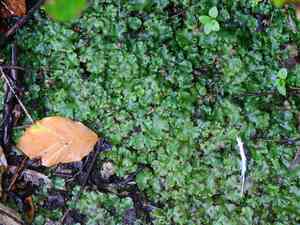
Common liverwort (Marchantia polymorpha)
Also known as: Umbrella liverwort
The plant in question is *Selaginella kraussiana*, also known as Krauss' spikemoss. This subtropical ground cover has forked branches and can grow up to 10 cm in length. It does not produce flowers or seeds but instead reproduces via spores. Often considered a weed in gardens and lawns due to its dense, carpet-like growth, it is also valued in woodland restoration efforts for its fire tolerance and ability to prevent soil erosion.
In This Article
Attributes of Common liverwort
Lifespan
Perennial
Plant Type
Moss
Plant Height
2 cm to 10 cm
Spread
10 cm
Leaf Color
Green
Flower Size
N/A
Flower Color
N/A
Images of Common liverwort
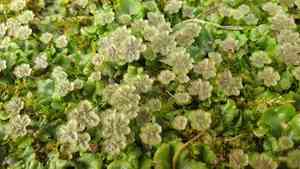
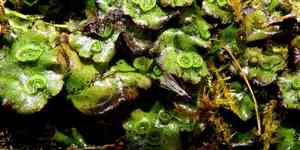
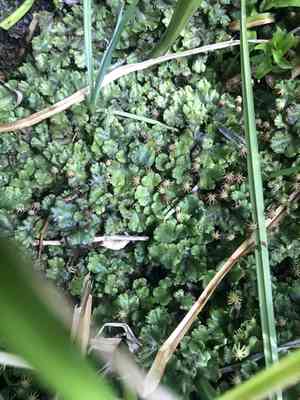
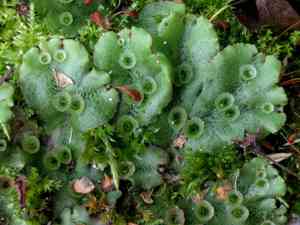
Quickly Identify Common liverwort
1
Mat-forming habit with dense covering on moist soil surfaces
2
Dichotomously branching fronds about 0.4-0.6 inches (1-1.5 cm) wide
3
Lacks true roots, anchors with rhizoids
4
Umbrella-like reproductive structures on slender stalks
5
Surface can be somewhat waxy, repels water when dry
Scientific Classification of Common liverwort
Phylum
Hepatics
Class
Complex thalloid liverworts
Order
Marchantiales
Family
Marchantiaceae
Genus
Marchantia
Species
Common liverwort
Planting and Growing of Common liverwort
Care Difficulty
Easy
Watering Schedule
Every 12 days
Sunlight Requirements
Partial sun
Sunshine Duration
6-10 hours
Ideal Temperature
59-77℉
Soil Type
Potting Mix, Peat Mix
Soil pH
6.5-7.5
Fertilizer Type
Balanced
Pruning Season
Spring, Summer
Pruning Area
Branches, Leaves
Pruning Frequency
2 times a year
Repotting Season
Spring
Pot Type
Plastic, Ceramic
 How to Water Common liverwort?
Marchantia polymorpha, known as the common liverwort, thrives in moist conditions without being waterlogged. The watering should be enough to make the soil damp but not soggy, about 50 milliliters per session is optimal. This ensures the plant's cells remain turgid, facilitating healthy photosynthesis and growth.
What are the symptoms of an underwatered Common liverwort?
›
What should I do if my Common liverwort is not getting enough water?
›
What are the symptoms of an overwatered Common liverwort?
›
How to save an overwatered Common liverwort?
›
 What Are the Sunlight Requirements for Common liverwort?
Partial sun delivers balanced exposure. Ensuring moderate light access bolsters photosynthesis, sustains vibrant leaves, and enhances resilience against stress factors.
What are the best light conditions for Marchantia polymorpha?
›
How can I achieve these lighting conditions indoors?
›
Why is partial sun ideal for Marchantia polymorpha?
›
 What Is the Ideal Temperature Range for Common liverwort?
The ideal temperature range for Marchantia polymorpha is between 59°F and 77°F. This ensures optimal growth conditions by allowing necessary physiological processes like photosynthesis to occur efficiently. In this temperature range, the exchange of gases and water vapor is also balanced, providing the most conducive environment for growth.
 What Soil is Best for Common liverwort?
Marchantia polymorpha thrives best in soils that retain moisture well without being waterlogged. This helps maintain consistent humidity around the plant, providing an ideal environment reminiscent of its natural habitats, such as bogs and wetlands. This liverwort prefers nutrient-rich soils to support its growth and reproduction. Adding organic matter, like compost, can enhance soil fertility and provide essential nutrients, fostering robust plant development. Adequately aerated soil prevents compaction, ensuring the roots receive enough oxygen. This trait is crucial as it facilitates healthy root function, which is vital for the plant's nutrient uptake and overall health.
 How to Fertilize Common liverwort?
Marchantia polymorpha, a unique liverwort, requires very mild fertilization. Use a diluted liquid fertilizer solution at one-tenth the recommended strength. Too much can damage its delicate structure, so moderation is key.
 How to Prune Common liverwort?
Begin by examining your Marchantia polymorpha for any brown, yellowed, or damaged thallus. These should be the focus of your pruning efforts. Gently lift or separate any sections to see which parts are hindering healthy growth or lying dormant. Using sharp scissors, make precise cuts close to the base of the affected thallus, avoiding any damage to adjacent healthy tissue. The goal is to remove the unhealthy parts without harming the plant's ability to recover swiftly and continue photosynthesis effectively. Water the plant moderately after pruning to help it cope with the stress. Ensure it has adequate indirect light and a humid environment. This will help Marchantia polymorpha heal and continue to thrive following the pruning session.
 How to Propagate Common liverwort plant?
1
Before division, ensure the parent plant is healthy and mature enough to withstand the division process. Water it adequately a few days prior to division to reduce stress and make division easier.
2
Carefully remove the Marchantia polymorpha from its growing medium, and use a sharp knife to divide the plant into sections. Ensure each section has a good amount of roots to encourage successful establishment.
3
Replant each divided section into its pot or designated growing area, ensuring that the soil is thoroughly damp. Keep the plants in a shaded area initially to prevent stress from too much light.
 How to Repot Common liverwort plant?
1
Look for signs such as overcrowding or compacted soil. If you notice the growth slowing or water pooling on the surface, it's time to consider repotting Marchantia polymorpha. Ideal repotting occurs when the plant shows active growth in spring or summer.
2
Choose a shallow pot with excellent drainage, as Marchantia polymorpha thrives in moist yet well-drained environments. A wider pot allows for the plant's spreading nature, encouraging healthy expansion and preventing root binding.
3
Use a moisture-retentive, nutrient-rich soil mix. Such soil should have ingredients like peat, compost, or orchid bark to mimic the plant's natural habitat, promote healthy growth, and provide necessary nutrients for sustained vitality.



