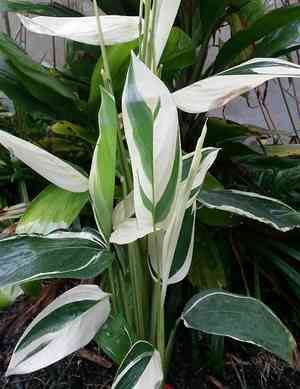
Arrowroot (Maranta arundinacea)
Also known as: Obedience plant, Bermuda arrowroot
Arrowroot (Maranta arundinacea) is a perennial herb that thrives in tropical rainforest climates. Today, it is primarily cultivated in St. Vincent in the Caribbean. The starch extracted from its roots is commercially valuable and is used in the culinary industry as a thickener, in gluten-free baking, in baby foods, as well as in cosmetics and adhesives.
In This Article
Attributes of Arrowroot
Lifespan
Perennial
Plant Type
Herb
Plant Height
30 cm to 1.5 m
Spread
1 m
Leaf Color
Green
Flower Size
2.5 cm
Flower Color
White
Images of Arrowroot
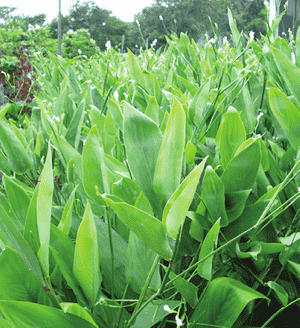
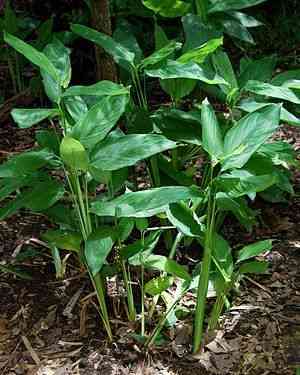
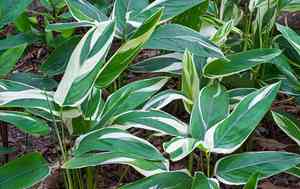
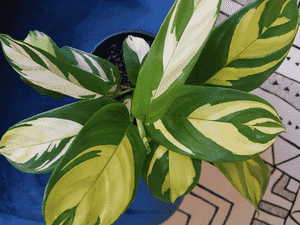
Quickly Identify Arrowroot
1
Robust cane-like stems
2
Distinctively patterned veins on leaves
3
Clump of storage rhizomes underground
4
Delicate flowers with curved tube and fan-like shape
5
Bright green elongated leaves with pointed tips and symmetrical arrangement
Scientific Classification of Arrowroot
Phylum
Vascular plants
Class
Monocotyledons
Order
Gingers, bananas, and allies
Family
Arrowroot
Genus
Prayer plant
Species
Arrowroot
Planting and Growing of Arrowroot
Care Difficulty
Easy
Watering Schedule
Every 4 days
Sunlight Requirements
Partial sun
Sunshine Duration
4-6 hours
Ideal Temperature
64-75℉
Soil Type
Potting Mix, Peat Mix
Soil pH
6.5-7.5
Fertilizer Type
Balanced
Pruning Season
Spring, Summer
Pruning Area
Branches, Leaves
Pruning Frequency
Once a year
Repotting Season
Spring
Pot Type
Plastic, Ceramic
 How to Water Arrowroot?
For Maranta arundinacea, watering should be thorough but not excessive, meaning the soil should be consistently moist but not waterlogged. Aim for about 250ml per watering session to ensure the moisture reaches the root zone without drowning the plant.
More About Watering Techniques→
What are the symptoms of an underwatered Arrowroot?
›
What should I do if my Arrowroot is not getting enough water?
›
What are the symptoms of an overwatered Arrowroot?
›
How to save an overwatered Arrowroot?
›
 What Are the Sunlight Requirements for Arrowroot?
Partial sun allows for balanced growth, as Maranta arundinacea benefits from moderate light to support its energy production while maintaining its vibrant foliage.
More About Sunlight Requirements Techniques→
Optimal Light Exposure?
›
How to Achieve Ideal Lighting?
›
Benefits of Proper Lighting?
›
 What Is the Ideal Temperature Range for Arrowroot?
For optimal growth, Maranta arundinacea thrives in a temperature range of 64°F to 75°F. Maintaining this range ensures the plant has the best conditions for photosynthesis and nutrient absorption.
 What Soil is Best for Arrowroot?
Why does Maranta arundinacea need well-drained soil? Well-drained soil allows proper root aeration and prevents water from pooling and causing root rot, ensuring the roots receive enough oxygen and the plant remains healthy. Why is a nutrient-rich medium essential? A nutrient-rich medium is crucial for providing sufficient minerals and nutrients that support the plant's growth and development, resulting in a robust and vibrant Maranta arundinacea. How does a moderately moist soil benefit the plant? Maintaining moderate moisture ensures Maranta arundinacea receives consistent hydration, crucial for its growth. Avoiding overly dry or waterlogged conditions keeps the plant thriving.
More About Soil→
 How to Fertilize Arrowroot?
Maranta arundinacea, also known as Arrowroot, needs a balanced fertilization approach. Applying a liquid fertilizer with a 20-20-20 NPK ratio diluted to half strength is ideal during its growing season. Each application should provide around 50-100 ppm of nitrogen, depending on the plant's size and growth rate.
More About Fertilizing Techniques→
 How to Prune Arrowroot?
Start by removing any brown, yellow, or damaged leaves. These leaves can draw energy away from healthy growth, so cutting them off helps the plant to direct nutrients to thriving parts. When trimming stems, make your cuts just above a leaf node to encourage bushier growth. The plant will often sprout new growth from these nodes, so placing your cuts strategically can shape the plant attractively. After removing unhealthy foliage, step back and assess the overall shape of the plant. Prune selectively to maintain its natural form, focusing on promoting an aesthetically pleasing structure that allows for adequate light and air circulation.
More About Pruning Techniques→
 How to Propagate Arrowroot plant?
1
For division propagation, remove the parent plant from its pot and gently clean away excess soil. Use a sharp, sterilized knife to cut the rhizomes into sections, ensuring each piece has at least one viable bud.
2
Use a well-draining potting mix to fill pots or trays for the new divisions or seeds. This is important to prevent waterlogging, which can lead to root rot during the early growth stages.
3
Place the divided rhizomes or seeds into the prepared soil, ensuring they are covered. Water sparingly to start, gradually increasing as roots develop. Consistent moisture levels promote successful root establishment.
 How to Repot Arrowroot plant?
1
Repot Maranta arundinacea when you notice roots emerging from drainage holes, a reduced growth rate, or when the plant becomes root-bound. These are clear signals that it's time for a new container to provide ample space for the roots to expand.
2
Select a pot that is 2-3 inches larger in diameter than the current one to allow room for root growth. Ensure it has drainage holes to prevent waterlogging, which helps maintain optimal soil moisture and supports healthy root development.
3
Opt for a rich, well-draining soil mix that retains enough moisture but avoids waterlogging. Soil that combines peat, perlite, and potting mix can offer these ideal conditions, promoting healthy plant growth and vibrant foliage.



