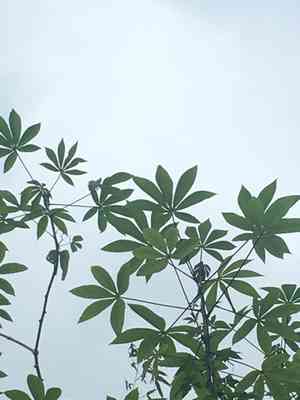
Cassava(Manihot esculenta)

Cassava (Manihot esculenta)

Also known as: Tapioca, Mandioca

Cassava (Manihot esculenta), originally from South America, has become a crucial carbohydrate source globally, particularly in low-income regions due to its affordability and ease of cultivation. The starchy root is versatile, used in dishes like boiled or fried cassava, as well as in products like tapioca and cassava flour. However, only the properly prepared root is safe for consumption; other parts of the plant are toxic.

Beyond food, cassava starch finds applications in laundry products and is being explored as a potential biofuel source. Proper processing is essential to eliminate harmful cyanogenic compounds, which can cause serious health issues if ingested.

Attributes of Cassava

Lifespan
Perennial
Plant Type
Herb
Plant Height
1.5 m to 5 m
Spread
1.8 m to 3 m
Leaf Color
Green Variegated
Flower Size
2.5 cm
Flower Color
White Yellow Green Pink Red Gold

PlantJoy - Identify plants with a snap

Identify and diagnose plants, get toxicity alerts, and explore safety guides for all types of fungi.

Try for Free

Images of Cassava

Cassava(Manihot esculenta)

Quickly Identify Cassava

1
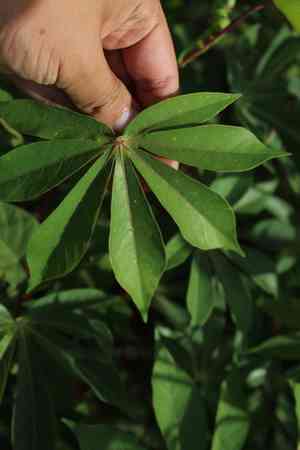
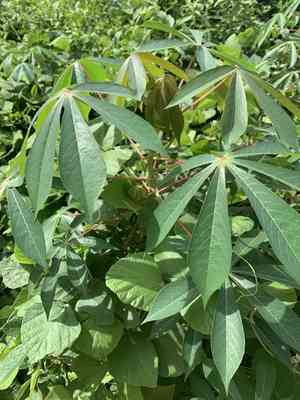
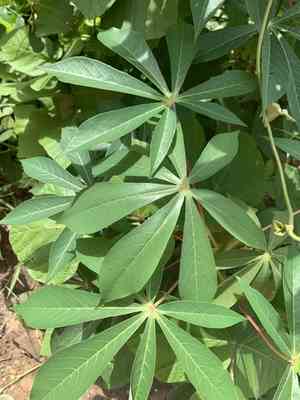
Deeply lobed leaves, 6-12 inches (15-30 cm) long, variegated with white or yellow patterns.
2
Inconspicuous male and female flowers, yellow to cream-colored, 0.2-0.4 inches (5-10 mm) across.
3
Unique 6-angled globose capsule fruit with brown to grey seeds marked with black patches.
4
Bushy herb with elongated tubers and toxic raw roots, requiring proper cooking for consumption.
5
Male and female flowers on the same plant, blooming mainly during warm, rainy seasons.

Scientific Classification of Cassava

Phylum
Vascular plants
Class
Dicotyledons
Order
Malpighiales
Family
Spurge
Genus
Cassava
Species
Cassava

Planting and Growing of Cassava

Care Difficulty
Easy
Watering Schedule
Every 3 days
Sunlight Requirements
Full sun
Sunshine Duration
4-8 hours
Ideal Temperature
75-90℉
Soil Type
Potting Mix, Peat Mix
Soil pH
6.5-7.5
Fertilizer Type
Balanced
Pruning Season
Spring, Summer
Pruning Area
Branches, Leaves
Pruning Frequency
Once a year
Repotting Season
Spring
Pot Type
Plastic, Ceramic

water icon How to Water Cassava?

For Manihot esculenta, ensure the soil is moistened to a depth of 15 centimeters, which generally requires about 500 ml of water. It's important to let the top few centimeters of soil dry out between watering to prevent root rot.
What are the symptoms of an underwatered Cassava?
What should I do if my Cassava is not getting enough water?
What are the symptoms of an overwatered Cassava?
How to save an overwatered Cassava?
More About Watering Techniques

sunlight icon What Are the Sunlight Requirements for Cassava?

Sunlight Requirements: Full sun, Partial sun
Duration of light: 6-8 hours daily
Manihot esculenta flourishes best in full sun to partial sun conditions. This exposure encourages healthy, lively growth, ensuring the plant attains its potential in yield and tuber quality by maximizing photosynthetic activity.
What is the ideal light condition?
How can I achieve this ideal condition?
What benefits does the ideal lighting have?
More About Sunlight Requirements Techniques

temperature icon What Is the Ideal Temperature Range for Cassava?

Ideal Temperature: 75 ~ 90℉
The ideal temperature range for growing Manihot esculenta, commonly known as cassava, is between 75°F and 90°F. This temperature range is optimal for photosynthesis, growth, and nutrient uptake. Ensuring consistent temperatures within this range promotes robust root development, which is crucial for the plant's nutritional and economic value. Attempting to maintain this temperature range typically results in a healthier and more productive crop.

soil icon What Soil is Best for Cassava?

Soil type: Loam, Sandy loam
Soil PH: 6.5 ~ 7.5
Cassava thrives in nutrient-rich soils because they provide essential minerals and nutrients for optimal growth. This leads to robust plant development and increases yield. Well-draining soil prevents waterlogging, which can cause root rot in cassava plants. Ensuring proper drainage helps maintain healthy root systems and promotes vigorous growth. Cassava benefits from soil that retains some moisture without becoming overly saturated, aiding in consistent growth and preventing drought stress during dry periods. More About Soil

fertilize icon How to Fertilize Cassava?

Fertilizer type: Balanced
For Manihot esculenta, the ideal fertilizer amount typically involves applying about 120-150 kg of nitrogen, 30-40 kg of phosphorus, and 70-100 kg of potassium per hectare annually. It's crucial to adjust these amounts based on soil analysis to ensure optimal nutrient content for robust growth. More About Fertilizing Techniques

prune icon How to Prune Cassava?

Pruning Time: Spring, Summer
Start by removing any dead or old growth that no longer contributes to the plant’s productivity. This process opens up space for new shoots and improves air circulation around the plant. Prune branches to maintain an even shape and stimulate bushier growth. By removing erratic growth, the plant can focus energy on developing new, productive branches. More About Pruning Techniques

propagate icon How to Propagate Cassava plant?

Propagate Time: Early spring, Late spring, Summer
1
Begin by choosing healthy machete segments from the Manihot esculenta plant, ensuring that each section includes nodes and is free of disease for optimal growth potential.
2
Trim the cuttings to a length of about 20-30 cm, removing any leaves from the lower part to prevent rotting and to focus energy on root formation.
3
Insert the cuttings vertically into well-draining soil or growing media, ensuring that at least one or two nodes are submerged to facilitate growth.
More About Propagating Techniques

repot icon How to Repot Cassava plant?

Repotting frequency: Every 2-3 years
1
Repotting should be considered when the roots visually crowd the pot or begin protruding from the drainage holes. This signifies that growth is restricted or the current soil has degraded.
2
Select a pot that is slightly larger than the existing one, equipped with drainage holes. This helps to accommodate root growth and ensures proper drainage, preventing root rot.
3
Opt for a well-draining, sandy soil with good aeration. This provides sufficient space and air for root expansion, aids in preventing waterlogging, and supplies vital nutrients for healthy growth.

PlantJoy - Identify plants with a snap

Find the best spots for them to optimize their health, simply using your phone.

Try for Free

Toxicity of Cassava

Is Cassava toxic to humans?

Cassava is a severely toxic plant that can lead to dysfunctional breathing, weakness, depression, spasms, convulsions, pupil dilation, staggering, and even temporary coma if its raw tubers or root peels are consumed. This toxicity arises from the presence of harmful compounds, namely linamarin and lotaustralin, which can release cyanide upon ingestion. It is advised that individuals with a poor, nutrient-deficient diet are at a heightened risk of experiencing the full effects of cassava poisoning, as adequate protein intake assists in the detoxification of cyanide from the body.

Is Cassava toxic to cat?

Cassava presents a moderate toxicity hazard to felines when consumed. The primary threat stems from the plant's leaves and roots. If a cat ingests any portion of the cassava, it may exhibit signs of physical distress, including potential gastrointestinal discomfort. Prompt veterinary attention is critical if you believe that a cat has swallowed cassava, as this will guarantee suitable treatment and avert more serious health complications.

Is Cassava toxic to dog?

Cassava presents a moderate toxicity hazard for dogs. When dogs consume certain parts of this plant, particularly the leaves and roots, they become susceptible to poisoning. The poisoning often occurs when these plant components are swallowed. Upon ingesting cassava, dogs can display a range of symptoms indicative of toxicity. It is crucial for dog owners to keep a vigilant eye on their pets and to seek prompt veterinary assistance if they suspect their dog has ingested any part of cassava. Timely treatment is vital in addressing the toxin's effects and ensuring the well-being and safety of the affected animal.

Identify toxic plants for your safety

Learn which plants are harmful to you and your pets, and make informed choices for a safer home!

Try for Free
WARNING
The judgment on toxicity and danger is for reference only. We DO NOT GUARANTEE any accuracy of such judgment. Therefore, you SHALL NOT rely on such judgment. It is IMPORTANT TO SEEK PROFESSIONAL ADVICE in advance when necessary.
More About Toxic Techniques