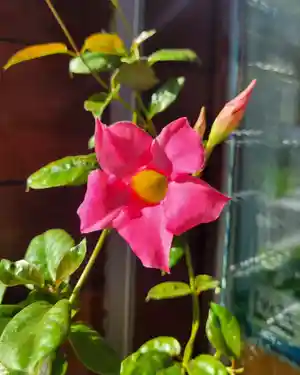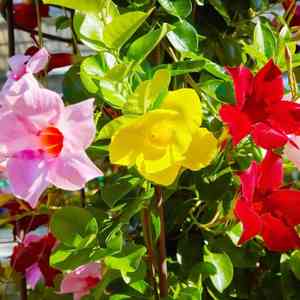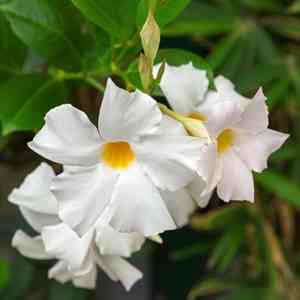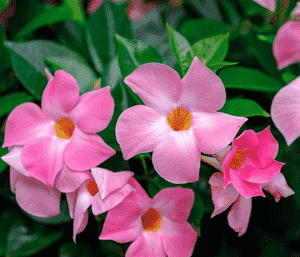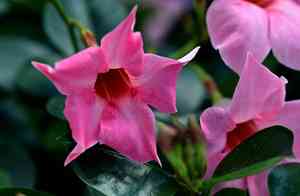
Brazilian jasmine(Mandevilla sanderi)

Brazilian jasmine (Mandevilla sanderi)

Also known as: Brazilian Jasmine, Dipladenia

Mandevilla sanderi, colloquially known as brazilian jasmine, is an ornamental perennial vine native to South America. Its velvety flowers are most often white, scarlet or pink in color. Brazilian jasmine contains white latex, which is toxic and can have an irritating effect when it comes in contact with skin or eyes.

Attributes of Brazilian jasmine

Lifespan
Perennial, Annual
Plant Type
Vine, Herb
Plant Height
1.5 m to 3 m
Spread
90 cm to 1.2 m
Leaf Color
Green
Flower Size
4 cm to 7 cm
Flower Color
Pink Red White Yellow

PlantJoy - Identify plants with a snap

Identify and diagnose plants, get toxicity alerts, and explore safety guides for all types of fungi.

Try for Free

Images of Brazilian jasmine

Brazilian jasmine(Mandevilla sanderi)

Quickly Identify Brazilian jasmine

1
Glossy oval-shaped leaves with a prominent vein pattern, 3 to 8 inches (7.6 to 20.3 cm) long.
2
Showy trumpet-shaped flowers, vibrant pink hue, up to 3 inches (8 cm) in length.
3
Woody stem, twining or climbing, with smooth texture, milky sap, 0.2 to 0.4 inches (0.5 to 1 cm) diameter.
4
Tropical-looking tubular flowers, 3 to 4 inches (7.5 to 10 cm) in diameter, range of colors.
5
Thrives in humid conditions, benefits from drier resting period, suitable for trellises or arches.

Scientific Classification of Brazilian jasmine

Phylum
Vascular plants
Class
Dicotyledons
Order
Gentianales
Family
Dogbane
Genus
Rocktrumpets
Species
Brazilian jasmine

Planting and Growing of Brazilian jasmine

Care Difficulty
Moderate
Watering Schedule
Every 12 days
Sunlight Requirements
Full sun
Sunshine Duration
6-10 hours
Ideal Temperature
65-85℉
Soil Type
Potting Mix, Peat Mix
Soil pH
6.5-7.5
Fertilizer Type
Balanced
Pruning Season
Spring, Summer
Pruning Area
Branches, Leaves
Pruning Frequency
2 times a year
Repotting Season
Spring
Pot Type
Plastic, Ceramic

water icon How to Water Brazilian jasmine?

For Mandevilla sanderi, watering should be deep but infrequent. The goal is to keep the soil moderately moist but not overly saturated. When watering, ensure the water penetrates the soil, approximately 250 ml per session, allowing excess water to drain. This mimics the natural tropical rain cycles, preventing root rot while still providing adequate moisture for growth.
What are the symptoms of an underwatered Brazilian jasmine?
What should I do if my Brazilian jasmine is not getting enough water?
What are the symptoms of an overwatered Brazilian jasmine?
How to save an overwatered Brazilian jasmine?
More About Watering Techniques

sunlight icon What Are the Sunlight Requirements for Brazilian jasmine?

Sunlight Requirements: Full sun, Partial sun
Duration of light: 6 to 8 hours
Mandevilla sanderi thrives in conditions offering partial to full sun. Ideal lighting facilitates healthy foliage, strong growth, and copious flowering, making the plant a stunning addition to gardens.
How much light does Mandevilla sanderi need?
Solution for achieving ideal light conditions
Effects of ideal light on Mandevilla sanderi
More About Sunlight Requirements Techniques

temperature icon What Is the Ideal Temperature Range for Brazilian jasmine?

Ideal Temperature: 65 ~ 85℉
Mandevilla sanderi thrives best in temperatures between 65 and 85 degrees Fahrenheit. Within this range, the plant can optimally perform essential physiological processes, such as photosynthesis and respiration, without unnecessary stress.

soil icon What Soil is Best for Brazilian jasmine?

Soil type: Loam, Sandy loam
Soil PH: 6.5 ~ 7.5
Mandevilla sanderi thrives in well-drained soil; this allows for proper air circulation around the roots, preventing root rot. Such soil ensures that water doesn't stagnate, providing a healthy environment for vigorous growth. While the soil should drain well, retaining some moisture is beneficial. It allows the plant to access water, especially in hot conditions, ensuring sustained hydration and growth without waterlogging. A fertile soil rich in organic matter supports Mandevilla's growth, supplying essential nutrients. This soil condition promotes lush foliage and abundant flowering by providing the necessary nutrition. More About Soil

fertilize icon How to Fertilize Brazilian jasmine?

Fertilizer type: Balanced
Mandevilla sanderi thrives on a balanced application of nutrients. For liquid fertilizers, use a water-soluble, balanced 20-20-20 mix, dissolving about half a tablespoon per gallon of water. For slow-release fertilizers, apply a light 1/3 cup per plant every four months. More About Fertilizing Techniques

prune icon How to Prune Brazilian jasmine?

Pruning Time: Spring, Summer, Autumn
Start by inspecting the plant for dead, damaged, or crossing branches. Use sharp, clean shears to cut back these parts as close to the healthy branch as possible. For shaping, trim back long shoots to encourage a bushier appearance. Keep an eye on symmetry and try to encourage a natural shape. After pruning, it's vital to provide your Mandevilla sanderi with a balanced fertilizer to boost recovery. Water it adequately but ensure proper drainage to avoid root rot. Monitor the plant for any signs of stress or disease, applying appropriate care if necessary. More About Pruning Techniques

propagate icon How to Propagate Brazilian jasmine plant?

Propagate Time: Spring,Summer
1
Choose a healthy Mandevilla stem that is around 6 inches long. Make the cut just below a node, and ensure it is free from diseases or pest infestations.
2
Remove the leaves from the bottom half of the cutting and dip the cut end into rooting hormone to promote root development.
3
Insert the prepared cutting into a container filled with well-draining potting mix, ensuring the node is buried. Water the cutting lightly to settle the soil.
More About Propagating Techniques

repot icon How to Repot Brazilian jasmine plant?

Repotting frequency: Every 1-2 years
1
Mandevilla sanderi should be repotted when its roots start poking out from the drainage holes, or if the plant is becoming root-bound. This typically occurs after active growing seasons. Spring and early summer are the ideal times as it allows the plant to recover and establish in its new pot.
2
Select a pot that is 1-2 inches larger in diameter than the current one. This allows enough room for root growth without overwhelming the plant. A pot with adequate drainage holes is essential to prevent waterlogging, which can lead to root rot, thereby promoting a healthy root system.
3
Use a well-draining potting mix, ideally a blend that includes peat, perlite, and sand. This maintains aeration while retaining enough moisture to nourish the roots. Such a mix ensures that the roots are not sitting in water, reducing the risk of root rot.
More About Repotting Techniques

PlantJoy - Identify plants with a snap

Find the best spots for them to optimize their health, simply using your phone.

Try for Free

Toxicity of Brazilian jasmine

Is Brazilian jasmine toxic to humans?

Incidents of poisoning associated with Brazilian jasmine are primarily due to unintentional exposure to the plant's sap or accidental ingestion. The level of toxicity is relatively low, with such occurrences predominantly affecting inquisitive children or individuals growing this ornamental vine, whether inside or outside. The plant produces a mildly toxic latex found in its leaves and stems, which can lead to dermatitis upon skin contact. Symptoms may manifest as redness, inflammation, and itchiness of the affected skin areas. Ingesting the plant could result in irritation of the throat and stomach, subsequently causing indigestion and potential vomiting.

Is Brazilian jasmine toxic to cat?

The Brazilian jasmine is harmful to cats, and every part of the plant poses a risk of toxicity. Cats might inadvertently consume the plant, resulting in a range of physical ailments and discomfort. If a cat is suspected of having interacted with Brazilian jasmine, it is crucial for owners to promptly take their pet to a veterinary clinic to avert further health complications.

Is Brazilian jasmine toxic to dog?

Brazilian jasmine is a harmful plant for dogs, presenting a serious health hazard if ingested. Dogs might inadvertently consume parts of brazilian jasmine while they are exploring or playing in locations where the plant grows. Every component of brazilian jasmine, including its leaves, stems, and flowers, contains toxic substances that can endanger dogs. Should a dog ingest any portion of brazilian jasmine, it may show symptoms such as vomiting, diarrhea, excessive salivation, or more severe reactions like irregular heart rates. It is imperative for dog owners to remain alert and keep their pets away from areas where brazilian jasmine flourishes. If a dog does consume this plant, prompt veterinary care is vital to secure the best possible prognosis for the affected animal.

Identify toxic plants for your safety

Learn which plants are harmful to you and your pets, and make informed choices for a safer home!

Try for Free
WARNING
The judgment on toxicity and danger is for reference only. We DO NOT GUARANTEE any accuracy of such judgment. Therefore, you SHALL NOT rely on such judgment. It is IMPORTANT TO SEEK PROFESSIONAL ADVICE in advance when necessary.
More About Toxic Techniques