
Wax mallow (Malvaviscus arboreus)
Also known as: Turk's turban, Scotchman's purse, Mexican Apple
A plant that is native to Central America and is often grown in gardens to attract hummingbirds and butterflies is the Turk's Cap, also known as **Malvaviscus arboreus**. This ornamental plant thrives in both sunny and shaded areas. Its distinctive bright red flowers, which resemble a Turkish Turban, are particularly attractive to pollinators. Each flower lasts around two days, providing ample nectar for visiting birds.
In This Article
Attributes of Wax mallow
Lifespan
Perennial
Plant Type
Shrub
Plant Height
30 cm to 60 cm
Spread
2.5 m to 3.5 m
Leaf Color
Green
Flower Size
2 cm
Flower Color
Red White Pink
Images of Wax mallow
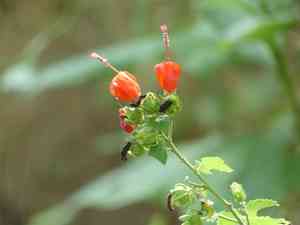
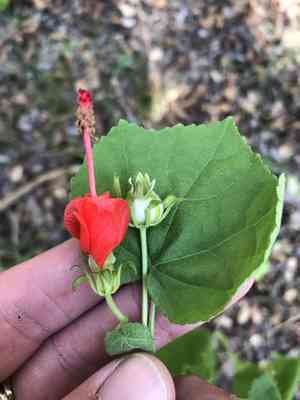
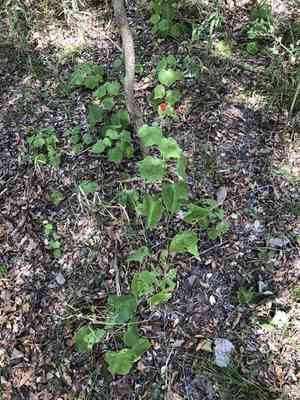
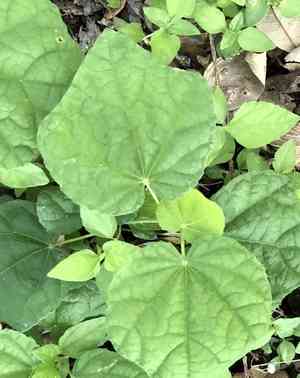
Quickly Identify Wax mallow
1
Showy red flowers with curled petals, attracting birds and butterflies.
2
Vibrant red fleshy capsules housing 3-4 seeds, conspicuous when mature.
3
Downy green leaves, broadly cordate or ovate-cordate, 6-12 cm (2.4-4.7 in) long.
4
Freely-branching shrub up to 15 feet (4.6 m) tall and 12 feet (3.7 m) wide.
5
Stamen and stigma extend beyond upright red petals in the showy flowers.
Scientific Classification of Wax mallow
Phylum
Vascular plants
Class
Dicotyledons
Order
Malvales
Family
Mallow
Genus
Malvaviscus
Species
Wax mallow
Planting and Growing of Wax mallow
Care Difficulty
Easy
Watering Schedule
Every 4 days
Sunlight Requirements
Partial sun
Sunshine Duration
6-10 hours
Ideal Temperature
65-75℉
Soil Type
Potting Mix, Peat Mix
Soil pH
6.5-7.5
Fertilizer Type
Balanced
Pruning Season
Spring, Summer
Pruning Area
Branches, Leaves
Pruning Frequency
2 times a year
Repotting Season
Spring
Pot Type
Plastic, Ceramic
 How to Water Wax mallow?
When watering Malvaviscus arboreus, ensure that you provide around 500 milliliters each time. The goal is to moisten the soil thoroughly without causing waterlogging. Check that the top inch of soil is dry before each watering, ensuring that the plant has enough moisture but isn't standing in water.
More About Watering Techniques→
What are the symptoms of an underwatered Wax mallow?
›
What should I do if my Wax mallow is not getting enough water?
›
What are the symptoms of an overwatered Wax mallow?
›
How to save an overwatered Wax mallow?
›
 What Are the Sunlight Requirements for Wax mallow?
Malvaviscus arboreus thrives best in partial to full sunlight conditions, typically with around 6 to 8 hours. Proper light exposure enables lush foliage, improved flowering, and overall better plant health, capitalizing on its natural phototropic attributes.
More About Sunlight Requirements Techniques→
How much light is ideal for Malvaviscus arboreus?
›
How to achieve ideal lighting at home?
›
What benefits occur from ideal lighting?
›
 What Is the Ideal Temperature Range for Wax mallow?
The ideal temperature range for Malvaviscus arboreus is between 65°F and 75°F. Within this range, the plant experiences optimal growth conditions likely due to its native tropical and subtropical habitats. It ensures proper physiological processes such as photosynthesis and nutrient uptake, which ultimately result in vibrant foliage and abundant flowering.
 What Soil is Best for Wax mallow?
Malvaviscus arboreus thrives best in well-drained soil to prevent root rot and allows for healthy root development. Proper drainage ensures that the roots get the right amount of oxygen, supporting the plant's growth and flowering. This plant benefits from soil enriched with organic matter, such as compost or well-rotted manure. Such additions boost soil fertility, promoting vibrant foliage and abundant blooms. Malvaviscus arboreus prefers a soil that retains moisture but doesn't become waterlogged. Consistent moisture levels help in maintaining the plant's vigor and extending the blooming season.
More About Soil→
 How to Fertilize Wax mallow?
The appropriate amount of fertilizer for Malvaviscus arboreus varies depending on the type. For liquid fertilizers, dilute to half the recommended strength and apply evenly to avoid over-fertilization. For slow-release fertilizers, use approximately one tablespoon per square foot of soil for containers, and slightly more for in-ground plants.
More About Fertilizing Techniques→
 How to Prune Wax mallow?
Start by removing any dead, damaged, or diseased branches to promote healthy growth. Use clean and sharp pruning shears. Next, trim back the branches that seem excessively long or unruly, cutting above a node or an outward-facing bud to encourage desirable growth. Reduce the plant's size by cutting back up to one-third of the oldest stems, which can stimulate new growth. Finally, shape the plant as desired, maintaining a pleasing, balanced form. Immediately after Malvaviscus arboreus finishes flowering, it is beneficial to remove spent flowers and seed pods. This practice is known as deadheading and helps direct the plant's energy toward new growth and future blooms rather than seed production. Regularly tidying the plant after it blooms not only promotes a tidier appearance but also encourages continuous blooming throughout the warmer periods.
More About Pruning Techniques→
 How to Propagate Wax mallow plant?
1
Select healthy, non-flowering stems, and cut 4-6 inch sections from the parent plant. Ensure cuts are made just below a node using a sterilized, sharp tool.
2
Prepare a well-draining potting mix composed of equal parts peat and perlite. This mixture provides the necessary aeration and drainage for root development.
3
Dip the cut end of each cutting in rooting hormone and plant it in the prepared soil mixture. Water lightly to settle the soil around the cutting.
 How to Repot Wax mallow plant?
1
The best time to repot Malvaviscus arboreus is during its active growing periods, in spring or autumn. Look for signals like roots protruding from drainage holes, soil drying out quickly, or stunted growth compared to usual.
2
Select a pot that is 1-2 inches larger in diameter than the current one and ensures good drainage. A slightly oversized pot encourages root growth and avoids waterlogging, which is crucial for healthy plant development.
3
Choose a well-draining potting mix that provides adequate nutrients and aeration. This type of soil prevents root rot and ensures that the Malvaviscus arboreus can grow vibrantly and healthily in its new pot.
Learn More About Wax mallow Diseases
Anthracnose
Bacterial Leaf Spot
Bacterial Wilt
Crown Gall
Damping-off
Downy Mildew
Drought Stress
Fusarium Wilt
Gray Mold
Leaf Curl
Leaf Spot
Mosaic
Nutrient Deficiency
Nutrient Toxicity
Powdery Mildew
Root Rot
Root-knot Nematode
Rusts
Sooty Mold
Spider Mites
Temperature Stress
Thrips Damage
White Mold



