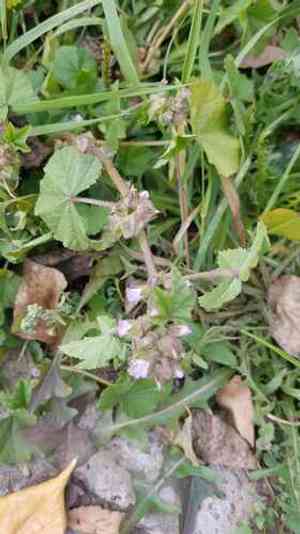
Chinese mallow (Malva verticillata)
Also known as: Curled mallow, Crisped mallow
Since the Tang dynasty, the cultivation of mallow had significantly decreased. In his "Nong Shu," Wang Zhen praised mallow as a premier vegetable, noting that it could serve as a crucial food source during crop failures and could also be preserved and used as a condiment with staple foods. Despite its benefits, mallow was rarely grown or eaten during the Ming dynasty.
In This Article
Attributes of Chinese mallow
Lifespan
Annual
Plant Type
Herb
Plant Height
1 m
Spread
0.5 to 1 meter
Leaf Color
Green
Flower Size
6 mm
Flower Color
Pale pink to white
Images of Chinese mallow
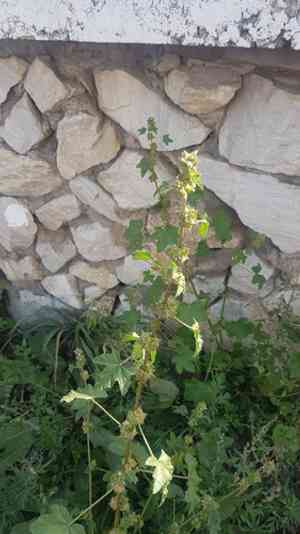
Quickly Identify Chinese mallow
1
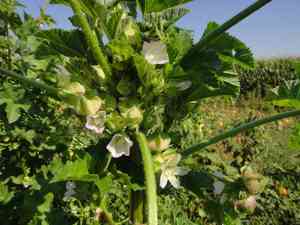
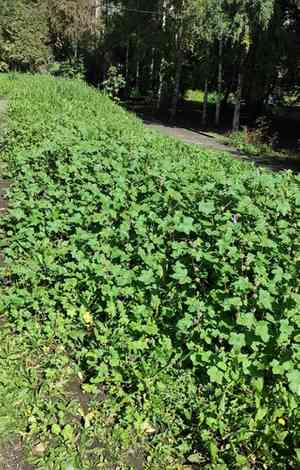
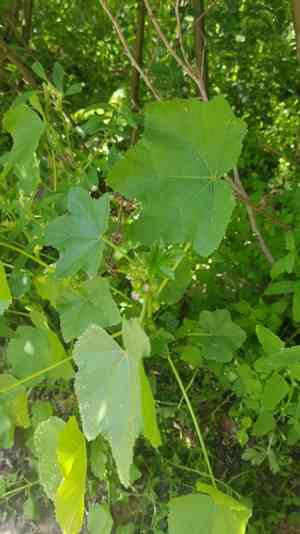
Look for round, lobed leaves with toothed edges. The stems are erect and can be hairy. The flowers are small and pale pink to white, grouped in clusters along the stem.
Scientific Classification of Chinese mallow
Phylum
Vascular plants
Class
Dicotyledons
Order
Mallows, rock-roses, and allies
Family
Mallow
Genus
Mallow
Species
Chinese mallow
Planting and Growing of Chinese mallow
Care Difficulty
Easy
Watering Schedule
Every 4 days
Sunlight Requirements
Full sun
Sunshine Duration
6-10 hours
Ideal Temperature
65-75℉
Soil Type
Potting Mix, Peat Mix
Soil pH
6.5-7.5
Fertilizer Type
Balanced
Pruning Season
Spring, Summer
Pruning Area
Branches, Leaves
Pruning Frequency
2 times a year
Repotting Season
Spring
Pot Type
Ceramic, Plastic
 How to Water Chinese mallow?
The watering amount for Malva verticillata should be enough to moisten the soil throughout the pot. Ensure water reaches 500 ml during each session, which allows the root system to absorb sufficient moisture without causing waterlogging. A thorough watering helps the roots to grow deeper and stronger, promoting better plant health.
What are the symptoms of an underwatered Chinese mallow?
›
What should I do if my Chinese mallow is not getting enough water?
›
What are the symptoms of an overwatered Chinese mallow?
›
How to save an overwatered Chinese mallow?
›
 What Are the Sunlight Requirements for Chinese mallow?
Preferring full sun to partial sun, Malva verticillata benefits from regular sunlight. Optimal light encourages vigorous growth, tactile leaves, and flourishing blooms, ideal for ornamental gardening.
Optimal Lighting for Growth
›
Solution for Urban Spaces
›
Benefits of Ideal Sunlight
›
 What Is the Ideal Temperature Range for Chinese mallow?
The ideal temperature range for growing Malva verticillata is between 65°F and 75°F. This range promotes optimal growth and development, ensuring the plant can photosynthesize efficiently and grow healthy foliage and stems.
 What Soil is Best for Chinese mallow?
Malva verticillata thrives in well-draining soils that prevent waterlogging. This is crucial as it allows roots to access air and avoids root rot, ensuring optimal growth. The plant prefers a soil rich in organic matter, which provides essential nutrients and promotes healthy foliage and flowers. Compost or well-rotted manure can be added to improve soil fertility. While well-draining, the soil should also retain enough moisture to keep the plant hydrated. Organic mulches can help manage moisture levels, leading to more robust plant health.
 How to Fertilize Chinese mallow?
For Malva verticillata, it's optimal to apply a balanced liquid fertilizer diluted to half the recommended strength. Use approximately 100ml per plant to provide nutrients without overwhelming the roots. Make sure the soil is moist before applying, as this helps prevent root burn and ensures an even distribution of nutrients.
 How to Prune Chinese mallow?
Start by using clean, sharp pruning shears. Focus on removing any dead, diseased, or damaged leaves and stems. Cut at a 45-degree angle to prevent water accumulation, which can lead to rot. Clear away any over-crowded branches to improve air circulation and sunlight penetration.
More About Pruning Techniques→
 How to Propagate Chinese mallow plant?
1
Start by filling a seed tray with a quality seed-starting mix. Scatter the seeds evenly on the surface, cover them lightly with soil, and water gently to provide moisture for germination.
2
Use pruning shears to take a 4-6 inch cutting from a healthy parent plant during its growth period. Remove the lower leaves and dip the cut end in rooting hormone to encourage root development.
3
Plant the prepared cuttings into pots filled with a well-draining potting mix. Ensure the cuttings are planted deep enough to support themselves. Water them well and place them in a warm, well-lit area.
 How to Repot Chinese mallow plant?
1
Watch for signs like roots growing through drainage holes or the plant becoming top-heavy and outgrowing its pot. This indicates it's time to repot Malva verticillata. Additionally, if the soil becomes compacted and water isn't permeating, consider repotting.
2
Opt for a pot that is one size larger than the current one, preferably with sufficient drainage holes. A slightly larger pot encourages healthy growth without overwhelming the plant. Avoid excessively large pots to prevent waterlogging and root rot.
3
Use a well-draining potting mix formulated for herbs or flowers. This ensures that roots receive the necessary aeration and nutrients, preventing issues like root rot. A mix with perlite or sand improves drainage, crucial for healthy plant development.
Learn More About Chinese mallow Diseases
Anthracnose
Bacterial Leaf Spot
Bacterial Soft Rot
Bacterial Wilt
Black Spot
Chemical Injury
Cyst Nematode
Damping-off
Downy Mildew
Drought Stress
Fusarium Wilt
Gray Mold
Leaf Curl
Leaf Spot
Mosaic
Nutrient Deficiency
Nutrient Toxicity
Powdery Mildew
Root Rot
Root-knot Nematode
Rusts
Sooty Mold
Spider Mites
Temperature Stress
Thrips Damage
White Mold



