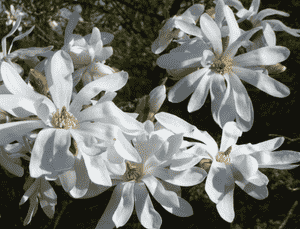
Star magnolia (Magnolia stellata)
Also known as: Star Magnolia, Starry Magnolia
Star magnolia (Magnolia stellata) is a slow-growing shrub originally from Japan, often found in gardens. It thrives in deep, well-drained soils with an acidic to neutral pH. Unlike other magnolias, its narrow petals give it a star-like appearance.
In This Article
Attributes of Star magnolia
Lifespan
Perennial
Plant Type
Shrub
Plant Height
4.5 m to 6 m
Spread
3 m to 4.5 m
Leaf Color
Green
Flower Size
2.5 cm to 8 cm
Flower Color
White Pink
Images of Star magnolia
Quickly Identify Star magnolia
1
Large star-shaped white flowers, 3-4 inches (7.6-10.2 cm) wide, bloom before leaves appear.
2
Distinctive cone-like fruits with vivid orange seeds, 2-2.5 inches (5-6.35 cm) long.
3
Alternate, simple leaves, bronze when young, turning yellow in fall, with reticulate vein pattern.
4
Smooth, grayish-brown stem, 0.3-0.6 inches (0.8-1.5 cm) diameter, with symmetrical branching.
5
Straight trunk with smooth, gray mottled bark, thin texture, recognizable by unique stipule scar.
Scientific Classification of Star magnolia
Phylum
Vascular plants
Class
Dicotyledons
Order
Magnoliales
Family
Magnolia
Genus
Magnolias
Species
Star magnolia
Planting and Growing of Star magnolia
Care Difficulty
Easy
Watering Schedule
Every 2 days
Sunlight Requirements
Full sun
Sunshine Duration
6-10 hours
Ideal Temperature
60-75℉
Soil Type
Potting Mix, Peat Mix
Soil pH
5.5-6.5
Fertilizer Type
Balanced
Pruning Season
Spring, Summer
Pruning Area
Branches, Leaves
Pruning Frequency
Once a year
Repotting Season
Spring
Pot Type
Plastic, Ceramic
 How to Water Star magnolia?
The water amount for Magnolia stellata should be around 1000 ml per session. This amount ensures the soil is moist but not soggy, as this plant prefers consistent but well-drained moisture. Water until you see a few drops from the bottom of the pot, indicating thorough watering.
More About Watering Techniques→
What are the symptoms of an underwatered Star magnolia?
›
What should I do if my Star magnolia is not getting enough water?
›
What are the symptoms of an overwatered Star magnolia?
›
How to save an overwatered Star magnolia?
›
 What Are the Sunlight Requirements for Star magnolia?
Magnolia stellata ideally enjoys full sun to partial sun exposure, flourishing with a mix of direct and diffused sunlight. This balance promotes plentiful blooms and maintains sturdy growth, thereby enhancing its ornamental value in gardens.
More About Sunlight Requirements Techniques→
How much light does Magnolia stellata need?
›
What solutions ensure ideal lighting for Magnolia stellata?
›
What are the benefits of ideal lighting for Magnolia stellata?
›
 What Is the Ideal Temperature Range for Star magnolia?
Magnolia stellata thrives best within an ideal temperature range of 60°F to 75°F. This range supports optimal growth and flowering, ensuring the plant develops robustly. Exposing the plant consistently to temperatures within this range can also reduce the likelihood of stress and enhance its ability to resist diseases.
 What Soil is Best for Star magnolia?
Magnolia stellata thrives in well-drained soil, which prevents root rot and encourages healthy growth. Proper drainage ensures that the plant roots receive the right balance of moisture and air. This plant requires soil that can retain moisture without becoming waterlogged. Moisture retention ensures that the plant maintains sufficient hydration during dry periods, critical for its overall health. Rich, fertile soil is critical for the vigorous growth of Magnolia stellata. The availability of nutrients promotes lush foliage, robust blooms, and overall plant vitality.
More About Soil→
 How to Fertilize Star magnolia?
For Magnolia stellata, it's essential to apply the right amount of fertilizer to ensure healthy growth. Use approximately 1/4 cup of balanced, slow-release granular fertilizer per plant during the growing season. For liquid fertilizers, dilute to half-strength to avoid nutrient burn and apply as per recommended monthly frequency.
More About Fertilizing Techniques→
 How to Prune Star magnolia?
Before you begin pruning your Magnolia stellata, take the time to examine the structure of the plant. Look for the main branches and the natural shape. This will help you identify which areas could benefit from pruning to enhance airflow and light penetration. Start by cutting back any dead, damaged, or diseased branches at their base using sharp, clean pruning shears. Make cuts just above a healthy bud or lateral branch. This encourages new growth and helps maintain the plant's health. Identify any areas where branches are overcrowded. Thin out these sections by removing some branches entirely to allow for better air circulation. This reduces the risk of disease and keeps your magnolia looking elegant and well-maintained. Gently shape your star magnolia by cutting back the tips of overly long branches. This keeps the plant's natural form while ensuring it doesn't become too sparse or unruly. Always step back periodically to assess the overall appearance during the process.
More About Pruning Techniques→
 How to Propagate Star magnolia plant?
1
Choose a healthy, non-flowering shoot from the parent plant that is approximately 6 inches long. Ensure the shoot is disease-free and has a few sets of leaves which will aid in rooting.
2
Remove the lower leaves to expose the nodes where rooting will occur and dip the cut end in rooting hormone. This will stimulate root growth, improving the success rate of propagation.
3
Insert the treated cutting into a pot filled with well-draining potting mix. Water it thoroughly but ensure excess water drains away to prevent rot. Cover with a plastic dome to maintain high humidity.
 How to Repot Star magnolia plant?
1
Look for signs such as the roots emerging from the drainage holes or the plant appearing to be top-heavy and unstable in its pot. If growth seems stunted or the soil is compacted, these are also indicators that it's time to repot.
2
Select a pot slightly larger than the existing one, ideally 2-4 inches in diameter larger. This helps to avoid excessive soil that may retain too much water and lead to root rot. Ensure it has adequate drainage holes to promote a healthy root environment.
3
Opt for a well-draining loamy soil mix. This type of soil helps to retain enough moisture for the roots while providing excellent aeration, which is crucial for the health of Magnolia stellata. A pH level around 5.5 to 6.5 is often ideal.



