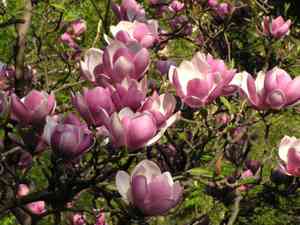
Saucer magnolia (Magnolia soulangeana)
Also known as: Saucer Magnolia, Tulip Tree, Chinese Magnolia
Saucer magnolia (*Magnolia soulangeana*) is a hybrid tree originating in Europe. This popular ornamental is widely grown in the British Isles and the United States due to its ease of cultivation. The cultivar 'Brozzonii' has been honored with the Royal Horticultural Society's Award of Garden Merit.
In This Article
Attributes of Saucer magnolia
Lifespan
Perennial
Plant Type
Tree
Plant Height
6 m to 10 m
Spread
8 m to 9 m
Leaf Color
Green Blue
Flower Size
10 cm to 35 cm
Flower Color
White Pink Purple
Images of Saucer magnolia
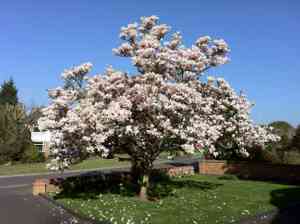
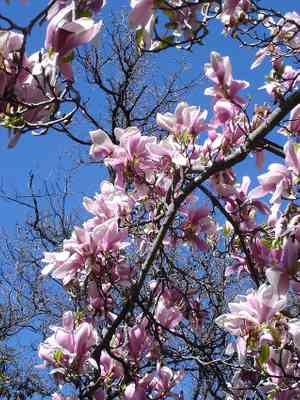
Quickly Identify Saucer magnolia
1
To identify Magnolia soulangeana, look for a multi-stemmed tree or large shrub with smooth, gray bark and saucer-shaped flowers. The flowers appear before the leaves and have six to nine petals in various shades of white, pink, and purple. The leaves are broad, ovate, and dark green in color.
Scientific Classification of Saucer magnolia
Phylum
Vascular plants
Class
Dicotyledons
Order
Magnolias, nutmegs, and allies
Family
Magnolia
Genus
Magnolias
Species
Saucer magnolia
Planting and Growing of Saucer magnolia
Care Difficulty
Easy
Watering Schedule
Every 6 days
Sunlight Requirements
Full sun
Sunshine Duration
4-8 hours
Ideal Temperature
60-75℉
Soil Type
Potting Mix, Peat Mix
Soil pH
6.5-7.5
Fertilizer Type
Balanced
Pruning Season
Spring, Summer
Pruning Area
Branches, Leaves
Pruning Frequency
2 times a year
Repotting Season
Spring
Pot Type
Plastic, Ceramic
 How to Water Saucer magnolia?
The Saucer Magnolia (Magnolia soulangeana) requires thorough watering to ensure moisture reaches the root zone, crucial for sustained growth. Approximately 2500 ml per session is ideal, soaking the soil evenly. Avoid water pooling by ensuring proper drainage.
More About Watering Techniques→
What are the symptoms of an underwatered Saucer magnolia?
›
What should I do if my Saucer magnolia is not getting enough water?
›
What are the symptoms of an overwatered Saucer magnolia?
›
How to save an overwatered Saucer magnolia?
›
 What Are the Sunlight Requirements for Saucer magnolia?
Magnolia soulangeana thrives in 4 to 8 hours of sun. This range fosters optimal blooming and foliage growth by maximizing light energy use efficiently for photosynthesis.
More About Sunlight Requirements Techniques→
Does Magnolia soulangeana prefer full sun or partial shade?
›
How do I provide ideal lighting solutions for Magnolia soulangeana?
›
What benefits does Magnolia soulangeana gain from optimal lighting?
›
 What Is the Ideal Temperature Range for Saucer magnolia?
The ideal temperature range for Magnolia soulangeana is between 60°F to 75°F. This range provides optimal conditions for growth, ensuring the plant can effectively photosynthesize and produce vibrant blooms. Temperatures within this range support the development of strong roots and foliage, enhancing the plant's overall health and resilience to pests and diseases.
 What Soil is Best for Saucer magnolia?
Magnolia soulangeana thrives in nutrient-rich soil, which provides the essential minerals and nutrients necessary for its growth. This encourages healthy foliage and vibrant flowering, ensuring the plant reaches its full ornamental potential. A well-drained environment is crucial for Magnolia soulangeana as it prevents root rot by allowing excess water to escape. This environment ensures that the roots have adequate oxygen, promoting strong root development and overall plant health. The plant requires soil with moderate moisture retention to keep roots hydrated without waterlogging. Retaining moisture helps in consistent nutrient uptake and supports sustained growth during dry spells.
More About Soil→
 How to Fertilize Saucer magnolia?
Magnolia soulangeana prefers a balanced nutrient intake; apply liquid fertilizer diluted to half strength to prevent root burning. Use approximately 1/4-1/2 cup per plant base, ensuring uniform application over the root zone.
More About Fertilizing Techniques→
 How to Prune Saucer magnolia?
The ideal time to prune Magnolia soulangeana is late winter to early spring, immediately after blooming. This timing allows you to shape the plant without losing the next season's flower buds. Focus on cutting out any dead, damaged, or disease-infected branches to promote healthier growth and prevent the spread of pests and diseases. Use pruning to maintain an open center. This helps with air circulation. Thin out branches that are crossing or rubbing against each other to enhance sunlight penetration. Avoid excessive pruning. Magnolias don't respond well to heavy cuts, which can stress the tree and lead to fewer blooms. Instead, focus on light, maintenance pruning.
More About Pruning Techniques→
 How to Propagate Saucer magnolia plant?
1
Collect seeds from a healthy Magnolia soulangeana tree in late summer or early autumn. Allow the seeds to dry before storing them in a cool, dry place until ready for planting.
2
Select a healthy branch of Magnolia soulangeana and cut a 6-8 inch section. Remove the leaves from the lower half and dip the bottom in rooting hormone before planting in moist soil.
3
Grafting involves joining a scion of Magnolia soulangeana to a rootstock. Make a clean cut on both the scion and rootstock, align them closely, and secure with grafting tape to ensure proper healing.
 How to Repot Saucer magnolia plant?
1
Look for signals such as roots growing out of the drainage holes or a noticeable decline in the plant's growth and health. These are clear signs that your Magnolia soulangeana might be craving a larger home and needs repotting.
2
Opt for a pot slightly larger than the current one, with good drainage holes. This will allow the roots more space to grow while preventing water from pooling at the bottom, which can cause root rot.
3
Use a well-draining acidic soil mix, ideally one tailored for azaleas or rhododendrons. This helps maintain the slightly acidic pH that Magnolia soulangeana thrives in, ensuring healthy growth and vibrant blooms.



