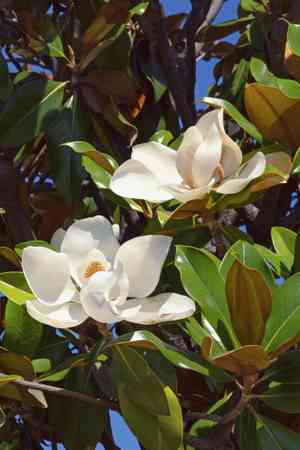
Southern magnolia (Magnolia grandiflora)
Also known as: Evergreen magnolia, Big laurel
The Southern Magnolia is a standout in the southern United States. Renowned for its leathery, dark green oval leaves and striking waxy, fragrant flowers, this tree is a symbol of dignity and nobility. Its white blooms are often used in bridal bouquets to represent purity.
In This Article
Attributes of Southern magnolia
Lifespan
Perennial
Plant Type
Tree
Plant Height
28 m to 37 m
Spread
10 m
Leaf Color
Green Brown
Flower Size
15 cm to 30 cm
Flower Color
White Cream
Images of Southern magnolia
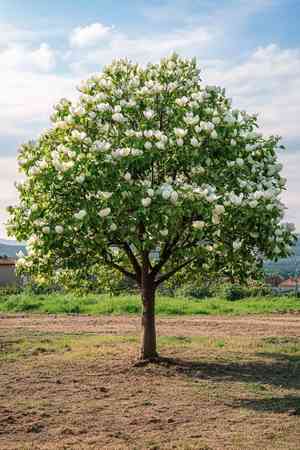
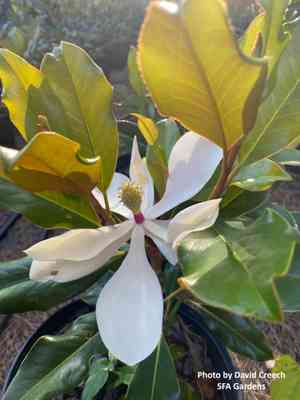
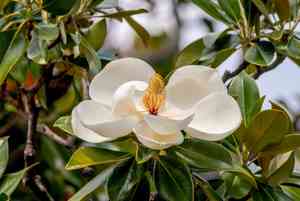
Quickly Identify Southern magnolia
1
Glossy dark green leaves, 5-8 inches (13-20 cm) long, with rusty-brown, felt-like texture on underside.
2
Fragrant, creamy white flowers, 8-12 inches (20-30 cm) in diameter, with 6-12 petals.
3
Spherical fruit clusters, 3-5 inches (7.6-12.7 cm) long, ripening to reveal rose-red seeds.
4
Woody stem, 4 inches (10 cm) in diameter, with rough, grayish-brown bark and horizontal branching.
5
Distinctive bark evolution from smooth to close plates or scales, indicative of age and resilience.
Scientific Classification of Southern magnolia
Phylum
Vascular plants
Class
Dicotyledons
Order
Magnolias, nutmegs, and allies
Family
Magnolia
Genus
Magnolias
Species
Southern magnolia
Planting and Growing of Southern magnolia
Care Difficulty
Easy
Watering Schedule
Every 3 days
Sunlight Requirements
Full sun
Sunshine Duration
4-8 hours
Ideal Temperature
65-77℉
Soil Type
Potting Mix, Peat Mix
Soil pH
5.5-6.5
Fertilizer Type
Balanced
Pruning Season
Spring, Summer
Pruning Area
Branches, Leaves
Pruning Frequency
2 times a year
Repotting Season
Spring
Pot Type
Terracotta, Plastic
 How to Water Southern magnolia?
When watering Magnolia grandiflora, aim to provide around 1000 milliliters per session. Wet the soil evenly until it feels moist at about 2 inches deep. This ensures deep root watering without causing root rot. Always allow the topsoil to dry somewhat between waterings to prevent overwatering.
More About Watering Techniques→
What are the symptoms of an underwatered Southern magnolia?
›
What should I do if my Southern magnolia is not getting enough water?
›
What are the symptoms of an overwatered Southern magnolia?
›
How to save an overwatered Southern magnolia?
›
 What Are the Sunlight Requirements for Southern magnolia?
Magnolia grandiflora performs best in full sun to partial shade, experiencing at least 6 to 8 hours of sunlight daily. This lighting promotes healthy growth, abundant flowering, and disease resistance.
More About Sunlight Requirements Techniques→
How much sunlight is ideal?
›
How to achieve the ideal lighting condition?
›
What are the benefits of ideal sunlight?
›
 What Is the Ideal Temperature Range for Southern magnolia?
The ideal temperature range for growing Magnolia grandiflora is between 65 and 77 degrees Fahrenheit. This range ensures optimal growth and development, providing a stable environment for photosynthesis and other physiological processes. Consistently maintaining temperatures within this range promotes abundant foliage and flowering.
 What Soil is Best for Southern magnolia?
Magnolia grandiflora thrives in soil that allows water to drain freely, preventing root rot. This kind of soil ensures the roots get enough oxygen, promoting vigorous growth and lush foliage. While drainage is important, the soil should retain enough moisture to provide consistent hydration. A loamy texture helps maintain an optimal water balance, crucial for the health of the magnolia. A rich supply of organic matter in the soil supports the tree's growth and flowering. This ensures the magnolia receives sufficient nutrients for development, producing striking and fragrant blossoms.
More About Soil→
 How to Fertilize Southern magnolia?
For Magnolia grandiflora, it is crucial to apply the right amount of fertilizer to maintain healthy growth. Use a balanced 10-10-10 liquid fertilizer, diluted to half strength, applied twice a month. This ensures the roots absorb nutrients efficiently without risking root burn.
More About Fertilizing Techniques→
 How to Prune Southern magnolia?
Magnolia grandiflora should be pruned after flowering, ideally in late spring to early summer. This timing allows the plant to recover quickly and ensures that you are not removing the next season's flower buds. Begin by removing any dead, damaged, or diseased branches. Next, thin out crowded areas to improve air circulation. Trim branches back to a lateral shoot or bud to maintain the desired shape and size. Make cuts at a 45-degree angle to promote healing.
More About Pruning Techniques→
 How to Propagate Southern magnolia plant?
1
Magnolia seeds require a period of cold stratification, typically around 3-6 months in a refrigerator. This process simulates natural winter conditions and encourages germination.
2
For successful cutting propagation, take semi-hardwood cuttings during late spring. Remove the lower leaves and dip the cut end in rooting hormone before planting.
3
Grafting is done in early summer. Techniques like cleft grafting can be used, where a scion is inserted into a cut made in the rootstock. Secure it with grafting tape to ensure it heals properly.
 How to Repot Southern magnolia plant?
1
Repotting a Magnolia grandiflora is best done in the early stages of Spring or early Summer when you notice the roots circling the pot, or there's a slowdown in growth. These are clear signals that the plant needs more space to flourish.
2
Opt for a pot that is at least 2 inches larger in diameter than the current one, with adequate drainage holes. This size gives the roots ample space to grow, ensuring better stability and less frequent disturbances.
3
A well-draining potting mix enriched with organic matter is key for Magnolia grandiflora. Good drainage prevents waterlogging, promoting healthier root growth and reducing the risk of diseases.



