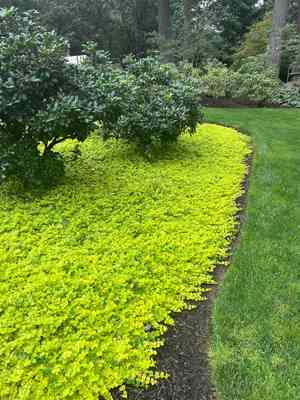
Creeping jenny (Lysimachia nummularia)
Also known as: Two penny grass, Running jenny
The plant known as herb twopence or twopenny grass is botanically named *Lysimachia nummularia*, which translates to "resembling a coin." Often referred to as creeping jenny, this versatile plant is ideal for use as a ground cover and thrives in bog gardens.
In This Article
Attributes of Creeping jenny
Lifespan
Perennial, Annual
Plant Type
Herb
Plant Height
5 cm
Spread
30 cm to 45 cm
Leaf Color
Green Yellow
Flower Size
2 cm
Flower Color
Yellow Gold
Images of Creeping jenny
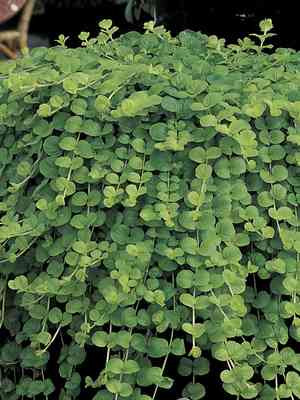
Quickly Identify Creeping jenny
1
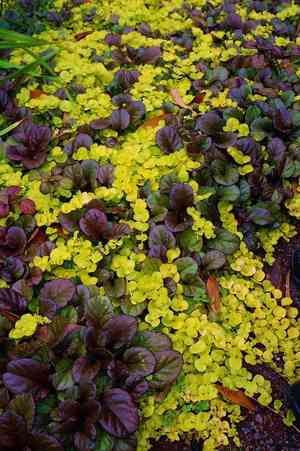
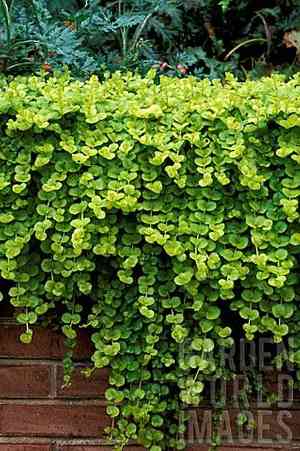
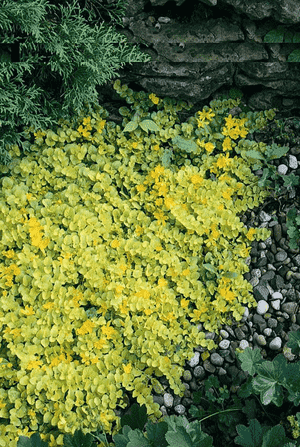
Forms dense, mat-like growth habit.
2
Small, cup-shaped yellow flowers with red dots.
3
Leaves are nearly circular with a glossy finish.
4
Stems are slender, green, and produce roots at leaf nodes.
5
Opposite pairs of roundish leaves with subtle vein patterns.
Scientific Classification of Creeping jenny
Phylum
Vascular plants
Class
Dicotyledons
Order
Heathers and allies
Family
Primrose
Genus
Loosestrifes
Species
Creeping jenny
Planting and Growing of Creeping jenny
Care Difficulty
Easy
Watering Schedule
Every 6 days
Sunlight Requirements
Partial sun
Sunshine Duration
4-6 hours
Ideal Temperature
65-75℉
Soil Type
Potting Mix, Peat Mix
Soil pH
6-7.5
Fertilizer Type
Balanced
Pruning Season
Spring, Summer
Pruning Area
Branches, Leaves
Pruning Frequency
2 times a year
Repotting Season
Spring
Pot Type
Plastic, Ceramic
 How to Water Creeping jenny?
For Lysimachia nummularia, ensure that you water it until the soil is thoroughly moistened but not waterlogged. Around 250 ml per watering session is typically sufficient for a medium-sized pot. This quantity ensures that water penetrates deep into the soil, reaching the roots without creating excess runoff.
More About Watering Techniques→
What are the symptoms of an underwatered Creeping jenny?
›
What should I do if my Creeping jenny is not getting enough water?
›
What are the symptoms of an overwatered Creeping jenny?
›
How to save an overwatered Creeping jenny?
›
 What Are the Sunlight Requirements for Creeping jenny?
Lysimachia nummularia grows best in partial sun conditions, allowing it to receive soft sunlight while being protected from intense heat. This ideal range helps in maintaining healthy foliage and robust growth.
More About Sunlight Requirements Techniques→
What is the best lighting condition for Lysimachia nummularia?
›
How can I provide ideal light conditions?
›
What are the benefits of ideal lighting?
›
 What Is the Ideal Temperature Range for Creeping jenny?
For optimal growth, Lysimachia nummularia thrives in temperatures between 65°F and 75°F. This range provides the perfect environment for photosynthesis and metabolic activities, fostering vibrant foliage and healthy development.
 What Soil is Best for Creeping jenny?
Lysimachia nummularia thrives in well-drained soil that allows for adequate air circulation around the roots. This condition helps prevent root rot and ensures the plant's healthy growth. While good drainage is essential, the soil should retain some moisture to mimic this plant’s natural damp habitats. This balance of moisture is crucial for continuous growth and vibrant foliage. The plant benefits from soil that is rich in organic matter. Nutrient-rich soils promote vigorous growth, lush leaves, and more robust overall plant health.
More About Soil→
 How to Fertilize Creeping jenny?
Lysimachia nummularia, commonly known as creeping jenny, benefits from a moderate amount of fertilizer. When applying liquid fertilizer, dilute the solution to about half the strength recommended for general houseplants. If using slow-release granules, a light sprinkle over the soil surface will suffice, ensuring not to overwhelm the root system.
More About Fertilizing Techniques→
 How to Prune Creeping jenny?
Start by identifying stems that are old, damaged, or excessively long. These can be cut back to a healthy lateral branch or to the base, encouraging new, vigorous growth. Prune the plant to maintain its desired shape, whether it's as a ground cover or in a hanging basket. Trim back any stems that are straying from the main growth pattern to keep it neat. Remove any spent flowers by cutting them off at the base of the bloom. This not only improves the plant's appearance but can also direct energy back into growth rather than seed production.
More About Pruning Techniques→
 How to Propagate Creeping jenny plant?
1
Choose a healthy Lysimachia nummularia plant to take cuttings. Ensure the plant is disease-free and vibrant, as cuttings from a healthy plant have a better chance of successful rooting.
2
Use your pruning shears to take a 4-6 inch cutting from the tip of a healthy stem. Ensure the cut is made just below a leaf node, as this is where roots are likely to develop.
3
Dab the cut end of the cutting in rooting hormone and plant it in a pot filled with well-draining potting mix. Keep the soil moist but not waterlogged to encourage root growth.
 How to Repot Creeping jenny plant?
1
Lysimachia nummularia needs repotting when the roots start crowding and appear from the pot's drainage holes, indicating limited space. Additionally, if the soil becomes compacted or waterlogged, it's time for a fresh start. Spring or early summer are ideal for giving your plant a new home, ensuring robust growth during the active months.
2
Select a pot one size larger with good drainage to prevent root rot and soil sogginess. The pot's material, like terracotta, allows for moisture evaporation while maintaining structure. Prioritizing drainage benefits avoids root diseases, ensuring the plant's prosperous growth and vibrancy.
3
Opt for well-draining loamy soil that balances moisture retention and aeration, preventing suffocation and rot. A good soil mix includes organic matter for nutrients, enabling healthy root expansion and optimizing plant stability. This provides the essential support Lysimachia nummularia requires for healthy, vigorous growth.
Learn More About Creeping jenny Diseases
Anthracnose
Bacterial Leaf Spot
Bacterial Soft Rot
Black Spot
Chemical Injury
Crown Gall
Damping-off
Downy Mildew
Drought Stress
Fusarium Wilt
Gray Mold
Leaf Curl
Leaf Spot
Mosaic
Nutrient Deficiency
Nutrient Toxicity
Powdery Mildew
Root Rot
Root-knot Nematode
Rusts
Sooty Mold
Spider Mites
Temperature Stress
Thrips Damage
White Mold



