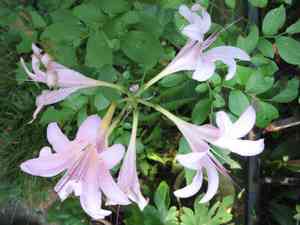
Resurrection lily (Lycoris squamigera)
Also known as: Naked ladies, Hardy amaryllis, Autumn lycoris, Sesame lily
Originating from Japan, the resurrection lily features trumpet-shaped, fragrant flowers that draw in birds and butterflies. Widely cultivated as an ornamental plant, it is ideal for borders, gardens, and pots. Note that its roots are mildly toxic if ingested.
In This Article
Attributes of Resurrection lily
Lifespan
Perennial
Plant Type
Herb
Plant Height
30 cm to 61 cm
Spread
30 cm to 60 cm
Leaf Color
Green
Flower Size
8 cm to 15 cm
Flower Color
Pink
Images of Resurrection lily

Quickly Identify Resurrection lily
1
Strap-like leaves, silver-grayish green, up to 12 inches long (30 cm) and 1 inch wide (2.5 cm).
2
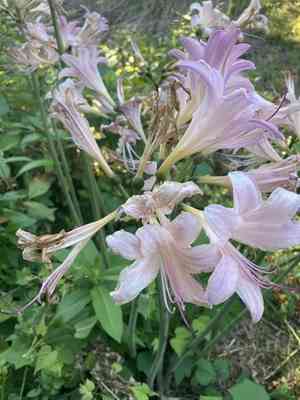
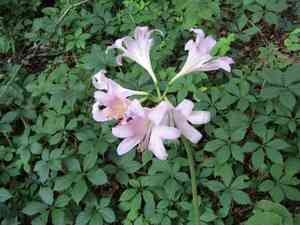
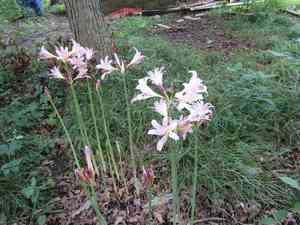
Late summer to fall blooms on 2-foot tall stalks with delicate rose-pink funnel-shaped flowers.
3
Flowers are 3 inches in diameter (7.6 cm) with purplish veins and a fragrant aroma.
4
Cluster of 6-8 slightly nodding flowers on leafless stems, blooming from August to September.
5
Distinctive seasonal growth pattern with leaves appearing first, followed by fragrant flowers in late summer.
Scientific Classification of Resurrection lily
Phylum
Vascular plants
Class
Monocotyledons
Order
Asparagales
Family
Amaryllis
Genus
Spider Lilies
Species
Resurrection lily
Planting and Growing of Resurrection lily
Care Difficulty
Easy
Watering Schedule
Every 2 days
Sunlight Requirements
Full sun
Sunshine Duration
4-8 hours
Ideal Temperature
60-75℉
Soil Type
Potting Mix, Peat Mix
Soil pH
6.5-7.5
Fertilizer Type
Balanced
Pruning Season
Spring, Summer
Pruning Area
Branches, Leaves
Pruning Frequency
2 times a year
Repotting Season
Spring
Pot Type
Plastic, Ceramic
 How to Water Resurrection lily?
For Lycoris squamigera, water it deeply to thoroughly moisten the soil, aiming for approximately 200ml per watering session. Ensure that the water penetrates at least 15cm deep into the soil to adequately reach the roots, yet avoid leaving the soil overly saturated to maintain healthy growth.
More About Watering Techniques→
What are the symptoms of an underwatered Resurrection lily?
›
What should I do if my Resurrection lily is not getting enough water?
›
What are the symptoms of an overwatered Resurrection lily?
›
How to save an overwatered Resurrection lily?
›
 What Are the Sunlight Requirements for Resurrection lily?
Adaptable to both full and partial sun, Lycoris squamigera thrives with a mix offering the vigor of full sun and the protective ease of partial shade, preventing leaf scorch while encouraging lush, continuous blooming.
More About Sunlight Requirements Techniques→
Optimal Light Duration
›
Solution for Obtain Ideal Lighting
›
Benefits of Ideal Light Exposure
›
 What Is the Ideal Temperature Range for Resurrection lily?
The ideal temperature range for Lycoris squamigera is between 60°F and 75°F. This range provides an optimal environment for the plant to thrive, encouraging healthy growth and vibrant blooms. At these temperatures, the plant's physiological processes function efficiently, ensuring robust development. Maintaining this temperature range minimizes stress and enhances the plant's ability to resist diseases and pests.
 What Soil is Best for Resurrection lily?
Lycoris squamigera thrives in well-draining soil, such as loam or sandy loam. This type of soil prevents waterlogging and root rot, ensuring the plant's roots remain healthy and oxygenated. The plant prefers soil with moderate fertility, which provides essential nutrients without the risk of excessive growth that can weaken the structure. Balanced soil fertility supports robust flowering and plant stability. While good drainage is critical, Lycoris squamigera also benefits from soil that retains some moisture. This balance helps maintain consistent hydration during dry spells, promoting sustained growth and vigor.
More About Soil→
 How to Fertilize Resurrection lily?
For Lycoris squamigera, also known as the surprise lily, the fertilization amount should be moderate. Typically, use a balanced liquid fertilizer diluted to half strength for liquid applications. Over-fertilizing can lead to salt accumulation in the soil, impacting plant health. Approximately 1-2 tablespoons of granular slow-release fertilizer should be enough for each application depending on the soil richness and plant size.
More About Fertilizing Techniques→
 How to Prune Resurrection lily?
First, locate and target any dead foliage and flower stems. Carefully snip these at the base to tidy the plant and allow for better air circulation. Removing spent parts helps redirect energy to healthy growth areas. Once the blooming period is over, trim away dead flower heads. This not only tidies the plant's appearance but also ensures that resources aren't wasted on seed production. This technique encourages more vigorous leaf growth.
More About Pruning Techniques→
 How to Propagate Resurrection lily plant?
1
Carefully dig around the clump of Lycoris squamigera bulbs using a garden trowel. Lift the entire cluster out without damaging the bulbs to prepare them for division.
2
Separate the bulbs gently by hand, ensuring each division has roots attached. This process promotes healthy regrowth and reduces overcrowding in the planting area.
3
Plant the divided bulbs at the same depth they were previously growing. Ensure good spacing between bulbs to encourage optimum growth and blooming in the upcoming season.
 How to Repot Resurrection lily plant?
1
Lycoris squamigera should be repotted when you notice reduced growth or the bulbs becoming overcrowded in the container. The ideal time to repot is during early spring before new growth emerges, as this minimizes stress and ensures a good start to the growing season.
2
Select a pot that's slightly larger than the current one, ensuring it has adequate drainage holes. A pot too large can retain excess moisture, leading to bulb rot. Terracotta pots are ideal as they allow the soil to dry out faster, preventing overwatering.
3
Opt for a well-draining, sandy loam mix. This type of soil ensures good drainage and adequate aeration for Lycoris bulbs, reducing the risk of root rot. Incorporating some organic matter will also help provide a steady supply of nutrients.
Toxicity
Ingestion, Skin Contact
WARNING
The judgment on toxicity and danger is for reference only. We DO NOT GUARANTEE any accuracy of such judgment. Therefore, you SHALL NOT rely on such judgment. It is IMPORTANT TO SEEK PROFESSIONAL ADVICE in advance when necessary.



