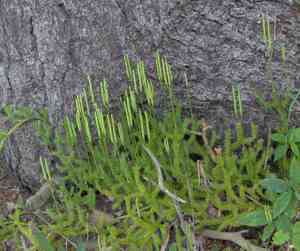
Stag's-horn clubmoss (Lycopodium clavatum)
Also known as: Wolf's claw club moss, Ground pine, Running pine, Stagshorn clubmoos
Stag's-horn clubmoss (Lycopodium clavatum) is a vascular plant that can either grow up to 1 meter tall or spread along the ground, rooting as it extends. Its spores are highly flammable and were traditionally used in magic performances and early photography flashes. This plant is also known by various names, including running pine, wolf's-foot clubmoss, running moss, princess pine, and common clubmoss.
In This Article
Attributes of Stag's-horn clubmoss
Lifespan
Perennial
Plant Type
Herb
Plant Height
10 cm
Spread
20 cm
Leaf Color
Green
Flower Size
Non-flowering plant
Flower Color
Yellow Green Brown
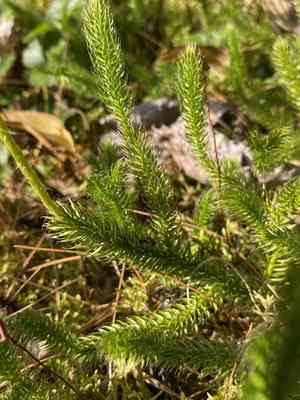
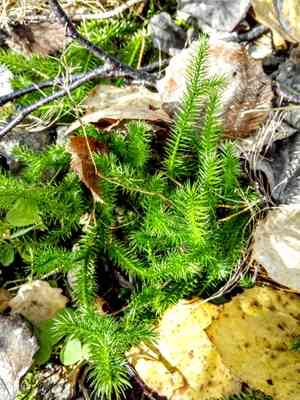
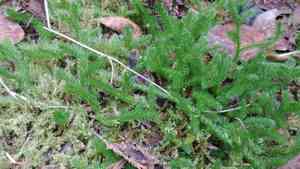
Images of Stag's-horn clubmoss
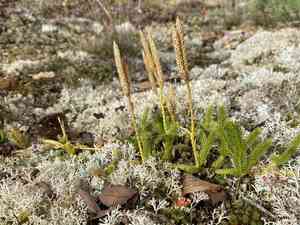
Quickly Identify Stag's-horn clubmoss
1
Needle-like or scale-like leaves, 0.12-0.24 inches (3-6 mm) long, densely packed and bright green.
2
Horizontal stem growth forming clusters, with slender stems measuring about 0.1 inches (2-3 mm) thick.
3
Upright branches 6 to 8 inches (15-20 cm) tall, with reproductive cones or sporangia in leaf axils.
4
Cylindrical strobili containing spores, yellow-green to brown, measuring a few millimeters in length.
5
Evergreen fern-like appearance with arching stems, distinctively lush green foliage and reproductive structures.
Scientific Classification of Stag's-horn clubmoss
Phylum
Vascular plants
Class
Club mosses
Order
Lycopodiales
Family
Clubmosses
Genus
Creeping cedar
Species
Stag's-horn clubmoss
Planting and Growing of Stag's-horn clubmoss
Care Difficulty
Hard
Watering Schedule
Every 2 days
Sunlight Requirements
Partial sun
Sunshine Duration
6-10 hours
Ideal Temperature
60-75℉
Soil Type
Potting Mix, Peat Mix
Soil pH
6.5-7.5
Fertilizer Type
Balanced
Pruning Season
Spring, Summer
Pruning Area
Branches, Leaves
Pruning Frequency
2 times a year
Repotting Season
Spring
Pot Type
Plastic, Ceramic
 How to Water Stag's-horn clubmoss?
For Lycopodium clavatum, the watering should be moderate, ensuring the soil remains moist but not waterlogged. This species thrives in natural environments where water drains quickly, so it's best to water it until the top 1-2 inches of soil feels consistently damp without being excessively saturated.
What are the symptoms of an underwatered Stag's-horn clubmoss?
›
What should I do if my Stag's-horn clubmoss is not getting enough water?
›
What are the symptoms of an overwatered Stag's-horn clubmoss?
›
How to save an overwatered Stag's-horn clubmoss?
›
 What Are the Sunlight Requirements for Stag's-horn clubmoss?
Lycopodium clavatum thrives best in partial sun to full shade. Exposure to soft, filtered light helps it maintain its lush appearance and supports healthy development. Ideal lighting conditions enhance its physiological processes, fostering robust growth.
More About Sunlight Requirements Techniques→
What is the ideal amount of sun exposure?
›
How to create optimal lighting arrangements?
›
What benefits does ideal lighting bring?
›
 What Is the Ideal Temperature Range for Stag's-horn clubmoss?
Lycopodium clavatum thrives in a temperate environment with an ideal temperature range between 60°F and 75°F. Consistent temperatures within this range support optimal growth and prevent stress. It is important to maintain these levels to encourage healthy foliage development.
 What Soil is Best for Stag's-horn clubmoss?
Lycopodium clavatum thrives best in soils that can retain moisture well. This is crucial for maintaining its lush green appearance and preventing desiccation, which can affect the plant's health and growth. The plant benefits from soils rich in organic matter, providing the essential nutrients necessary for its development. A nutrient-dense environment supports robust growth and a vibrant presentation of its foliage. While moisture retention is important, the soil must also offer good drainage to avoid waterlogging. Proper drainage prevents root rot, ensuring a healthy root system and overall plant vitality.
 How to Fertilize Stag's-horn clubmoss?
For Lycopodium clavatum, it's important to use a balanced fertilizer with a nitrogen-phosphorus-potassium (NPK) ratio of 10-10-10 at half strength. Each application should not exceed 25 ml per plant to avoid a nutrient burn risk.
 How to Prune Stag's-horn clubmoss?
Begin by inspecting the plant for any diseased or dying branches. Use a pair of sharp, sterilized scissors to make clean cuts, trimming back the branches to a healthy node. Be mindful to maintain the plant’s natural shape and avoid cutting too close to the base. To maintain an attractive shape, focus on the silhouette of the plant. Trim any wayward branches that disrupt the symmetry. This ensures that the plant remains compact and aesthetically pleasing while also allowing for more light penetration through the canopy.
More About Pruning Techniques→
 How to Propagate Stag's-horn clubmoss plant?
1
Wait until the spore capsules on the plant turn brown and start to open. Collect these capsules carefully to avoid losing the spores. Use a paper bag to catch the spores as they are released.
2
Prepare a sterile medium by mixing peat with sand. The medium should be moist but not waterlogged. Place this medium in a sterile container or tray.
3
Distribute the collected spores evenly over the moist medium. Place the container in a controlled environment with indirect light and maintain high humidity. Avoid direct sunlight to prevent drying out.
 How to Repot Stag's-horn clubmoss plant?
1
Lycopodium clavatum signals the need for repotting when its roots outgrow the current container or soil begins to compact and retain less moisture. These indicators suggest the plant requires more room to flourish.
2
Select a pot that is one size larger than the current one with adequate drainage holes. This allows excess water to escape, preventing root rot and ensuring your plant's health and development.
3
Opt for a free-draining sandy mix, which promotes good air circulation and prevents water logging. This soil blend mimics the plant’s natural environment and enhances its growth potential.



