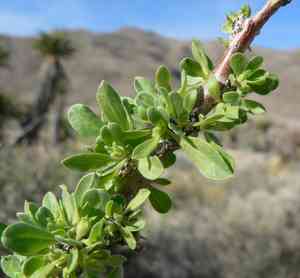
Peach thorn (Lycium cooperi)
Also known as: Cooper's wolfberry, Peach thorn
The inflorescence consists of a compact group of tubular flowers about 1-2 cm in length, including the base calyx formed by fleshy sepals. The flowers are white or greenish with lavender or green veins. The corolla forms a tube that opens into a face with four or five lobes. The fruit is a small yellow or orange berry, less than a centimeter in diameter, and houses numerous seeds.
In This Article
Attributes of Peach thorn
Lifespan
Perennial
Plant Type
Shrub
Plant Height
Up to 1.5 meters (5 feet)
Spread
Approximately 1 meter (3 feet)
Leaf Color
Green
Flower Size
Up to 0.7 centimeters (0.28 inches)
Flower Color
White to greenish
Images of Peach thorn

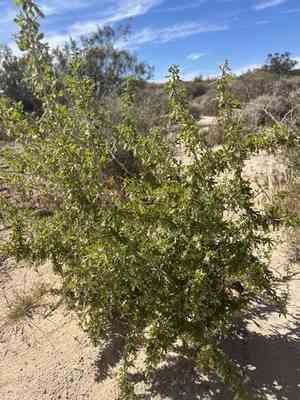
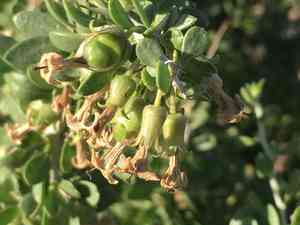
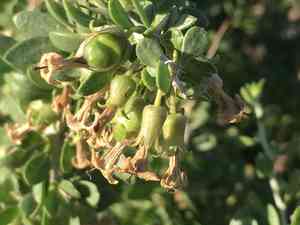
Quickly Identify Peach thorn
1
Lycium cooperi can be identified by its thorny branches, small linear to lanceolate leaves, and clusters of tubular white to greenish flowers followed by small red or orange berries. The plant often forms dense thickets.
Scientific Classification of Peach thorn
Phylum
Vascular plants
Class
Dicotyledons
Order
Solanales
Family
Nightshade
Genus
Box-thorns
Species
Peach thorn
Planting and Growing of Peach thorn
Care Difficulty
Moderate
Watering Schedule
Every 2 days
Sunlight Requirements
Full sun
Sunshine Duration
4-8 hours
Ideal Temperature
70-80℉
Soil Type
Potting Mix, Peat Mix
Soil pH
6.5-7.5
Fertilizer Type
Balanced
Pruning Season
Spring, Summer
Pruning Area
Branches, Leaves
Pruning Frequency
2 times a year
Repotting Season
Spring
Pot Type
Ceramic, Plastic
 How to Water Peach thorn?
When watering Lycium cooperi, ensure that the water amount is sufficient to moisten the soil without causing it to become waterlogged. You should aim for about 500 milliliters each time, enough to reach the roots without excess pooling at the bottom.
What are the symptoms of an underwatered Peach thorn?
›
What should I do if my Peach thorn is not getting enough water?
›
What are the symptoms of an overwatered Peach thorn?
›
How to save an overwatered Peach thorn?
›
 What Are the Sunlight Requirements for Peach thorn?
Ideal light conditions for Lycium cooperi are achieved in full to partial sun settings, mimicking its natural environment. Here, the plant enjoys ample sunlight that promotes energetic growth and development.
Optimal Light Exposure
›
Challenges and Solutions
›
Benefits of Ideal Light
›
 What Is the Ideal Temperature Range for Peach thorn?
Lycium cooperi thrives best in temperatures ranging from 70 to 80 degrees Fahrenheit. This range provides an ideal balance of warmth necessary for vital physiological processes, promoting healthy growth and development.
 What Soil is Best for Peach thorn?
Lycium cooperi thrives in well-drained soil, which helps prevent root rot. The porous texture allows water to drain effectively, ensuring that the roots receive the right balance of moisture and air. This plant prefers sandy soil as it mimics its natural desert habitat. Sandy soil provides excellent drainage and heating properties, allowing the plant to access nutrients easily without the risk of waterlogging. A pH range of 6.5 to 7.5 is ideal for Lycium cooperi, helping it absorb nutrients effectively. This pH range supports healthy microbial activity, contributing to robust plant growth and fruit production.
 How to Fertilize Peach thorn?
Lycium cooperi prefers a balanced fertilizing approach. Use a liquid fertilizer with a 10-10-10 NPK ratio, diluted to half strength. Apply approximately 4-6 tablespoons per gallon of water. For slow-release fertilizer, distribute around 2 pounds per 100 square feet.
 How to Prune Peach thorn?
Start by removing any dead or diseased branches. Cut them back to healthy wood, making clean cuts just above a healthy bud or lateral branch. This helps prevent disease spread and encourages robust growth. Trim the outside branches to create a balanced shape. Think of it as giving the plant a haircut to maintain its structure, promoting a fuller look by cutting just above an outward-facing bud. Prune back some older growth to stimulate new shoot development. This encourages bushier growth and can lead to more prolific flowering in subsequent seasons.
More About Pruning Techniques→
 How to Propagate Peach thorn plant?
1
For seed propagation, start by preparing a well-draining potting mix. Use a combination of sand, peat, and perlite to create a medium that provides both moisture retention and good drainage.
2
Sow the seeds evenly on the surface of the prepared medium and cover them lightly with a thin layer of the same mix. Ensure the seeds are kept moist but not waterlogged to encourage germination.
3
For cutting propagation, select healthy, non-flowering stems and cut approximately 4-6 inches in length. Remove the lower leaves, leaving a few at the top, and dip the cut end in rooting hormone.
 How to Repot Peach thorn plant?
1
Look for roots escaping through drainage holes or if the plant shows stunted growth. These signs indicate that your Lycium cooperi has outgrown its current pot and needs more space. Repotting during the growing seasons of spring and summer allows the plant to settle faster.
2
Select a pot that's 1-2 inches larger in diameter than the current one. Ensure it has good drainage to prevent waterlogging, which Lycium cooperi dislikes. A slightly larger pot provides enough room for root growth and helps maintain a healthy plant.
3
Opt for a well-draining sandy mix, a preferred choice for Lycium cooperi. This type of soil imitates its natural desert habitat, assisting in the prevention of root rot by allowing water to drain quickly and reducing the risk of soggy roots.
Learn More About Peach thorn Diseases
Anthracnose
Bacterial Leaf Spot
Bacterial Soft Rot
Bacterial Wilt
Black Spot
Chemical Injury
Crown Gall
Damping-off
Downy Mildew
Drought Stress
Fusarium Wilt
Gray Mold
Leaf Curl
Leaf Spot
Mosaic
Nutrient Deficiency
Nutrient Toxicity
Powdery Mildew
Root Rot
Root-knot Nematode
Rusts
Sooty Mold
Spider Mites
Temperature Stress
Thrips Damage
White Mold



