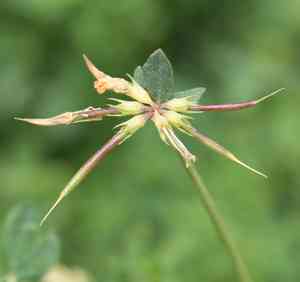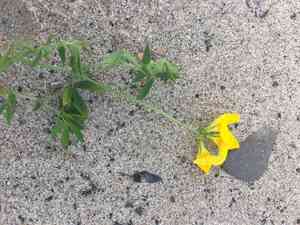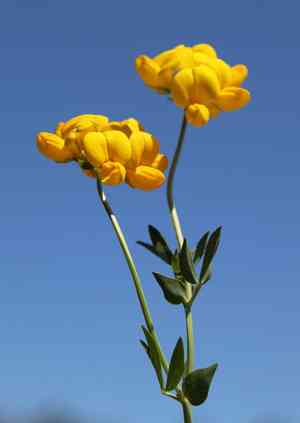
Common bird's-foot trefoil(Lotus corniculatus)

Common bird's-foot trefoil (Lotus corniculatus)

Also known as: Ground honeysuckle

Birdsfoot Trefoil (Lotus corniculatus) is a widely distributed perennial flowering plant found across Europe and North America. It is frequently incorporated into livestock feed to prevent bloating. Known in Britain as "butter and eggs" because of its vibrant yellow and orange flowers, it also attracts bumblebees. However, it is considered invasive in North America and Australia.

Attributes of Common bird's-foot trefoil

Lifespan
Perennial
Plant Type
Herb
Plant Height
10 cm to 50 cm
Spread
40 cm
Leaf Color
Green
Flower Size
1 cm to 1.4 cm
Flower Color
Yellow Red

ForwardPlant - Identify plants with a snap

Identify and diagnose plants, get toxicity alerts, and explore safety guides for all types of fungi.

Try for Free

Images of Common bird's-foot trefoil
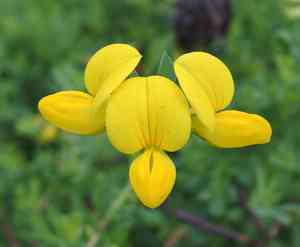
Common bird's-foot trefoil(Lotus corniculatus)

Quickly Identify Common bird's-foot trefoil

1
The plant can be identified by its bright yellow flowers which appear in clusters, and its characteristic seed pods that resemble a bird's foot. It has compound leaves with five leaflets and a creeping growth habit.

Scientific Classification of Common bird's-foot trefoil

Phylum
Vascular plants
Class
Dicotyledons
Order
Legumes, milkworts and allies
Family
Legume
Genus
Lotus
Species
Common bird's-foot trefoil

Planting and Growing of Common bird's-foot trefoil

Care Difficulty
Easy
Watering Schedule
Every 4 days
Sunlight Requirements
Full sun
Sunshine Duration
4-6 hours
Ideal Temperature
60-77℉
Soil Type
Potting Mix, Peat Mix
Soil pH
6.5-7.5
Fertilizer Type
Balanced
Pruning Season
Spring, Summer
Pruning Area
Branches, Leaves
Pruning Frequency
2 times a year
Repotting Season
Spring
Pot Type
Plastic, Ceramic

water icon How to Water Common bird's-foot trefoil?

Lotus corniculatus prefers moderate watering, ensuring the soil remains moist but not waterlogged. As a general rule, water until the top 3 cm of soil feels saturated, but avoid leaving standing water.
What are the symptoms of an underwatered Common bird's-foot trefoil?
What should I do if my Common bird's-foot trefoil is not getting enough water?
What are the symptoms of an overwatered Common bird's-foot trefoil?
How to save an overwatered Common bird's-foot trefoil?

sunlight icon What Are the Sunlight Requirements for Common bird's-foot trefoil?

Sunlight Requirements: Full sun, Partial sun
Duration of light: 6 to 8 hours
Lotus corniculatus prefers full to partial sun, meaning at least 6 to 8 hours of direct sunlight. This range ensures the plant produces vibrant blooms and vigorous growth, contributing to its overall health and beauty.
What is the best type of light?
Solutions to achieve ideal lighting
Benefits of ideal lighting

temperature icon What Is the Ideal Temperature Range for Common bird's-foot trefoil?

Ideal Temperature: 60 ~ 77℉
Lotus corniculatus thrives best in temperatures between 60°F and 77°F. Maintaining this temperature range ensures optimal enzyme activity and metabolic processes required for growth and development.

soil icon What Soil is Best for Common bird's-foot trefoil?

Soil type: Sandy soil, Loam, Calcareous soil, Sandy loam
Soil PH: 6.5 ~ 7.5
Lotus corniculatus thrives in well-drained soil conditions. This requirement prevents waterlogged roots and promotes healthy plant growth by allowing excess moisture to escape efficiently, thus preventing root rot. A nutrient-rich substrate is pivotal for the growth of Lotus corniculatus. A fertile ground ensures sufficient availability of essential nutrients, enhancing vigorous growth and a lush, vibrant green appearance. The soil should maintain moderate moisture levels for optimal growth. Adequate moisture helps in nutrient absorption, yet it prevents the risk of overwatering, ensuring a balanced hydration level for thriving health.

fertilize icon How to Fertilize Common bird's-foot trefoil?

Fertilizer type: Balanced
For Lotus corniculatus, it's important to use a balanced, all-purpose fertilizer. When applying liquid fertilizer, dilute it to half the strength recommended on the label to avoid nutrient burning. For slow-release fertilizer, apply at the rate specified by the manufacturer, typically around 30 grams per square meter.

prune icon How to Prune Common bird's-foot trefoil?

Pruning Time: Spring, Summer, Autumn, Winter
Begin by sterilizing your pruning shears with rubbing alcohol to prevent disease spread. Identify spent blooms and dead stems; remove these first to keep the plant vigorous. Trim the plant by cutting back approximately one-third of its length, which stimulates new growth and flowering. Always make cuts above a leaf node to foster branching. Regular checking and removal of dead flowers encourage further blooming.

propagate icon How to Propagate Common bird's-foot trefoil plant?

Propagate Time: Spring, Late spring, Early spring
1
Gather fresh Lotus corniculatus seeds and soak them in water for 24 hours to soften the hard seed coat. This process improves the germination rate by allowing moisture to more easily penetrate the seeds.
2
Select healthy, non-flowering shoots and cut a 10 cm segment using a sharp pruner. Trim the leaves on the lower half and dip the cutting into rooting hormone to enhance rooting efficacy.
3
For seeds, place them in seed starter trays filled with well-draining soil. For cuttings, insert into a pot containing a mixture of perlite and peat. Provide consistent moisture and indirect sunlight.
More About Propagating Techniques

repot icon How to Repot Common bird's-foot trefoil plant?

Repotting frequency: Every 1-2 years
1
Lotus corniculatus, commonly known as Bird's Foot Trefoil, should be repotted when its roots start poking through the drainage holes or when the soil no longer retains water as effectively. These are signals that it's time to provide a fresh environment for optimum growth.
2
Choose a pot that is slightly larger than the current one, with good drainage. The new pot should offer just enough additional space for root expansion, avoiding excessive soil that could lead to waterlogged conditions and root rot. A ceramic or terracotta pot is ideal due to its breathability.
3
Opt for a well-draining loam soil, enriched with organic matter. This type of soil ensures that excess water drains quickly, reducing the risk of root rot while still providing necessary nutrients. It forms an excellent balance between retaining moisture and facilitating airflow to the roots.

ForwardPlant - Identify plants with a snap

Find the best spots for them to optimize their health, simply using your phone.

Try for Free

Toxicity of Common bird's-foot trefoil

Is Common bird's-foot trefoil toxic to cat?

The common bird's-foot trefoil contains a moderate level of toxicity and poses a significant threat to feline health if consumed, as every part of this plant is toxic to cats. When exposed to common bird's-foot trefoil, affected animals may show signs of physical discomfort or illness. Therefore, it is essential for cat owners to remain vigilant and ensure their pets cannot access any part of common bird's-foot trefoil, keeping these plants well out of reach. In the event that a cat is suspected of ingesting common bird's-foot trefoil, it is crucial to seek prompt veterinary attention to address the effects of the poisoning.

Is Common bird's-foot trefoil toxic to dog?

The plant species known as common bird's-foot trefoil is categorized as exhibiting moderate toxicity towards dogs. If a dog ingests any part of this plant, it can lead to poisoning, as all its components are deemed toxic. Following the consumption of common bird's-foot trefoil, a dog may show a range of symptoms associated with poisoning. These might include gastrointestinal distress, such as vomiting and diarrhea, as well as more serious manifestations like lethargy or behavioral changes indicating systemic issues. Dog owners must vigilantly supervise their pets and restrict access to common bird's-foot trefoil to mitigate the risk of poisoning. Should a dog ingest any portion of this plant, it is vital to seek prompt veterinary assistance to ensure the best possible outcome for the animal.

Identify toxic plants for your safety

Learn which plants are harmful to you and your pets, and make informed choices for a safer home!

Try for Free
WARNING
The judgment on toxicity and danger is for reference only. We DO NOT GUARANTEE any accuracy of such judgment. Therefore, you SHALL NOT rely on such judgment. It is IMPORTANT TO SEEK PROFESSIONAL ADVICE in advance when necessary.
More About Toxic Techniques