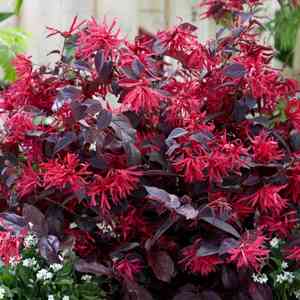
Chinese fringe flower (Loropetalum chinense)
Also known as: Strap flower, Fringe flower
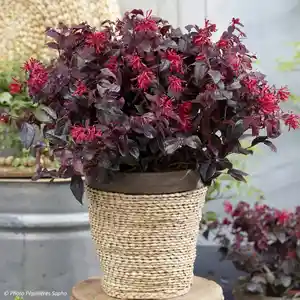
Loropetalum chinense, also known as Chinese fringe flower, is an evergreen shrub originating from the woodlands of China, Southeast Asia, and Japan. The plant is widely grown in gardens and planters due to its appealing aesthetics. Notably, certain varieties feature striking purple foliage and bright pink blossoms, making them particularly sought after. The leaves of this species have a somewhat rough texture.
In This Article
Attributes of Chinese fringe flower
Lifespan
Perennial
Plant Type
Tree, Shrub
Plant Height
1.5 m to 1.8 m
Spread
1.8 m to 3 m
Leaf Color
Green
Flower Size
2.5 cm
Flower Color
White Pink Red Cream
Images of Chinese fringe flower



Quickly Identify Chinese fringe flower
1
Pubescent leaves with asymmetrical bases and sandpapery texture.
2
Distinctive 4-petaled, wavy, strap-like white flowers in clusters.
3
Nut-like, woody capsules with 2-valved structure and brown hairs.
4
Slender, densely pubescent stems with a fuzzy texture and solid green pith.
5
Rounded, vase-shaped habit with arching branches and pliable new growth.
Scientific Classification of Chinese fringe flower
Phylum
Vascular plants
Class
Dicotyledons
Order
Saxifrages, stonecrops and allies
Family
Witch-hazel
Genus
Chinese witch hazel
Species
Chinese fringe flower
Planting and Growing of Chinese fringe flower
Care Difficulty
Easy
Watering Schedule
Every 4 days
Sunlight Requirements
Full sun
Sunshine Duration
6-10 hours
Ideal Temperature
60-77℉
Soil Type
Potting Mix, Peat Mix
Soil pH
6.5-7.5
Fertilizer Type
Balanced
Pruning Season
Spring, Summer
Pruning Area
Branches, Leaves
Pruning Frequency
2 times a year
Repotting Season
Spring
Pot Type
Plastic, Ceramic
 How to Water Chinese fringe flower?
When watering Loropetalum chinense, ensure the soil is thoroughly soaked but not waterlogged. Stick your finger into the soil about an inch deep; if it's dry at that depth, it's time to water. Around 500ml per session is ideal, depending on pot size and climate. The idea is to get the soil damp but not to the point where water is pooling on the surface.
What are the symptoms of an underwatered Chinese fringe flower?
›
What should I do if my Chinese fringe flower is not getting enough water?
›
What are the symptoms of an overwatered Chinese fringe flower?
›
How to save an overwatered Chinese fringe flower?
›
 What Are the Sunlight Requirements for Chinese fringe flower?
Partial sun with some morning direct light exposure ensures optimal growth, flowering, and foliage coloration in Loropetalum chinense.
More About Sunlight Requirements Techniques→
Optimal Sun Exposure
›
Solution for Ideal Lighting
›
Benefits of Ideal Light
›
 What Is the Ideal Temperature Range for Chinese fringe flower?
Loropetalum chinense thrives best in an environment where the temperature ranges from 60°F to 77°F. This range ensures optimal growth and flowering by maintaining adequate metabolic activity in the plant.
 What Soil is Best for Chinese fringe flower?
Loropetalum chinense thrives in well-draining soil to prevent root rot. This characteristic ensures that the plant receives adequate oxygenation and reduces the risk of fungal diseases, promoting healthier growth and vibrant blooms. Offering a pH range from 6.5 to 7.5, the plant prefers slightly acidic to neutral soil. This range allows optimal nutrient absorption, essential for lush foliage and sustained flowering. Loropetalum chinense requires soil that retains moisture yet avoids sogginess. Proper moisture levels are critical for consistent growth and maintaining the plant's overall vigor.
 How to Fertilize Chinese fringe flower?
Loropetalum chinense benefits from a balanced approach to fertilization. Apply approximately 1/2 cup of granular fertilizer per plant in a single application. If using liquid fertilizer, dilute it according to the manufacturer’s instructions and ensure even distribution around the base. The right amount helps maintain vibrant foliage and healthy growth.
 How to Prune Chinese fringe flower?
Start by using clean, sharp shears to remove any dead or damaged branches. This encourages new growth and prevents diseases. Next, trim back any overly long branches to maintain the desired shape and size. Ensure you make clean cuts at a 45-degree angle to facilitate healing. Regularly check for suckers or water sprouts and remove them to direct energy to the main plant. If your Loropetalum chinense has become too woody or overgrown, consider rejuvenation pruning. This involves cutting back up to one-third of the plant to stimulate new growth. Focus on thinning out dense areas to improve air circulation and light penetration, which helps prevent fungal diseases and encourages a fuller plant structure.
More About Pruning Techniques→
 How to Propagate Chinese fringe flower plant?
1
Choose branches that are healthy and free from disease as cuttings. These should be semi-hardwood, featuring some flexibility but not too green or old.
2
Cut a length of around 4-6 inches and remove the leaves from the lower half. Dip the cut end in rooting hormone to promote root development.
3
Place the prepared cuttings in a potting mix that retains moisture while providing good drainage. Maintain a humid environment by covering with a plastic bag or using a misting system.
 How to Repot Chinese fringe flower plant?
1
Loropetalum chinense should be repotted when its roots begin to congest the pot or emerge through the drainage holes. This often occurs every 2-3 years. Spring and autumn are ideal as the plant is not in its peak growing phase, minimizing transplant shock.
2
Choose a pot with adequate drainage to prevent waterlogging. It should be slightly larger than the current one to facilitate growth. The material should allow breathability; terracotta is a good choice. This fosters a stable environment and reduces root rot risk.
3
Select an acidic, well-draining potting mix for optimal growth. A mix designed for azaleas or camellias works well due to similar soil requirements. The right soil prevents nutrient lockout and ensures efficient water absorption.



