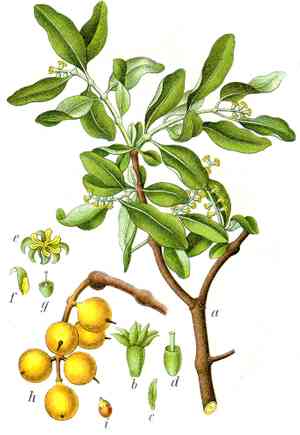
Mulberry mistletoe (Loranthus) (Loranthus)
Also known as: Mistletoe
Loranthus is a genus of parasitic plants commonly known as mistletoe. These plants attach to and penetrate the branches of a tree or shrub by their roots to absorb water and nutrients.
In This Article
Attributes of Mulberry mistletoe (Loranthus)
Lifespan
Perennial
Plant Height
0.5 to 1 meter
Spread
Varies depending on the host tree; generally forms clumps up to 1 meter in diameter
Leaf Color
Green
Flower Size
Small, about 1-2 cm
Flower Color
Usually yellow, green, or white
Images of Mulberry mistletoe (Loranthus)
Quickly Identify Mulberry mistletoe (Loranthus)
1
Loranthus species can be identified by their green, leathery leaves, which are often opposite, and their parasitic growth on host trees. They usually have small, tubular flowers and produce berries that are often white or red.
Scientific Classification of Mulberry mistletoe (Loranthus)
Phylum
Magnoliophyta
Class
Magnoliopsida
Order
Santalales
Family
Loranthaceae
Genus
Loranthus
Planting and Growing of Mulberry mistletoe (Loranthus)
Care Difficulty
Hard
Watering Schedule
Every 3 days
Sunlight Requirements
Partial sun
Sunshine Duration
4-6 hours
Ideal Temperature
65-80℉
Soil Type
Potting Mix, Peat Mix
Soil pH
5.5-8
Fertilizer Type
Balanced
Pruning Season
Spring, Summer
Pruning Area
Branches, Leaves
Pruning Frequency
2 times a year
Repotting Season
Spring
Pot Type
Plastic, Ceramic
 How to Water Mulberry mistletoe (Loranthus)?
When watering Loranthus, aim to give around 200 milliliters per session, ensuring the soil is adequately moist but not waterlogged. This plant thrives with moderate water levels, as excess water can lead to root rot and other complications.
What are the symptoms of an underwatered Mulberry mistletoe (Loranthus)?
›
What should I do if my Mulberry mistletoe (Loranthus) is not getting enough water?
›
What are the symptoms of an overwatered Mulberry mistletoe (Loranthus)?
›
How to save an overwatered Mulberry mistletoe (Loranthus)?
›
 What Are the Sunlight Requirements for Mulberry mistletoe (Loranthus)?
Loranthus thrives best with partial sun exposure. Ideal lighting supports vigorous growth, ensuring vibrant foliage and robust health.
Is Loranthus suitable for full sun exposure?
›
How can I ensure my Loranthus get enough indirect light?
›
What are the benefits of providing ideal light conditions for Loranthus?
›
 What Is the Ideal Temperature Range for Mulberry mistletoe (Loranthus)?
Loranthus thrives best within a temperature range of 65 to 80 degrees Fahrenheit. This range ensures optimal growth, as the plant can efficiently perform essential physiological processes without stress. Maintaining the temperature within this range helps promote healthy leaf development and robust flowering, which are indicative of a well-nurtured plant.
 What Soil is Best for Mulberry mistletoe (Loranthus)?
Loranthus thrives in nutrient-rich soils that provide essential minerals and organic matter for optimal growth. This type of soil ensures the plant has access to the necessary nutrients to develop sturdy branches and vibrant foliage. Well-drained soil is crucial for Loranthus as it prevents water from pooling around the roots, which can lead to root rot. The right balance of moisture retention and drainage promotes healthy root development and overall plant vigor. Slightly alkaline soils, with a pH closer to the upper limit of its tolerance, can enhance the plant's nutrient uptake efficiency. This environment supports better growth and increases resistance to certain soil-borne diseases.
 How to Fertilize Mulberry mistletoe (Loranthus)?
When fertilizing Loranthus, it is crucial to use a balanced fertilizer. A standard rate of application could be approximately 20 grams per square meter for granular fertilizers. For liquid fertilizers, a dilution rate of 1:200 is generally effective.
 How to Prune Mulberry mistletoe (Loranthus)?
Start by identifying and removing any dead or diseased branches using sharp, clean scissors. Trim the branches back to the nearest healthy bud or the main stem. Make clean cuts to prevent damage to the plant, which could introduce disease or pests.
 How to Propagate Mulberry mistletoe (Loranthus) plant?
1
Collect mature seeds from the Loranthus plant. Ensure they are fully ripe and free from any disease or mold for optimal germination.
2
Select healthy branches for cuttings, approximately 6 inches in length. Cut at a 45-degree angle to increase the surface area for rooting.
3
For seeds, plant them in seed trays filled with a seed-starting mix. For cuttings, dip the cut end in rooting hormone before planting it in potting mix.
 How to Repot Mulberry mistletoe (Loranthus) plant?
1
Repot Loranthus when roots start circling the pot base or when water drains too quickly or too slowly. This usually indicates the plant has outgrown its current home, and nutrients might be depleted.
2
Choose a pot that is slightly larger than the current one, with ample drainage holes. This ensures excess water flows out freely, preventing root rot. A heavy base also helps balance the plant's weight.
3
Opt for a well-draining mix containing peat, perlite, and sand. This allows for adequate air circulation around the roots, promoting healthy growth and preventing waterlogging issues.
Toxicity
Ingestion
WARNING
The judgment on toxicity and danger is for reference only. We DO NOT GUARANTEE any accuracy of such judgment. Therefore, you SHALL NOT rely on such judgment. It is IMPORTANT TO SEEK PROFESSIONAL ADVICE in advance when necessary.

