Pink Honeysuckle (Lonicera hispidula)
Also known as: Hairy Honeysuckle
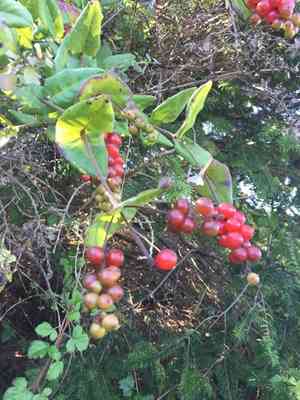
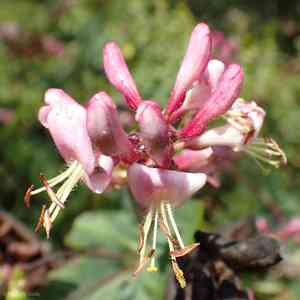
Consider the "Pink Honeysuckle" (Lonicera hispidula) as an excellent evergreen vine for ground cover. It can extend from 3 to 20 feet in length and has a loose, sprawling growth habit. This plant produces pinkish-purple flowers in spring, followed by vibrant red berries in the fall. The flowers are rich in honey-sweet nectar, making it a favorite for bees, butterflies, and songbirds.
Attributes of Pink Honeysuckle
Images of Pink Honeysuckle
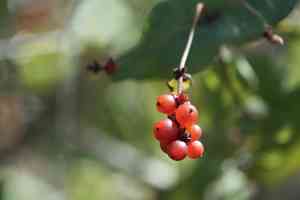
Quickly Identify Pink Honeysuckle
Scientific Classification of Pink Honeysuckle
Planting and Growing of Pink Honeysuckle
 How to Water Pink Honeysuckle?
 What Are the Sunlight Requirements for Pink Honeysuckle?
 What Is the Ideal Temperature Range for Pink Honeysuckle?
 What Soil is Best for Pink Honeysuckle?
 How to Fertilize Pink Honeysuckle?
 How to Prune Pink Honeysuckle?
 How to Propagate Pink Honeysuckle plant?
 How to Repot Pink Honeysuckle plant?
Toxicity of Pink Honeysuckle
Is Pink Honeysuckle toxic to humans?
The Pink Honeysuckle carries a slight toxicity risk to humans, mainly when its fruits, which harbor saponins, are ingested. Consumption of these fruits may result in various symptoms, including gastrointestinal discomfort manifesting as nausea, vomiting, and diarrhea. The intensity of these symptoms can fluctuate based on the amount consumed. Thus, it is crucial for individuals, particularly those who forage or have children tempted by the fruit, to recognize the possibility of mild poisoning and to avoid unintentional consumption of the toxic components. While other parts of the plant are generally safe, one should remain vigilant to deter the eating of the fruit.



