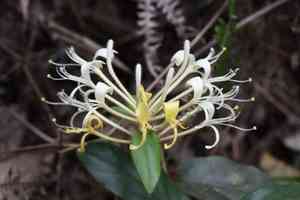
Wild honeysuckles (Lonicera confusa)
Also known as: Confused Honeysuckle
Honeysuckle is a climbing shrub known for its sweetly scented, tubular flowers that vary from white to yellow, typically appearing in pairs. Its stems can twist and wrap around structures, helping it to find sunlight amidst dense growth. This plant features oval, dark green leaves that create a rich, verdant backdrop for its blossoms. It grows well in well-drained soils and is hardy enough to withstand tough conditions, making it a versatile choice for different landscapes.
In This Article
Attributes of Wild honeysuckles
Lifespan
Perennial
Plant Type
Vine
Plant Height
1.5 to 3 meters
Spread
1 to 2 meters
Leaf Color
Dark green
Flower Size
1 to 2 centimeters
Flower Color
White to pale yellow
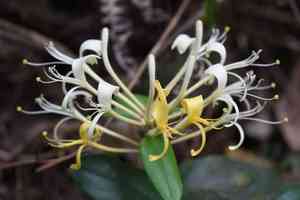
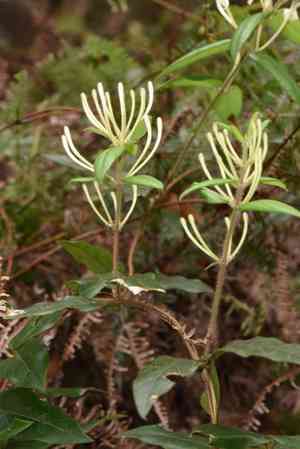
Images of Wild honeysuckles
Quickly Identify Wild honeysuckles
1
Twining growth reaching up to 25 feet (7.6 meters).
2
Distinct curled petals and long stamens on pale yellow flowers.
3
Resilient to seaside conditions and withstands temperatures down to 15°F (-9°C).
Scientific Classification of Wild honeysuckles
Phylum
Vascular plants
Class
Dicotyledons
Order
Honeysuckles, moschatels and allies
Family
Honeysuckle
Genus
Honeysuckles
Species
Wild honeysuckles
Planting and Growing of Wild honeysuckles
Care Difficulty
Easy
Watering Schedule
Every 3 days
Sunlight Requirements
Partial sun
Sunshine Duration
4-6 hours
Ideal Temperature
60-75℉
Soil Type
Potting Mix, Peat Mix
Soil pH
6.5-7.5
Fertilizer Type
Balanced
Pruning Season
Spring, Summer
Pruning Area
Branches, Leaves
Pruning Frequency
2 times a year
Repotting Season
Spring
Pot Type
Plastic, Ceramic
 How to Water Wild honeysuckles?
For Lonicera confusa, it's essential to water thoroughly enough for the moisture to reach the root zone, which typically translates to around 500 ml per watering session. Ensure water penetrates deeply by observing if the excess drains through the pot's bottom.
What are the symptoms of an underwatered Wild honeysuckles?
›
What should I do if my Wild honeysuckles is not getting enough water?
›
What are the symptoms of an overwatered Wild honeysuckles?
›
How to save an overwatered Wild honeysuckles?
›
 What Are the Sunlight Requirements for Wild honeysuckles?
Partial sun to filter light is ideal for Lonicera confusa. This light range helps maintain its moisture levels, supports healthy leaf coloration, and fosters frequent blooming without the risk of scorching.
Optimal Sunlight Exposure
›
Balancing Shade and Sun
›
Maximizing Growth Benefits
›
 What Is the Ideal Temperature Range for Wild honeysuckles?
Lonicera confusa thrives in temperatures ranging from 60 to 75°F. This range facilitates robust growth and flowering, ensuring the plant's optimal health and development. Maintaining such temperatures supports photosynthesis and nutrient absorption effectively.
 What Soil is Best for Wild honeysuckles?
Lonicera confusa thrives in soil that offers excellent drainage capabilities. This aspect prevents root rot and allows roots to breathe, essential for vigorous growth. The soil should be rich in organic matter to support healthy growth and flowering. A fertile soil ensures that the plant receives all necessary macro and micronutrients for robust development. While good drainage is crucial, the soil should retain enough moisture to keep the plant hydrated between waterings. This balance is critical to maintaining plant health without waterlogging.
 How to Fertilize Wild honeysuckles?
For Lonicera confusa, it's crucial to provide a balanced amount of nutrients. Liquid fertilizers should be applied at a rate of 1 liter per plant per session, ensuring the mixture is well diluted to avoid root burn. Solid fertilizers should be used sparingly, around 100 grams per plant per application, to provide a steady nutrient supply without overwhelming the plant.
 How to Prune Wild honeysuckles?
Start by cutting back any long, lanky stems to a point just above a pair of healthy buds. Aim to remove around a third of the oldest stems at the base to encourage fresh growth. Prune the plant's center sparingly to maintain good air circulation. This helps reduce pest and disease problems by keeping the center of the plant open and airy.
More About Pruning Techniques→
 How to Propagate Wild honeysuckles plant?
1
Select healthy, semi-woody stems from the parent plant. Use clean pruning shears to cut sections about 4-6 inches long. Remove the leaves from the lower half of the cutting and dip the cut end into rooting hormone.
2
Insert the prepared cuttings into moist, well-draining potting soil or a mix designed for propagation. Ensure that at least two nodes are buried in the soil, as this is where roots will form. Keep the cuttings in a location with indirect light.
3
Cover the pot or tray with a plastic bag or dome to retain humidity around the cuttings. This prevents the cuttings from drying out and encourages rooting. Regularly check to ensure condensation doesn't lead to mold or disease.
 How to Repot Wild honeysuckles plant?
1
Lonicera confusa signals that it’s ready for repotting when roots begin circling the pot, or water is not draining properly. Typically, this occurs every 2 to 3 years, so be vigilant during the start of spring or mid-autumn.
2
Select a pot that's 2 inches wider than the current one. This size prevents excessive water retention and encourages healthy root spread. Ensure it has adequate drainage holes to prevent water-logging, which can damage the roots.
3
Opt for a well-draining loamy mix which helps maintain a balance of moisture and air, crucial for Lonicera confusa. This soil structure encourages root breathability while preventing water stagnation, helping roots thrive.
Learn More About Wild honeysuckles Diseases
Anthracnose
Bacterial Leaf Spot
Crown Gall
Damping-off
Downy Mildew
Drought Stress
Fusarium Wilt
Gray Mold
Leaf Curl
Leaf Spot
Mosaic
Nutrient Deficiency
Nutrient Toxicity
Powdery Mildew
Root Rot
Root-knot Nematode
Rusts
Sooty Mold
Spider Mites
Temperature Stress
Thrips Damage
White Mold
Chemical Injury



