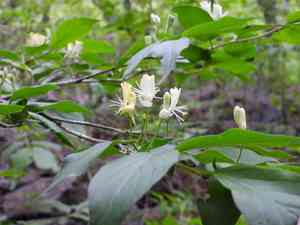
Honeysuckle (Lonicera chrysantha)
Also known as: Golden Honeysuckle
Daphne mezereum, often known as February Daphne, is a resilient garden shrub capable of withstanding temperatures as low as -40 ℃. This species features both male and female reproductive organs and relies on insects for cross-pollination. Renowned for its sweet fragrance, February Daphne is also known to be toxic.
In This Article
Attributes of Honeysuckle
Lifespan
Perennial
Plant Type
Shrub
Plant Height
4 m
Spread
2.5 m to 3.5 m
Leaf Color
Green
Flower Size
2.5 cm
Flower Color
White Yellow
Images of Honeysuckle
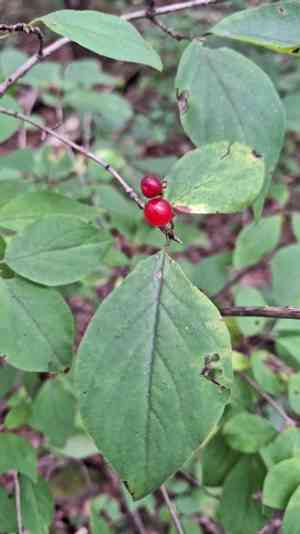
Quickly Identify Honeysuckle
1
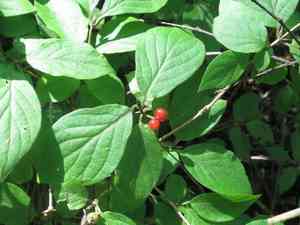
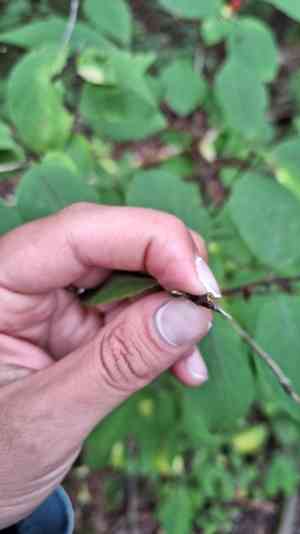
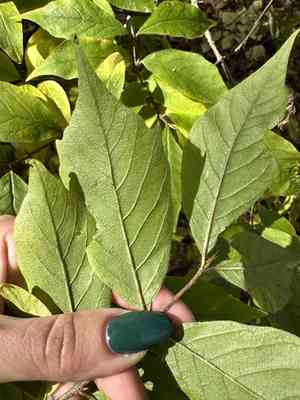
Lonicera chrysantha can be identified by its twining growth habit, opposite leaves, tubular yellow flowers, and red berries. The leaves are oval and smooth-edged, and the plant often forms dense thickets.
Scientific Classification of Honeysuckle
Phylum
Vascular plants
Class
Dicotyledons
Order
Dipsacales
Family
Honeysuckle
Genus
Honeysuckles
Species
Honeysuckle
Planting and Growing of Honeysuckle
Care Difficulty
Moderate
Watering Schedule
Every 2 days
Sunlight Requirements
Partial sun
Sunshine Duration
4-8 hours
Ideal Temperature
60-75℉
Soil Type
Potting Mix, Peat Mix
Soil pH
6.5-7.5
Fertilizer Type
Balanced
Pruning Season
Spring, Summer
Pruning Area
Branches, Leaves
Pruning Frequency
2 times a year
Repotting Season
Spring
Pot Type
Plastic, Ceramic
 How to Water Honeysuckle?
When watering Lonicera chrysantha, ensure the soil is thoroughly moistened. The goal is to provide 500 ml of water per session, allowing the soil to absorb water evenly. The principle is to saturate the soil until the top 1-2 inches are moist but not soggy. This helps maintain the right balance of moisture, crucial for the plant's healthy root development.
What are the symptoms of an underwatered Honeysuckle?
›
What should I do if my Honeysuckle is not getting enough water?
›
What are the symptoms of an overwatered Honeysuckle?
›
How to save an overwatered Honeysuckle?
›
 What Are the Sunlight Requirements for Honeysuckle?
Partial to full sun with 4 to 6 hours of light ensures Lonicera chrysantha's optimal flowering and vibrant foliage, fostering a robust plant structure and increased resilience against pests.
Understanding Lonicera chrysantha's Light Needs
›
How to Achieve Ideal Light Conditions
›
Benefits of Ideal Light Conditions
›
 What Is the Ideal Temperature Range for Honeysuckle?
The ideal temperature range for the growth of Lonicera chrysantha is between 60°F and 75°F. Within this range, the plant can efficiently perform photosynthesis, metabolize nutrients, and grow vigorously. It mimics its natural habitat's mild climate, which is crucial for optimal blooming and fruiting.
 What Soil is Best for Honeysuckle?
Lonicera chrysantha thrives in well-drained soils that prevent water from stagnating around the roots. A well-drained substrate ensures that the plant doesn't suffer from waterlogging, which can lead to root rot, thus fostering a healthy growth environment. This plant benefits from a nutrient-rich soil, which provides the essential nutrients required for robust growth and vibrant flowering. A soil rich in organic matter can improve fertility and stimulate healthy development. The soil should remain consistently moist, but not waterlogged, to keep the roots hydrated without causing them to suffocate. Maintaining proper moisture levels helps in sustaining the plant's vitality and flowering potential.
 How to Fertilize Honeysuckle?
For Lonicera chrysantha, it is crucial to provide an adequate but not excessive amount of fertilizer. Typically, when applying liquid fertilizer, a diluted solution (half the recommended strength on the package) is sufficient. For slow-release fertilizers, using roughly 50 grams per plant in early spring is advisable, ensuring even distribution around the root area.
 How to Prune Honeysuckle?
Start by removing any dead, diseased, or damaged stems. Thin out overcrowded branches by cutting at a 45-degree angle just above a healthy bud or leaf node to promote new growth and maintain shape. After initial thinning, step back to assess the plant's shape. Trim back longer stems to a uniform length, maintaining the natural form of Lonicera chrysantha. This helps keep its appearance tidy and encourages even growth. To boost the blooming potential, prune lightly after the flowering period in late spring. Removing spent flowers and cutting back to a pair of strong buds encourages reblooming in the next cycle.
More About Pruning Techniques→
 How to Propagate Honeysuckle plant?
1
Select robust and disease-free stems or seeds from an established Lonicera chrysantha. Healthy plant material increases propagation success and leads to stronger new plants, ensuring optimal growth in early stages.
2
When preparing cuttings, trim below a leaf node; for seeds, ensure they are mature and viable. Proper preparation is crucial for maximizing the success rate of root or seed germination and subsequent plant development.
3
Ensure the environment offers adequate humidity, warmth, and light for propagation, using grow lights or heaters if necessary. Consistent conditions are vital for encouraging healthy root development and preventing transplant shock.
 How to Repot Honeysuckle plant?
1
Lonicera chrysantha usually needs repotting every 2 to 3 years. The best time to repot is in spring or autumn, when the plant is actively growing. Look for signs such as roots growing out of drainage holes or a plant that looks top-heavy; these are sure indicators that it's time for a new pot.
2
Choose a pot that is about 2 inches larger in diameter than the current one and has good drainage holes. This encourages root growth and prevents waterlogging, a common issue with honeysuckle that could lead to root rot. Opt for materials like terracotta to aid moisture evaporation and keep the root system healthy.
3
Select a well-draining loamy soil composed of equal parts sand, silt, and clay. This type of soil will ensure proper drainage and nutrient retention, providing essential support for blooming and growth. The balanced texture gives roots room to breathe and grow efficiently.



