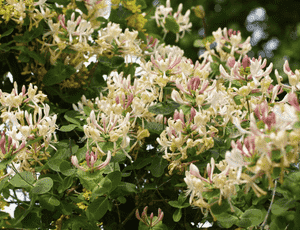
Perfoliate honeysuckle(Lonicera caprifolium)

Perfoliate honeysuckle (Lonicera caprifolium)

Also known as: Italian honeysuckle, Perfoliate woodbine

The shrub you're referring to is likely the Perfoliate Honeysuckle (Lonicera caprifolium). This deciduous plant can reach up to 6 meters in height. It features clusters of fragrant flowers that bloom from spring to summer, drawing in bees, butterflies, and hummingbirds. In the fall, it produces orange-red berries. It thrives in partial shade but can also handle full sun. Ideal for growing along fences, arbors, or trellises, but be cautious as it can become invasive.

Attributes of Perfoliate honeysuckle

Lifespan
Perennial
Plant Type
Vine
Plant Height
1 m to 2 m
Spread
6 m
Leaf Color
Green Blue
Flower Size
2.5 cm
Flower Color
White Pink Yellow Cream

ForwardPlant - Identify plants with a snap

Identify and diagnose plants, get toxicity alerts, and explore safety guides for all types of fungi.

Try for Free

Images of Perfoliate honeysuckle

Perfoliate honeysuckle(Lonicera caprifolium)

Quickly Identify Perfoliate honeysuckle

1
Identify Lonicera caprifolium by its perfoliate leaves, meaning the stem appears to pierce through the leaf. Look for tubular, highly fragrant flowers and red berries in the fall. The twining nature of the vine is also a key characteristic.

Scientific Classification of Perfoliate honeysuckle

Phylum
Vascular plants
Class
Dicotyledons
Order
Dipsacales
Family
Honeysuckle
Genus
Honeysuckles
Species
Perfoliate honeysuckle

Planting and Growing of Perfoliate honeysuckle

Care Difficulty
Easy
Watering Schedule
Every 3 days
Sunlight Requirements
Partial sun
Sunshine Duration
4-8 hours
Ideal Temperature
60-75℉
Soil Type
Potting Mix, Peat Mix
Soil pH
6.5-7.5
Fertilizer Type
Balanced
Pruning Season
Spring, Summer
Pruning Area
Branches, Leaves
Pruning Frequency
2 times a year
Repotting Season
Spring
Pot Type
Plastic, Ceramic

water icon How to Water Perfoliate honeysuckle?

Lonicera caprifolium requires moderate watering, ensuring the soil is evenly moist but not waterlogged. It is crucial to allow the top inch of soil to dry before the next watering. This balance helps prevent root rot while providing adequate moisture for vigorous growth.
What are the symptoms of an underwatered Perfoliate honeysuckle?
What should I do if my Perfoliate honeysuckle is not getting enough water?
What are the symptoms of an overwatered Perfoliate honeysuckle?
How to save an overwatered Perfoliate honeysuckle?

sunlight icon What Are the Sunlight Requirements for Perfoliate honeysuckle?

Sunlight Requirements: Partial sun, Full sun
Duration of light: 6 to 8 hours daily
Lonicera caprifolium prefers a range from partial to full sunlight, approximately 6 to 8 hours of light daily. This range ensures healthy growth and vibrant blooms.
What lighting condition is best for Lonicera caprifolium?
How can you ensure Lonicera caprifolium gets optimal sunlight?
What are the benefits of ideal sunlight for Lonicera caprifolium?
More About Sunlight Requirements Techniques

temperature icon What Is the Ideal Temperature Range for Perfoliate honeysuckle?

Ideal Temperature: 60 ~ 75℉
Lonicera caprifolium thrives best within a temperature range of 60°F to 75°F. This range supports healthy physiological processes such as photosynthesis and respiration, ensuring robust growth and vibrant flowers. Maintaining temperatures within this ideal range allows the plant to allocate resources effectively, promoting an optimal balance between vegetative growth and flowering.

soil icon What Soil is Best for Perfoliate honeysuckle?

Soil type: Loam, Sandy loam, Calcareous soil
Soil PH: 6.5 ~ 7.5
Lonicera caprifolium thrives in nutrient-rich soils where it can absorb essential nutrients for vigorous growth. Such conditions promote vibrant foliage and abundant flowering, offering a lush aesthetic appeal. This plant demands well-drained soil to prevent root rot, which ensures robust health and longevity. Adequate drainage facilitates healthy root development, which is crucial for optimal nutrient and water uptake. While it requires moisture at the roots, the soil should remain aerated to avoid waterlogging. This balance supports constant hydration and prevents oxygen deprivation, critical for root health and growth.

fertilize icon How to Fertilize Perfoliate honeysuckle?

Fertilizer type: Balanced
For Lonicera caprifolium, apply a balanced fertilizer at a concentration of 20-10-20 at a rate of 1 tablespoon per gallon of water for liquid fertilizers. With solid fertilizers, use approximately 1 teaspoon per plant per application. Avoid over-fertilization as this plant requires moderate nutrients.

prune icon How to Prune Perfoliate honeysuckle?

Pruning Time: Spring, Summer, Autumn
Begin by removing any dead or damaged branches. This not only improves the plant's appearance but also helps to prevent disease. Trim back any overgrown branches to manage the plant size. This helps maintain a neat appearance and prevents the plant from overtaking other garden areas. Cut stems just above a pair of leaves or buds to encourage bushier growth. This helps the plant stay healthy and promotes more abundant flowering. More About Pruning Techniques

propagate icon How to Propagate Perfoliate honeysuckle plant?

Propagate Time: Spring,Early summer
1
Choose a healthy section of the plant that is free from diseases and pests. Look for a young, non-flowering shoot as this increases the chances of rooting successfully.
2
Cut the shoot at a 45-degree angle, ideally 4-6 inches long, and remove the lower leaves. This allows for better absorption of water and nutrients, and reduces water loss.
3
Dip the cut end into rooting hormone before planting it in a pot filled with a suitable soil mix. Ensure it is firmed in well to support the cutting, and water gently.
More About Propagating Techniques

repot icon How to Repot Perfoliate honeysuckle plant?

Repotting frequency: Every 2-3 years
1
Lonicera caprifolium typically signals the need for repotting when roots begin to emerge from the drainage holes or the plant appears root-bound. Another indicator is a noticeable slowdown in growth despite adequate watering and fertilizing. Repotting should ideally be done in early spring or autumn to minimize stress on the plant.
2
Select a pot that is one size larger than the current one, with good drainage holes. This prevents water from stagnating and causing root rot. A slightly larger pot provides the roots with ample space to grow, ensuring healthy plant development.
3
Opt for a well-draining potting mix rich in organic matter. This type of soil will help maintain moisture without becoming waterlogged, promoting healthy root growth. A mix with perlite or sand can improve drainage and aeration, preventing potential root diseases.

ForwardPlant - Identify plants with a snap

Find the best spots for them to optimize their health, simply using your phone.

Try for Free

Toxicity of Perfoliate honeysuckle

Is Perfoliate honeysuckle toxic to humans?

Perfoliate honeysuckle presents a low toxicity hazard to humans, potentially resulting in allergic reactions. Interaction with any part of this plant can lead to skin irritation, whereas consuming it may cause more severe symptoms. The whole plant, encompassing leaves, stems, and berries, is deemed toxic. In the event of accidental consumption, individuals might suffer gastrointestinal distress, which could include nausea, vomiting, and diarrhea. It is essential to exercise caution when near perfoliate honeysuckle, particularly for those with known allergies, to avert accidental poisoning via touch or ingestion.

Is Perfoliate honeysuckle toxic to cat?

Perfoliate honeysuckle carries a slight risk of toxicity for cats. Cats can be exposed to the plant's toxins through eating or skin contact, as every part of the plant is harmful. Symptoms of poisoning in cats can include various signs of physical discomfort, necessitating prompt veterinary care. It is crucial for cat owners to vigilantly observe their pets and restrict their access to perfoliate honeysuckle to safeguard their health and welfare.

Is Perfoliate honeysuckle toxic to dog?

Perfoliate honeysuckle is recognized for its mild toxicity in dogs. This plant can cause poisoning in canines through skin exposure or accidental ingestion. All parts of the plant, including its leaves, stems, and flowers, possess toxic properties that can endanger dogs. Should a dog come into contact with or ingest any section of the perfoliate honeysuckle, it may show symptoms such as gastrointestinal distress, vomiting, diarrhea, and potentially more serious reactions depending on the quantity consumed. It is vital for dog owners to keep a close watch on their pets and restrict access to perfoliate honeysuckle. If poisoning is suspected, seeking immediate veterinary assistance is crucial to safeguard the affected animal's health.

Identify toxic plants for your safety

Learn which plants are harmful to you and your pets, and make informed choices for a safer home!

Try for Free
WARNING
The judgment on toxicity and danger is for reference only. We DO NOT GUARANTEE any accuracy of such judgment. Therefore, you SHALL NOT rely on such judgment. It is IMPORTANT TO SEEK PROFESSIONAL ADVICE in advance when necessary.
More About Toxic Techniques

