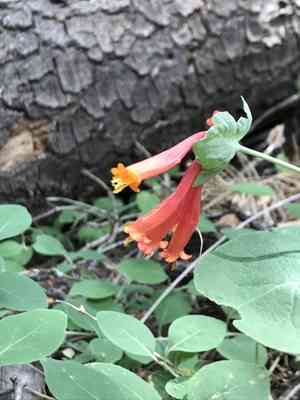
Arizona honeysuckle (Lonicera arizonica)
Also known as: Arizona Honeysuckle
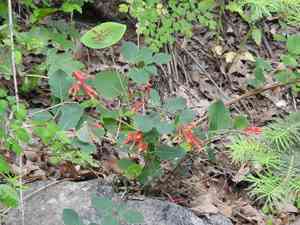
The shrub you're describing is likely the Arizona honeysuckle (Lonicera arizonica). This fragrant, flowering plant is indigenous to the southwestern United States and produces tubular, bright yellow to orange blossoms that attract hummingbirds. It is well-suited to dry, rocky environments and exhibits remarkable adaptability and resilience. Its elliptical, bluish-green leaves add to its unique look in arid settings.
In This Article
Attributes of Arizona honeysuckle
Lifespan
Perennial
Plant Type
Shrub
Plant Height
1 to 2 meters
Spread
1 to 2 meters
Leaf Color
Green
Flower Size
1 to 2 cm
Flower Color
Red, Orange
Images of Arizona honeysuckle
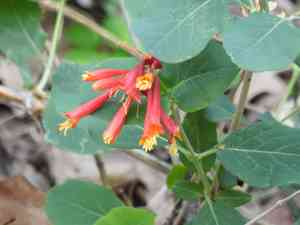
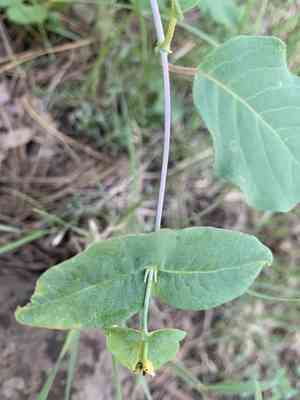
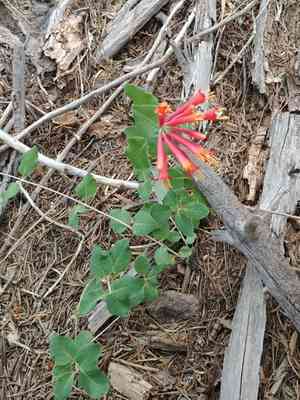
Quickly Identify Arizona honeysuckle
1
This plant can be identified by its opposite, oval-shaped leaves, tubular flowers that are typically red to orange in color, and its sprawling, vining habit. The stems are often woody and may have peeling bark.
Scientific Classification of Arizona honeysuckle
Phylum
Vascular plants
Class
Dicotyledons
Order
Dipsacales
Family
Honeysuckle
Genus
Honeysuckles
Species
Arizona honeysuckle
Planting and Growing of Arizona honeysuckle
Care Difficulty
Easy
Watering Schedule
Every 3 days
Sunlight Requirements
Full sun
Sunshine Duration
8-12 hours
Ideal Temperature
60-75℉
Soil Type
Potting Mix, Peat Mix
Soil pH
6.5-7.5
Fertilizer Type
Balanced
Pruning Season
Spring, Summer
Pruning Area
Branches, Leaves
Pruning Frequency
2 times a year
Repotting Season
Spring
Pot Type
Plastic, Ceramic
 How to Water Arizona honeysuckle?
Lonicera arizonica, commonly known as Arizona honeysuckle, thrives best with consistent moisture but well-drained soil. The plant should be watered until the soil is moist to a depth of about two inches. This usually requires approximately 500ml of water per session, making sure not to waterlog the soil as this can lead to root rot.
What are the symptoms of an underwatered Arizona honeysuckle?
›
What should I do if my Arizona honeysuckle is not getting enough water?
›
What are the symptoms of an overwatered Arizona honeysuckle?
›
How to save an overwatered Arizona honeysuckle?
›
 What Are the Sunlight Requirements for Arizona honeysuckle?
Lonicera arizonica benefits from full sun to partial sun. Adequate sunlight results in dense foliage, abundant flowering, and improved resistance to stress and disease.
How much sunlight does Lonicera arizonica need?
›
How to achieve ideal lighting for Lonicera arizonica?
›
What benefits does ideal lighting provide to Lonicera arizonica?
›
 What Is the Ideal Temperature Range for Arizona honeysuckle?
The ideal temperature range for Lonicera arizonica is between 60°F and 75°F. These temperatures are optimal for the plant's growth as they provide a conducive environment for photosynthesis and other metabolic processes. Ensuring the plant remains in this range facilitates healthy development and robust flowering.
 What Soil is Best for Arizona honeysuckle?
Lonicera arizonica thrives best in well-drained soils. This allows for proper root aeration, preventing root rot and promoting healthier, more robust growth. The plant benefits from soil with moderate fertility. This provides necessary nutrients without overwhelming the roots, ensuring steady, balanced growth. Retaining some soil moisture is essential for Lonicera arizonica as it prevents the plant from drying out during hot, sunny days, promoting lush foliage and vibrant blooms.
 How to Fertilize Arizona honeysuckle?
Lonicera arizonica thrives with a moderate application of fertilizer. When using liquid fertilizer, it is advisable to dilute it to half strength to avoid overwhelming the plant. For solid fertilizers, a slow-release type ensures a consistent supply of nutrients over time.
 How to Prune Arizona honeysuckle?
Start by examining the shrub for any dead, damaged, or diseased stems. Using sharp pruning shears, cut these branches back to healthy wood. Aim to remove about one-third of the growth to promote good airflow, shape, and stimulate new growth. Focus on cutting just above a bud to foster healthy future branches. Prune the honeysuckle vine to keep it within its designated boundaries. Remove any stems that have grown beyond the desired area to maintain a compact, manageable size. This type of formative pruning helps control the plant's direction and supports structural integrity.
More About Pruning Techniques→
 How to Propagate Arizona honeysuckle plant?
1
Choose healthy, disease-free parent plants with vigorous growth. Inspect for signs of pests and avoid any with discolored, wilted, or damaged leaves.
2
Prepare a well-draining soil mix that retains moisture without becoming soggy. Use a mix of peat, perlite, and sand for optimal results.
3
For cuttings, dip the cut end in rooting hormone before planting. For seeds, sow them lightly and cover with a thin layer of soil. Water gently after planting.
 How to Repot Arizona honeysuckle plant?
1
Lonicera arizonica needs repotting when you see roots coming out of the drainage holes or the plant looks top-heavy and unbalanced. Another sign is water sitting on the surface, indicating compacted soil. Repotting is best done in spring to allow the plant to settle before its growing phase.
2
Choose a pot that is 1-2 inches larger in diameter than the current one. This provides enough space for root growth without overwhelming the plant. Ensure the pot has drainage holes to prevent waterlogging, which can lead to root rot.
3
For Lonicera arizonica, choose a well-draining loamy soil mix. This soil type retains essential nutrients while allowing excess water to escape. It's perfect for balancing the plant's need for moisture without risking root rot, promoting healthy growth.
Toxicity
Ingestion
WARNING
The judgment on toxicity and danger is for reference only. We DO NOT GUARANTEE any accuracy of such judgment. Therefore, you SHALL NOT rely on such judgment. It is IMPORTANT TO SEEK PROFESSIONAL ADVICE in advance when necessary.



