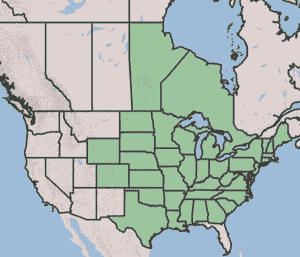
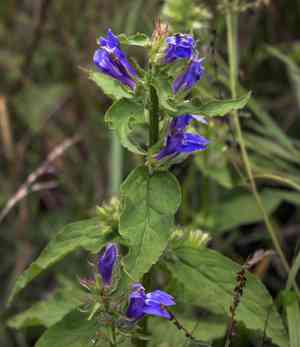
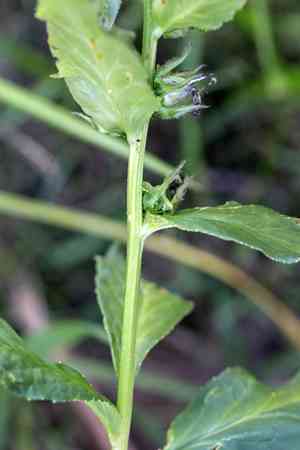
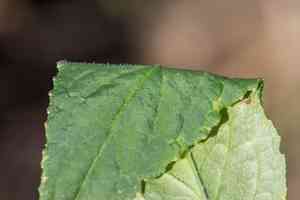
Great blue lobelia(Lobelia siphilitica)

Great blue lobelia (Lobelia siphilitica)

Also known as: Blue cardinal flower

The great blue lobelia (Lobelia siphilitica), once believed to treat syphilis, is a stunning wildflower known for its vivid blue blossoms. These flowers, which appear in late summer, feature segmented tubular shapes on tall, upright stems, making the plant a striking perennial in any garden.

Attributes of Great blue lobelia

Lifespan
Perennial
Plant Type
Herb
Plant Height
91 cm to 1.2 m
Spread
30 cm to 45 cm
Leaf Color
Green
Flower Size
2.5 cm
Flower Color
Blue White

PlantJoy - Identify plants with a snap

Identify and diagnose plants, get toxicity alerts, and explore safety guides for all types of fungi.

Try for Free

Images of Great blue lobelia

Great blue lobelia(Lobelia siphilitica)

Quickly Identify Great blue lobelia

1
Serrated, lance-shaped leaves with no stalks, 2-6 inches (5-15 cm) long and light green.
2
Blue flowers with distinct striped patterns on tubes, larger than Lobelia counterparts, blooming July-October.
3
Fruit is a slender, dehiscent capsule, 0.5-0.75 inches (1.3-1.9 cm) releasing light brown seeds.
4
Flowers are tubular, 1 inch (2.5 cm) long, light to dark blue with three prominent lower lobes.
5
Herbaceous perennial reaching 3-4 feet (91-122 cm) in height, forming dense racemes in mid-summer.

Scientific Classification of Great blue lobelia

Phylum
Vascular plants
Class
Dicotyledons
Order
Asters bellflowers fanflowers and allies
Family
Bellflower
Genus
Lobelias
Species
Great blue lobelia

Planting and Growing of Great blue lobelia

Care Difficulty
Easy
Watering Schedule
Every 8 days
Sunlight Requirements
Partial sun
Sunshine Duration
4-6 hours
Ideal Temperature
60-75℉
Soil Type
Potting Mix, Peat Mix
Soil pH
6.5-7.5
Fertilizer Type
Balanced
Pruning Season
Spring, Summer
Pruning Area
Branches, Leaves
Pruning Frequency
2 times a year
Repotting Season
Spring
Pot Type
Plastic, Ceramic

water icon How to Water Great blue lobelia?

The Lobelia siphilitica requires consistent moisture, so each watering session should provide about 500 ml of water. The soil should be kept consistently moist but not soggy, simulating its natural habitat of moist meadows and wetlands.
What are the symptoms of an underwatered Great blue lobelia?
What should I do if my Great blue lobelia is not getting enough water?
What are the symptoms of an overwatered Great blue lobelia?
How to save an overwatered Great blue lobelia?

sunlight icon What Are the Sunlight Requirements for Great blue lobelia?

Sunlight Requirements: Partial sun, Full sun
Duration of light: 4 to 6 hours
Lobelia siphilitica prospers with partial sun to full sun conditions, enhancing growth and bloom capacity. The ideal light range supports vigorous foliage and resilience against environmental stresses while maximizing photosynthetic efficiency.
What light conditions does Lobelia siphilitica prefer?
How can I ensure that Lobelia siphilitica gets ideal light?
What benefits come from Lobelia siphilitica receiving the right light?
More About Sunlight Requirements Techniques

temperature icon What Is the Ideal Temperature Range for Great blue lobelia?

Ideal Temperature: 60 ~ 75℉
Lobelia siphilitica thrives best in temperatures between 60°F and 75°F. These conditions mimic the natural habitat where the plant grows, providing optimal energy for photosynthesis and other physiological processes. Maintaining this range ensures robust growth and maximum blooming capacity.

soil icon What Soil is Best for Great blue lobelia?

Soil type: Loam, Clay soil, Sandy loam
Soil PH: 6.5 ~ 7.5
Lobelia siphilitica thrives in soils that retain moisture well. Maintaining the right moisture level helps the plant absorb nutrients more effectively, ensuring optimal growth and vibrant blooms. A nutrient-rich soil ensures that the plant has access to all the essential elements it needs for healthy growth. The natural fertility of loam and sandy loam provides a perfect balance for Lobelia siphilitica. Incorporating organic matter into the soil enhances its structure and nutrient profile, benefiting Lobelia siphilitica. This promotes healthy root development and supports robust flowering. More About Soil

fertilize icon How to Fertilize Great blue lobelia?

Fertilizer type: Balanced
For Lobelia siphilitica, the amount of fertilizer should be balanced. Use a liquid fertilizer at half the recommended strength to prevent nutrient burn. Apply approximately 10 ml of diluted liquid fertilizer per plant during the active growing season to support its growth. More About Fertilizing Techniques

prune icon How to Prune Great blue lobelia?

Pruning Time: Spring, Autumn
Start by using sharp, clean pruning shears to remove any dead or damaged stems near the base of Lobelia siphilitica. This promotes healthier growth and prevents disease. Afterward, trim back any overgrown stems to maintain a tidy appearance and prevent the plant from becoming too leggy. Always cut just above a leaf node to encourage new growth. More About Pruning Techniques

propagate icon How to Propagate Great blue lobelia plant?

Propagate Time: Spring, Early summer, Late winter
1
To prepare the seeds for propagation, begin by soaking them in warm water for 24 hours. This process helps to break dormancy and promotes quicker germination by softening the seed coat and activating the embryo inside.
2
Select healthy stems and use sharp pruners to take a 4-6 inch cutting. Remove the lower leaves to reduce water loss and dip the cut end in rooting hormone to enhance root formation before planting in a moist growing medium.
3
Gently dig up a mature plant after its flowering period. Use a clean, sharp knife to divide the root ball into several sections, ensuring each section has healthy roots and shoots. Replant the divisions at the same depth in well-prepared soil.
More About Propagating Techniques

repot icon How to Repot Great blue lobelia plant?

Repotting frequency: Every 1-2 years
1
Look for signs like roots emerging from the drainage holes, stunted growth, or soil compacting. These indicate that your Lobelia siphilitica needs more room to thrive and should be repotted.
2
Choose a pot that is only slightly larger than the current one, ideally 1-2 inches wider. This prevents overwatering and provides the right environment for root growth, ensuring your plant doesn’t experience unnecessary stress.
3
Use a soil mix that retains moisture but allows excess water to escape easily, such as a loamy mix with some organic matter. This supports healthy root growth and keeps your plant from becoming waterlogged.

PlantJoy - Identify plants with a snap

Find the best spots for them to optimize their health, simply using your phone.

Try for Free

Toxicity of Great blue lobelia

Is Great blue lobelia toxic to cat?

Great blue lobelia possesses moderate toxicity for cats and ingestion of any part of the plant can result in poisoning. When exposed to great blue lobelia, cats may exhibit various symptoms that suggest physical distress or illness. It is important for cat owners to recognize this risk and take measures to keep their pets away from the plant. If a cat is believed to have consumed great blue lobelia, it is essential to seek immediate professional care at a veterinary clinic to ensure the condition is treated properly.

Is Great blue lobelia toxic to dog?

The plant species known as great blue lobelia is categorized as possessing moderate toxicity to dogs. If a dog consumes any part of this plant, as all its parts are toxic, there exists a risk of poisoning. Dogs are commonly poisoned by ingesting fragments of the plant. Following ingestion, a dog may display a range of symptoms that suggest poisoning. It is vital for dog owners to recognize these signs and to take immediate action by seeking veterinary care if their pet encounters great blue lobelia.

Identify toxic plants for your safety

Learn which plants are harmful to you and your pets, and make informed choices for a safer home!

Try for Free
WARNING
The judgment on toxicity and danger is for reference only. We DO NOT GUARANTEE any accuracy of such judgment. Therefore, you SHALL NOT rely on such judgment. It is IMPORTANT TO SEEK PROFESSIONAL ADVICE in advance when necessary.
More About Toxic Techniques