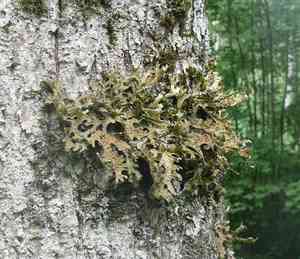
Tree lungwort (Lobaria pulmonaria)
Also known as: Lungwort, Oak lungs, Lung moss
Oakmoss is a green lichen thriving in the humid regions of North America, Europe, and Asia. It commonly grows on trees, rocks, and in mossy urban settings. Oakmoss is often utilized as a dye and can also serve as food for animals.
In This Article
Attributes of Tree lungwort
Lifespan
Perennial
Plant Height
0.25 inches
Spread
10 inches
Leaf Color
Greenish when wet, grayish when dry
Flower Size
N/A - lichens do not produce flowers.
Flower Color
N/A - lichens do not produce flowers.
Images of Tree lungwort
Quickly Identify Tree lungwort
1
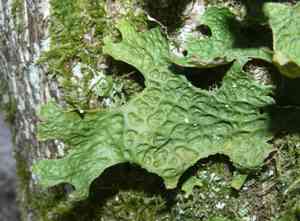
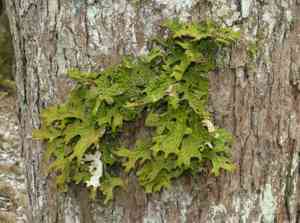
Look for a large, leafy lichen with a broad, lobed surface. The upper surface is greenish when wet and grayish when dry, often dimpled or pitted, while the underside is white and fuzzy. It often grows on the bark of deciduous trees in moist, shaded environments.
Scientific Classification of Tree lungwort
Phylum
Sac fungi
Class
Lecanoromycetes
Order
Peltigerales
Family
Lobariaceae
Genus
Lung wort
Species
Tree lungwort
Planting and Growing of Tree lungwort
Care Difficulty
Hard
Watering Schedule
Every 2 days
Sunlight Requirements
Full shade
Sunshine Duration
4-8 hours
Ideal Temperature
59-68℉
Soil Type
Potting Mix, Peat Mix
Soil pH
4.5-6.5
Fertilizer Type
Balanced
Pruning Season
Spring, Summer
Pruning Area
Leaves, Branches
Pruning Frequency
Once a year
Repotting Season
Spring
Pot Type
Plastic, Ceramic
 How to Water Tree lungwort?
Lobaria pulmonaria, commonly known as lungwort lichen, thrives in moist environments but does not require heavy watering. Aim for around 50 ml during each session to ensure the substrate remains slightly moist without becoming waterlogged. A balance is crucial as the lichen is sensitive to both under-watering and over-watering.
What are the symptoms of an underwatered Tree lungwort?
›
What should I do if my Tree lungwort is not getting enough water?
›
What are the symptoms of an overwatered Tree lungwort?
›
How to save an overwatered Tree lungwort?
›
 What Are the Sunlight Requirements for Tree lungwort?
Partially shaded environments are ideal, enabling Lobaria pulmonaria to benefit from gentle sun exposure. This ensures it engages in healthy metabolic activity, maintaining its moisture and ecological function.
What is the optimal lighting for Lobaria pulmonaria?
›
How can one ensure ideal lighting conditions for this lichen?
›
What are the advantages of providing ideal lighting?
›
 What Is the Ideal Temperature Range for Tree lungwort?
The ideal temperature range for Lobaria pulmonaria, also known as lungwort lichen, is between 59°F and 68°F. This range is optimal as it mimics the cool, moist environments where the lichen naturally thrives, thus supporting its growth and overall health.
 What Soil is Best for Tree lungwort?
Lobaria pulmonaria thrives in environments where the soil retains moisture consistently. This species is often found in humid forests, which mimic the moist, acidic conditions it naturally prefers. Having soil that holds moisture without becoming waterlogged is vital for its survival, as it supports the plant's need for a consistently damp habitat, preventing dehydration and promoting nutrient absorption. Adequate nutrient availability in the soil is essential for Lobaria pulmonaria's growth. Rich, organic loam enhances the plant's access to necessary minerals and nutrients. Ensuring the soil is neither too poor nor too rich helps maintain a balanced ecosystem, which encourages the lichen's healthy development and reproduction. This lichen favors acidic soils, as such conditions facilitate the proliferation of microflora, which Lobaria pulmonaria interacts with symbiotically. Maintaining an acidic pH in the soil boosts the lichen's growth and supports the symbiotic relationship with algae and fungi, enhancing its photosynthetic efficiency and overall health.
 How to Fertilize Tree lungwort?
Lobaria pulmonaria, commonly known as lungwort lichen, requires very minimal fertilization due to its slow-growing nature. It is crucial to provide only a diluted liquid fertilizer at a quarter strength to avoid nutrient overload.
 How to Prune Tree lungwort?
Begin by examining your lichen-covered area and identify any dead or decaying parts. Use sharp, sterilized scissors to carefully trim these sections away, taking care to avoid damaging the healthy, vibrant portions. Maintain an even thickness throughout the plant for better aesthetic and health purposes. Finish by gently cleaning up any loose debris to make your lichen appear tidy.
 How to Propagate Tree lungwort plant?
1
Choose a healthy Lobaria pulmonaria with vibrant colors. Healthy specimens are more likely to produce successful cuttings or divisions, as they are stronger and less susceptible to stress during propagation.
2
Prepare a sterile potting mix suitable for bryophytes, ensuring it remains moist but not waterlogged. Proper medium preparation is vital for new cuttings to root effectively, reducing the risk of rot.
3
Use sharp scissors to cut sections with both algal and fungal components. Plant these sections into the prepared medium, ensuring good contact. Proper planting technique ensures better establishment and rooting.
 How to Repot Tree lungwort plant?
1
Observe for signs like stunted growth or roots emerging from the drainage holes. These are indicators that Lobaria pulmonaria needs more space and resources, signaling it's time for a new pot.
2
Choose a pot slightly larger than the current one, ensuring it has adequate drainage holes. This prevents water stagnation, promoting healthy air circulation and root development, essential for Lobaria pulmonaria’s growth.
3
Opt for a moist, acidic soil mix high in organic content. Such soil mimics its natural environment, supporting its growth and ensuring adequate nutrient absorption while maintaining necessary moisture levels.

