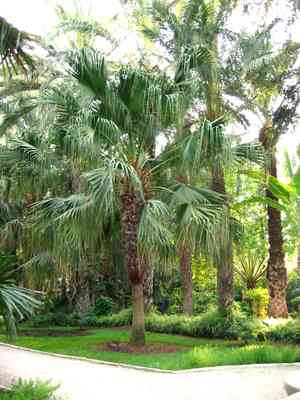
Chinese Fan Palm (Livistona chinensis)
Also known as: Chinese Fan Palm, Fountain Palm
The Chinese Fan Palm (Livistona chinensis) originates from southern Japan, the Ryukyu Islands, southeastern China, and Hainan. Beyond its native range, it is now also present in regions such as South Africa and various other global locations. This palm can reach heights of 9 to 15 meters and features distinctive fan-shaped leaves. It is widely cultivated as an ornamental plant, popular in gardens and conservatories.
In This Article
Attributes of Chinese Fan Palm
Lifespan
Perennial
Plant Type
Tree
Plant Height
5 m to 20 m
Spread
4 m
Leaf Color
Green
Flower Size
2 mm
Flower Color
Cream White
Images of Chinese Fan Palm
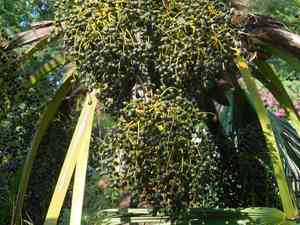
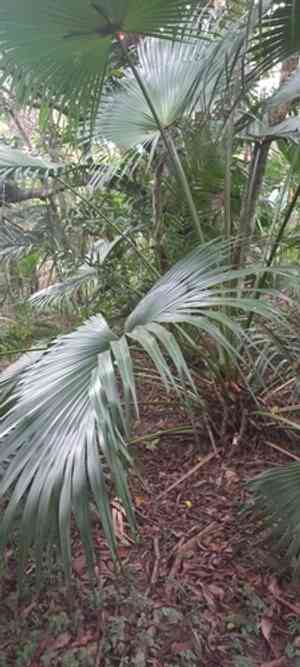
Quickly Identify Chinese Fan Palm
1
Fan-shaped leaves are deeply divided, with tips that droop elegantly.
2
Leaf stems have serrated edges and spiny teeth.
3
Slow growth rate, reaching up to 30 feet (9 meters) tall.
4
Thrives in various light conditions, requires ample moisture in intense sun to prevent yellowing.
Scientific Classification of Chinese Fan Palm
Phylum
Vascular plants
Class
Monocotyledons
Order
Palms, bullanocks, and allies
Family
Palm
Genus
Livistona
Species
Chinese Fan Palm
Planting and Growing of Chinese Fan Palm
Care Difficulty
Easy
Watering Schedule
Every day
Sunlight Requirements
Full sun
Sunshine Duration
6-12 hours
Ideal Temperature
68-86℉
Soil Type
Potting Mix, Peat Mix
Soil pH
6.5-7.5
Fertilizer Type
Balanced
Pruning Season
Spring, Summer
Pruning Area
Branches, Leaves
Pruning Frequency
2 times a year
Repotting Season
Spring
Pot Type
Plastic, Ceramic
 How to Water Chinese Fan Palm?
When watering Livistona chinensis, ensure the soil is thoroughly soaked without waterlogging. Aim for about 500 ml until you see a slight trickle from the pot’s drainage holes, indicating adequate soil penetration.
More About Watering Techniques→
What are the symptoms of an underwatered Chinese Fan Palm?
›
What should I do if my Chinese Fan Palm is not getting enough water?
›
What are the symptoms of an overwatered Chinese Fan Palm?
›
How to save an overwatered Chinese Fan Palm?
›
 What Are the Sunlight Requirements for Chinese Fan Palm?
Livistona chinensis ideally benefits from full to partial sun exposure, with 6 to 8 daily hours of light. Proper light levels enhance the plant’s chlorophyll production, contributing to vibrant, sturdy foliage and a thriving lifespan.
More About Sunlight Requirements Techniques→
Question: What is the ideal lighting condition for Livistona chinensis?
›
Question: How can you ensure your Livistona chinensis gets optimal light indoors?
›
Question: How does adjusting light exposure benefit Livistona chinensis?
›
 What Is the Ideal Temperature Range for Chinese Fan Palm?
Livistona chinensis thrives best in temperatures between 68°F and 86°F. Maintaining this range allows for optimal growth and prevents thermal stress. Consistent temperatures within this bracket support the plant's physiological processes without risking heat or cold damage.
 What Soil is Best for Chinese Fan Palm?
Ensure the soil drains well to prevent root rot. Livistona chinensis thrives in soil that allows excess water to flow away, protecting against root diseases and ensuring the plant obtains the necessary nutrients and oxygen. Rich in nutrients, the chosen soil must support the lush growth of Livistona chinensis. This provides the plant with the essential macro and micronutrients required for robust foliage and healthy development. The soil should balance moisture retention and drainage. Too much moisture can be detrimental, but the soil must retain enough to ensure consistent access to water for Livistona chinensis, crucial for maintaining the palm's vigor.
More About Soil→
 How to Fertilize Chinese Fan Palm?
When applying fertilizer to Livistona chinensis, it is crucial to use a balanced fertilizer that contains equal amounts of nitrogen, phosphorus, and potassium. For liquid fertilizers, dilute the solution to half the recommended strength on the label to avoid over-fertilization. Apply about one cup per plant each time.
More About Fertilizing Techniques→
 How to Prune Chinese Fan Palm?
Begin by identifying fronds that are brown, yellowed, or damaged. These fronds should be removed first as they can drain nutrients from the healthy parts of the plant. Using your sharp shears, make a clean cut close to the base of the frond where it meets the trunk. Take care not to cut into the trunk itself, as this can cause damage to the plant. Livistona chinensis benefits from having a full crown, so only remove lower fronds if they are dead or unsightly. Avoid removing too many green fronds to allow the plant to photosynthesize effectively. After pruning, collect all the cut fronds and dispose of them properly. Leaving debris around the plant base can attract pests and promote disease.
More About Pruning Techniques→
 How to Propagate Chinese Fan Palm plant?
1
Before sowing, soak the seeds in lukewarm water for 24 hours to encourage better germination rates. This process softens the seed coat, making it easier for the seedling to emerge.
2
Fill the seed tray with the sterile potting mix and evenly spread the soaked seeds. Cover them lightly with a layer of soil, ensuring they are not buried too deep to facilitate air flow and moisture.
3
Water the seeds gently using a spray bottle to avoid dislodging them. Keep the soil consistently moist but not waterlogged, as excessive water can reduce oxygen access to the seeds.
 How to Repot Chinese Fan Palm plant?
1
Livistona chinensis shows signs of needing a new pot when its roots start circling the container or growing out of the drainage holes. Additionally, if the soil seems compacted or water doesn't drain well, it's time for a change. Spring or summer are the ideal seasons for repotting, as the plant is actively growing and can recover quickly.
2
When selecting a new pot for your Livistona chinensis, ensure it is just one size larger than the current one. This helps prevent over-watering and gives enough space for root growth without overwhelming the plant. Opt for pots with good drainage to avoid water-logging, which can lead to root rot. A slightly heavy pot is also preferred to anchor the tall plant and prevent tipping.
3
Use a well-draining potting mix formulated for palms or succulents. This type of soil ensures excess water drains away quickly, preventing sogginess around the roots. A mix that includes sand, peat, and perlite works well, promoting a light and airy environment to encourage healthy root development and reduce the risk of disease.



