Living stones (Lithops) (Lithops)
Also known as: Pebble plants
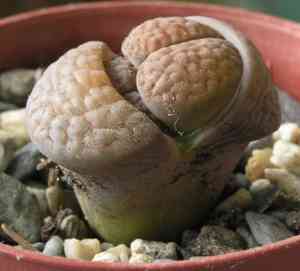
Lithops, commonly known as "living stones," have a distinctive stone-like appearance due to their bulbous, fused leaves. This mimicry serves as a survival adaptation, making them look like pebbles. As a result, herbivores are less likely to recognize and consume them, mistaking them for inedible rocks instead.
In This Article
Attributes of Living stones (Lithops)
Lifespan
Perennial
Plant Height
1 cm
Spread
2 cm
Leaf Color
Various shades of gray, brown, green, and red
Flower Size
1 to 2 inches
Flower Color
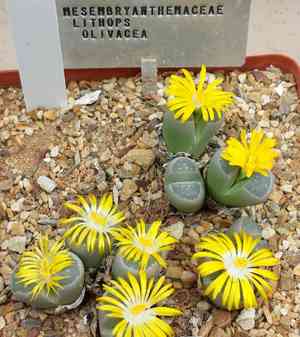
White, yellow, rarely pink
Images of Living stones (Lithops)
Quickly Identify Living stones (Lithops)
1
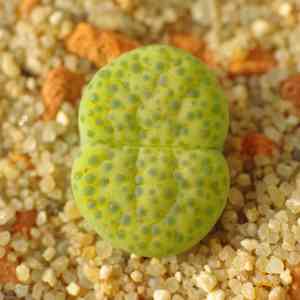
Lithops can be identified by their unique pebble-like appearance, with two succulent leaves forming a split that resembles a cleft. They have patterns and colors that mimic the surrounding stones.
Scientific Classification of Living stones (Lithops)
Phylum
Tracheophyta
Class
Magnoliopsida
Order
Caryophyllales
Family
Aizoaceae
Genus
Lithops
Planting and Growing of Living stones (Lithops)
Care Difficulty
Moderate
Watering Schedule
Every day
Sunlight Requirements
Full sun
Sunshine Duration
4-8 hours
Ideal Temperature
70-77℉
Soil Type
Potting Mix, Peat Mix
Soil pH
6.5-7.5
Fertilizer Type
Balanced
Pruning Season
Spring, Summer
Pruning Area
Branches, Leaves
Pruning Frequency
2 times a year
Repotting Season
Spring
Pot Type
Plastic, Ceramic
 How to Water Living stones (Lithops)?
Lithops are unique succulents that require very careful watering. They need just about 30 milliliters of water each time you water them. The goal is to mimic the natural rainfall in their native habitat, which is minimal. Ensure the soil is barely moist and avoid letting water stagnate at the bottom of the pot.
What are the symptoms of an underwatered Living stones (Lithops)?
›
What should I do if my Living stones (Lithops) is not getting enough water?
›
What are the symptoms of an overwatered Living stones (Lithops)?
›
How to save an overwatered Living stones (Lithops)?
›
 What Are the Sunlight Requirements for Living stones (Lithops)?
Lithops ideally require full sun to partial sun conditions, equating to roughly 6 to 8 hours of sunlight. This exposure is essential for maintaining their compact growth and vibrant color without inducing stress.
How can Lithops achieve ideal lighting conditions?
›
What specific actions help Lithops get optimal light?
›
What are the benefits of optimal lighting for Lithops?
›
 What Is the Ideal Temperature Range for Living stones (Lithops)?
The ideal temperature range for Lithops, or 'living stones,' is between 70°F and 77°F. This range supports their growth and mimics their native habitat in Southern Africa where they thrive in warm conditions with plenty of sunlight.
 What Soil is Best for Living stones (Lithops)?
Lithops require well-drained soil to mimic their natural habitat. This prevents root rot and ensures that the plant does not get waterlogged, which is crucial for its survival. A sandy soil composition helps Lithops thrive by allowing air and water to circulate efficiently around the roots. This aids in maintaining an optimal moisture balance required for their growth. Lithops do best in soil with minimal organic content, as overly rich soil can retain too much moisture and nutrients, leading to rot and poor plant health.
 How to Fertilize Living stones (Lithops)?
When fertilizing Lithops, it is important to use a very diluted fertilizer. Typically, using a quarter of the recommended dose on the fertilizer package is appropriate. These plants are very sensitive to nutrient concentrations, and a high concentration can be harmful.
 How to Prune Living stones (Lithops)?
Lithops are sensitive plants that do not require much pruning. Excessive pruning can harm them, leading to stress and potential rot. It's important to touch the plant as little as possible and only remove parts that are dead and dry. Only prune Lithops after their annual growth cycle when the old leaves have completely dried out. Attempting to prune at other times can disrupt their natural growth process and potentially damage the sensitive new shoots.
 How to Propagate Living stones (Lithops) plant?
1
Use a well-draining cactus or succulent mix. Ensure the soil is moist before sowing seeds or placing divisions. Adding perlite can improve drainage and aeration of the soil.
2
Scatter seeds over the surface without covering them with soil, as they require light to germinate. Mist gently with water to settle them and place the tray in a warm, bright location.
3
Carefully remove the plant from its pot and gently brush away the soil around the roots. Use a sterilized knife to cut between the heads, ensuring each division has roots attached.
 How to Repot Living stones (Lithops) plant?
1
Repot Lithops when you notice rootbound conditions, slowed growth, or soil degradation. Ideally, this occurs during their dormant period in spring or autumn, ensuring minimal stress and optimal recovery.
2
Select a pot that is shallow and has ample drainage holes. Lithops have a deep root system but require minimal soil on top, so the reduced soil space discourages overwatering and replicates their natural habitat.
3
Use a well-draining cactus soil mix to replicate the arid conditions Lithops prefer. This type of soil prevents water retention, significantly reducing the risk of root rot and ensuring healthy growth.

