Truncate living stone (Lithops pseudotruncatella)
Also known as: Cattle hoof, Sheep hoof, Lithops terricolor, Flowering stones
Truncate living stone (*Lithops pseudotruncatella*) is a succulent species native to Southern Africa. Truncate living stone is valued for its stone-like appearance and cultivated as a houseplant. This species was the first in its genus to be introduced in Europe. It is considered low-maintenance and easy to grow as a houseplant because it requires little watering.
In This Article
Plant Comprehensive Care Guide: Beginner's Introduction and Key Details
Perfect for beginners starting their plant care journey
→
10 Secrets to Making Truncate living stone Grow Faster (A Must-Read for Beginners)
Advanced tips to accelerate your plant's growth
→
Care "Black Tech": 10 Little-Known Highly Effective Maintenance Tips
Expert-level techniques for optimal plant care
→
Attributes of Truncate living stone
Lifespan
Perennial
Plant Type
Succulent, Herb
Plant Height
1 cm
Spread
2 cm
Leaf Color
Brown
Flower Size
2.5 cm to 5 cm
Flower Color
Yellow
Images of Truncate living stone
Quickly Identify Truncate living stone
1
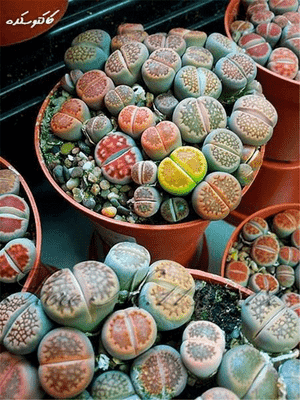
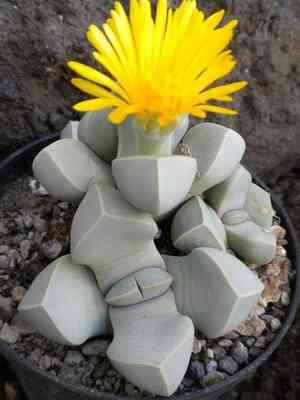
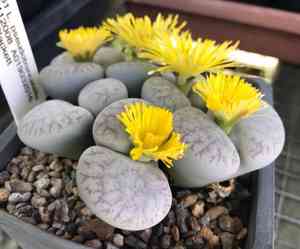
To identify Lithops pseudotruncatella, look for its distinctive stone-like appearance with two fleshy, fused leaves split by a small fissure. The plant's surface can range in color from grey to brown with various patterns that mimic pebbles. Flowers are bright yellow or white and emerge from the central fissure.
Scientific Classification of Truncate living stone
Phylum
Vascular plants
Class
Dicotyledons
Order
Caryophyllales
Family
Fig-marigold
Genus
Living stones
Species
Truncate living stone
Planting and Growing of Truncate living stone
Care Difficulty
Easy
Watering Schedule
Every day
Sunlight Requirements
Full sun
Sunshine Duration
6-10 hours
Ideal Temperature
65-70℉
Soil Type
Potting Mix, Peat Mix
Soil pH
6.5-7.5
Fertilizer Type
Balanced
Pruning Season
Spring, Summer
Pruning Area
Branches, Leaves
Pruning Frequency
2 times a year
Repotting Season
Spring
Pot Type
Terracotta, Plastic
 How to Water Truncate living stone?
Lithops pseudotruncatella are known for their ability to store water in their leaves, allowing them to survive long periods without additional moisture. The key principle in watering them is moderation. It is essential to allow the soil to dry out completely between waterings. A general guideline is about 30 ml per watering session, which should be enough to slightly moisten the soil without causing it to become soggy, mimicking the infrequent rainfall they would receive in their natural habitat.
What are the symptoms of an underwatered Truncate living stone?
›
What should I do if my Truncate living stone is not getting enough water?
›
What are the symptoms of an overwatered Truncate living stone?
›
How to save an overwatered Truncate living stone?
›
 What Are the Sunlight Requirements for Truncate living stone?
Lithops pseudotruncatella thrives best with partial to full sun exposure, typically between 4-6 hours of bright light daily. This promotes healthy growth and flowering by providing the right conditions for photosynthesis and energy acquisition.
More About Sunlight Requirements Techniques→
What is the best lighting setup for Lithops pseudotruncatella?
›
How can I ensure Lithops receives adequate indirect sunlight indoors?
›
What benefits does ideal lighting confer to Lithops pseudotruncatella?
›
 What Is the Ideal Temperature Range for Truncate living stone?
The optimal temperature range for Lithops pseudotruncatella cultivation is between 65°F and 70°F. This range provides the conditions needed for healthy growth, mimicking the plant's native habitat in southern Africa. Maintaining this temperature helps ensure appropriate water retention, metabolic function, and flowering.
 What Soil is Best for Truncate living stone?
Lithops pseudotruncatella thrives in soil that offers excellent drainage. This mimics its natural habitat, where rainwater quickly drains away, preventing root rot and ensuring that the roots can access just enough moisture without being waterlogged. This plant requires soil that is well-aerated. Good aeration provides roots with the necessary oxygen, promoting healthy growth and preventing fungal issues. It replicates the airy, loose soil conditions found in its natural desert environment. While Lithops pseudotruncatella does not require nutrient-rich soil, it thrives in soil that still provides basic nutrients. Minimal organic matter is sufficient, reflecting its adaptation to nutrient-sparse desert soils.
More About Soil→
 How to Fertilize Truncate living stone?
For Lithops pseudotruncatella, the amount of fertilizer should be minimal. Typically, a diluted liquid fertilizer at one-quarter to one-half the recommended strength is sufficient. These plants are adapted to nutrient-poor environments, so a light hand in fertilization is key to their success.
 How to Prune Truncate living stone?
Carefully inspect the plant to identify any dead, shriveled, or damaged leaves. Lithops only shed their outer leaves naturally once or twice a year, so any leaves that seem out of place are likely ready for removal, aiding in the plant's natural rejuvenation process. Gently hold the base of the Lithops and, with sterilized scissors or tweezers, carefully cut or pinch off the dead or brown leaf tissue. Avoid cutting into the healthy parts of the plant, as this can cause unnecessary damage and interfere with the plant's natural growth cycle. After pruning, refrain from watering the Lithops immediately. Allow the plant a couple of days to heal from the pruning stress to prevent moisture-related diseases. This dry period is crucial for minimizing the risk of rot following pruning.
 How to Propagate Truncate living stone plant?
1
Fill the seed tray with a well-draining cactus mix. Lightly moisten the soil before spreading the Lithops seeds evenly on top without covering them with soil as they need light to germinate.
2
Scatter the Lithops seeds on the surface of the prepared seed tray. Do not bury them as they require light to germinate. Maintain a temperature around 20°C for optimal germination conditions.
3
Using a sharp knife, gently separate clusters ensuring each has roots attached. Let the cuts dry out for a couple of days to callus over before planting them into individual pots.
 How to Repot Truncate living stone plant?
1
Lithops pseudotruncatella should be repotted when you notice the plant's stems pushing against the sides of its container or when there is excessive clumping. Another good indication is when the plant becomes excessively root-bound, causing drainage issues. These signs typically occur every 2-3 years, aligning with the plant's natural cycle of growth.
2
When selecting a pot for your Lithops pseudotruncatella, opt for one that is shallow, as their roots are not deep. Ensure the pot has ample drainage holes to prevent waterlogging, which can harm the plant. A terracotta pot is ideal as it allows moisture to evaporate quickly, providing the plant with a more suitable arid environment.
3
The best soil for repotting Lithops pseudotruncatella is a well-draining cactus mix combined with gritty sand. This type of soil mimics their natural habitat, providing excellent drainage and preventing root rot. The gritty texture also helps in anchoring the plant, giving it the stability it needs to thrive.



