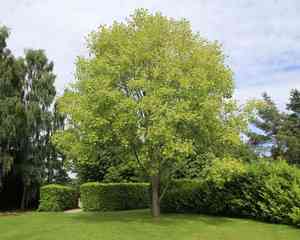
Tulip poplar (Liriodendron tulipifera)
Also known as: Tulipwood, Whitewood, Yellow-Poplar
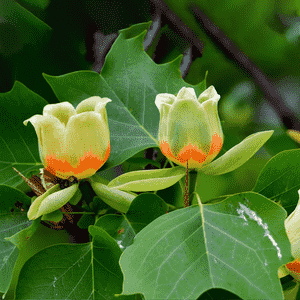
The tulip tree, also known as the tulip poplar, belongs to the magnolia family rather than the poplar family. It is distinguished by its tulip-like green and yellow flowers. As the tallest hardwood in the Eastern United States, Native Americans highly valued it for crafting dugout canoes.
In This Article
Attributes of Tulip poplar
Lifespan
Perennial
Plant Type
Tree
Plant Height
10 m to 40 m
Spread
12 m
Leaf Color
Green Yellow White Variegated Gold
Flower Size
4 cm
Flower Color
Yellow Green Orange Gold
Images of Tulip poplar
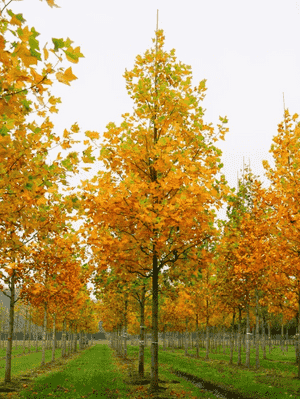
Quickly Identify Tulip poplar
1
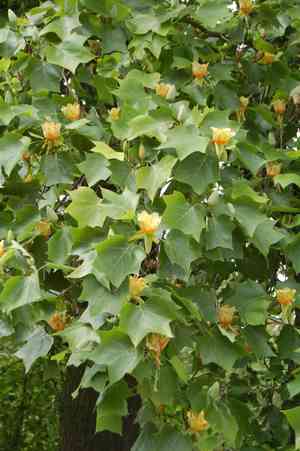
Tall pyramidal shape, reaching 90-200 feet (27-61 meters) with 4-lobed waxy leaves.
2
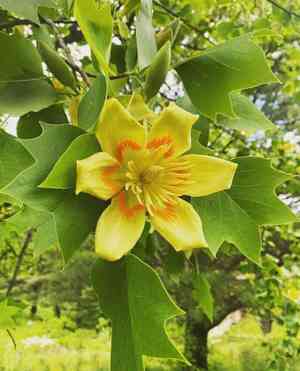
Distinctive cup-shaped, fragrant yellow flowers with tulip-like orange center, blooming in late spring.
3
Oblong fruit aggregate of winged samaras, 2-3 inches long (5-7.6 cm), maturing to brown.
4
Alternate, palmately veined leaves, bright green with paler undersides, turning golden yellow in fall.
5
Distinct stem with stipule scars, oval flattened buds, free of branches up to 80 feet (24 meters).
Scientific Classification of Tulip poplar
Phylum
Vascular plants
Class
Dicotyledons
Order
Magnoliales
Family
Magnolia
Genus
Tulip trees
Species
Tulip poplar
Planting and Growing of Tulip poplar
Care Difficulty
Easy
Watering Schedule
Every 3 days
Sunlight Requirements
Full sun
Sunshine Duration
4-6 hours
Ideal Temperature
60-80℉
Soil Type
Potting Mix, Peat Mix
Soil pH
6.5-7.5
Fertilizer Type
Balanced
Pruning Season
Spring, Summer
Pruning Area
Branches, Leaves
Pruning Frequency
2 times a year
Repotting Season
Spring
Pot Type
Plastic, Ceramic
 How to Water Tulip poplar?
For Liriodendron tulipifera, ensure you provide deep watering. This tree thrives best when the water penetrates deeply, promoting a robust root system. It's vital to keep the soil consistently moist to mimic its natural forest floor habitat.
More About Watering Techniques→
What are the symptoms of an underwatered Tulip poplar?
›
What should I do if my Tulip poplar is not getting enough water?
›
What are the symptoms of an overwatered Tulip poplar?
›
How to save an overwatered Tulip poplar?
›
 What Are the Sunlight Requirements for Tulip poplar?
A combination of full sun and partial sun suits Liriodendron tulipifera well, fostering strong growth, vibrant leaf color, and abundant flowering. Adequate light ensures healthy photosynthesis and energy production.
More About Sunlight Requirements Techniques→
What is the best lighting condition for Liriodendron tulipifera?
›
How can I ensure optimal sunlight exposure for Liriodendron tulipifera?
›
What are the benefits of providing ideal light conditions for Liriodendron tulipifera?
›
 What Is the Ideal Temperature Range for Tulip poplar?
Liriodendron tulipifera thrives best in environments where the daytime temperatures range from 60 to 80 degrees Fahrenheit. This range facilitates optimal metabolic processes and photosynthesis, contributing to robust growth and strong stem development. Consistent temperatures within this range enhance leaf coloration and the vigor of floral displays, essential for the overall health and aesthetic of the plant.
 What Soil is Best for Tulip poplar?
Liriodendron tulipifera thrives in soil that holds moisture well. A good retention level ensures the tree gets ample water without the roots becoming waterlogged, aiding in its healthy growth. This tree prefers nutrient-rich soil loaded with organic matter. Such soil supports vigorous growth and the production of lush, green foliage that enhances the initial beauty and shading capabilities of this towering tree. While moisture is crucial, the soil must also drain well to prevent root rot. Well-drained soils under Liriodendron tulipifera encourage robust root systems, which are essential for the stability of this large tree.
More About Soil→
 How to Fertilize Tulip poplar?
For Liriodendron tulipifera, it's best to apply fertilizer sparingly. Use a balanced fertilizer with equal parts nitrogen, phosphorus, and potassium. For liquid fertilizers, dilute to a quarter of the recommended strength to prevent excessive nutrient buildup.
More About Fertilizing Techniques→
 How to Prune Tulip poplar?
Begin pruning Liriodendron tulipifera by identifying and removing any dead, diseased, or damaged branches. Start at the tree's base and work your way upward, ensuring to maintain the tree's natural shape. Use sharp, clean tools to make cuts at a slight angle, just above a bud or branch junction. Pruning is best carried out in early spring before the tree comes into leaf, which allows cuts to heal quickly without energy being diverted from leaf growth. Alternatively, pruning in summer after flowering can help shape the tree and promote health.
More About Pruning Techniques→
 How to Propagate Tulip poplar plant?
1
Collect seeds from mature cones in the autumn. Ensure seeds are fully dried and stored in a cool place until spring planting to promote viability
2
Select healthy branches from the current year's growth during the early spring. Cut six to eight-inch sections and remove the lower leaves to prepare for planting.
3
Sow seeds or plant cuttings in a well-draining soil mix. Ensure adequate watering without waterlogging the soil for optimal root growth and seed germination.
 How to Repot Tulip poplar plant?
1
Liriodendron tulipifera indicates repotting readiness when its roots begin to outgrow their current pot. Look for roots emerging from the drainage holes or visible through the soil surface. Spring or early summer are optimal seasons for repotting, allowing the plant ample time to recover and establish before the onset of winter.
2
Choose a pot that is only slightly larger than the current one, ensuring it's not too big to avoid waterlogging. Ensure there are enough drainage holes at the bottom to prevent root rot. A slightly heavier pot helps keep the tall plant stable against gusts of wind.
3
Opt for a rich, well-draining soil mix ideally composed of organic matter and a bit of sand or perlite. This ensures good root aeration and prevents water from pooling, which is crucial for the health of Liriodendron tulipifera, known for its preference for airy soils.



