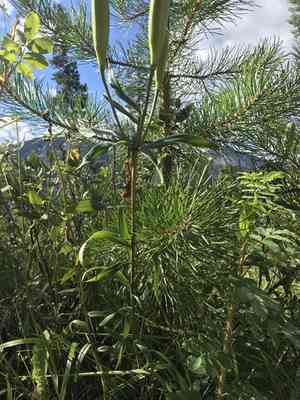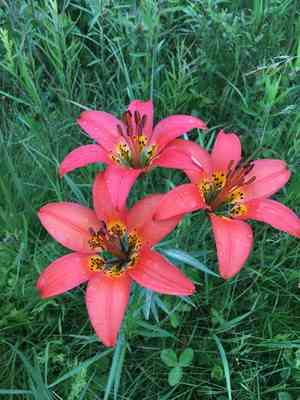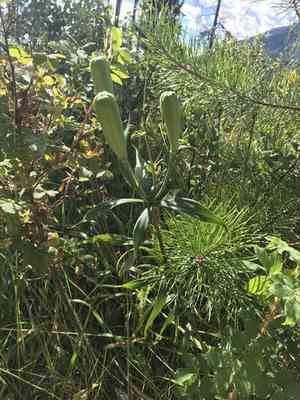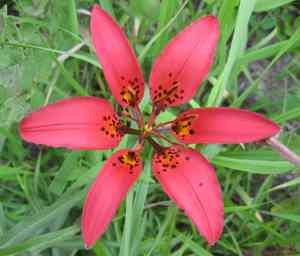
Wood lily(Lilium philadelphicum)

Wood lily (Lilium philadelphicum)

Also known as: Prairie lily

The wood lily (Lilium philadelphicum), a perennial flower that attracts butterflies, birds, and bees, thrives in well-drained soils and struggles in flooded conditions. One major reason for its endangerment is the over-harvesting of its flowers, which prevents the bulbs from regenerating properly.

Attributes of Wood lily

Lifespan
Perennial
Plant Type
Herb
Plant Height
30 cm to 91 cm
Spread
30 cm
Leaf Color
Green
Flower Size
2.5 cm to 8 cm
Flower Color
Orange Red Purple

PlantJoy - Identify plants with a snap

Identify and diagnose plants, get toxicity alerts, and explore safety guides for all types of fungi.

Try for Free

Images of Wood lily

Wood lily(Lilium philadelphicum)

Quickly Identify Wood lily

1
Upward-facing orangish-red blooms, clustered in 1-3, distinctive early to mid-summer inflorescence.
2
2-3 inch (5-7.5 cm) flowers with purplish-brown spots, maroon anthers, and gradient to yellow base.
3
3-chambered capsule fruit with textured, dehiscent capsule releasing minute seeds for wind dispersal.
4
Narrow elliptic leaves, 2-6 inches (5-15 cm) long, smooth surfaces, stalkless, alternate arrangement.
5
Round, unbranched stem up to 4 feet (1.2 meters) tall, glaucous color, sturdy support for plant.

Scientific Classification of Wood lily

Phylum
Vascular plants
Class
Monocotyledons
Order
Liliales
Family
Lily
Genus
Lilies
Species
Wood lily

Planting and Growing of Wood lily

Care Difficulty
Easy
Watering Schedule
Every 4 days
Sunlight Requirements
Full sun
Sunshine Duration
4-8 hours
Ideal Temperature
60-75℉
Soil Type
Potting Mix, Peat Mix
Soil pH
6.5-7.5
Fertilizer Type
Balanced
Pruning Season
Spring, Summer
Pruning Area
Branches, Leaves
Pruning Frequency
2 times a year
Repotting Season
Spring
Pot Type
Plastic, Terracotta

water icon How to Water Wood lily?

For Lilium philadelphicum, the watering should be thorough but not excessive. Aim for 500 ml of water allowing it to soak well into the soil. This ensures that the soil remains consistently moist but not waterlogged. This plant prefers soil that is consistently moist but well-drained. Always ensure the excess water has drained out to avoid root rot.
What are the symptoms of an underwatered Wood lily?
What should I do if my Wood lily is not getting enough water?
What are the symptoms of an overwatered Wood lily?
How to save an overwatered Wood lily?

sunlight icon What Are the Sunlight Requirements for Wood lily?

Sunlight Requirements: Full sun, Partial sun
Duration of light: 6 to 8 hours
Lilium philadelphicum prefers an environment where it is exposed to full sun or up to 8 hours of partial sun each day, which enhances its flowering ability and foliage health significantly.
How much sunlight is ideal for Lilium philadelphicum?
What should be done to achieve ideal sunlight conditions?
What are the benefits of achieving ideal sunlight conditions?
More About Sunlight Requirements Techniques

temperature icon What Is the Ideal Temperature Range for Wood lily?

Ideal Temperature: 60 ~ 75℉
The ideal temperature range for Lilium philadelphicum is between 60°F to 75°F. This range is optimal for growth and flowering, providing the right balance for photosynthesis and nutrient absorption. Keeping the temperature within this range will ensure healthy development and vibrant blooms.

soil icon What Soil is Best for Wood lily?

Soil type: Loam, Sandy soil
Soil PH: 6.5 ~ 7.5
Lilium philadelphicum thrives best in well-drained soil that prevents waterlogging. This kind of soil helps maintain optimal root health by allowing excess water to escape, reducing the risk of rot and promoting strong growth. A soil rich in organic matter is beneficial for these lilies as it provides essential nutrients needed for vigorous growth. Adding compost or well-rotted manure can enhance the soil's fertility, supporting lush foliage and vibrant blooms. While it's crucial to avoid soggy conditions, maintaining a level of consistent moisture is key. This balance ensures that nutrients are effectively transported to the plant's stems and leaves, avoiding stress and encouraging healthy development.

fertilize icon How to Fertilize Wood lily?

Fertilizer type: Balanced
Lilium philadelphicum requires a balanced approach to fertilization. Depending on the type of fertilizer used, adjust the amount carefully. For liquid fertilizers, use a half-diluted solution of a balanced liquid fertilizer every two weeks. Avoid heavy doses to prevent root burn.

prune icon How to Prune Wood lily?

Pruning Time: Autumn
While Lilium philadelphicum is not toxic, it's always prudent to wear gloves to avoid irritation from sap or handling debris. This practice also keeps your hands safe from sharp tools. Before pruning, examine the plant for signs of disease or pest infestation. Prune diseased sections immediately and consider treating the plant to prevent further damage. More About Pruning Techniques

propagate icon How to Propagate Wood lily plant?

Propagate Time: Spring, Early spring
1
Seeds should be collected once the seed pods have matured and dried on the plant. This typically occurs in late summer or early autumn. Ensure they are fully dry before storing them for sowing.
2
Fill seed trays with a well-draining mix and moisten slightly before sowing the seeds. Create small indentations and sow seeds thinly, covering lightly with soil. Maintain moisture and place trays in a bright, warm location.
3
Divide the bulbs in early spring when they are not in active growth. Carefully dig around the parent plant, gently removing the bulbs. Use a sharp tool to separate the bulbs ensuring each piece has some roots attached.
More About Propagating Techniques

repot icon How to Repot Wood lily plant?

Repotting frequency: Every 2-3 years
1
Lilium philadelphicum should be repotted when you notice its roots filling the pot, appearing cramped. These signs often indicate the plant has depleted nutrients from the soil. Also, if the plant's growth slows down or blooms diminish, it's time to consider repotting.
2
Select a pot that is just one size larger than the current one. This provides enough room for root growth without causing waterlogging. A pot with drainage holes is essential, as it ensures excess water can escape, preventing root rot and keeping the plant healthy.
3
Opt for a well-draining, loamy soil mix. Such a mix maintains moisture while preventing water from sitting around the roots, which can lead to decay. The soil should be loose and rich in organic matter to provide nutrients and facilitate healthy growth.

PlantJoy - Identify plants with a snap

Find the best spots for them to optimize their health, simply using your phone.

Try for Free

Toxicity of Wood lily

Is Wood lily toxic to cat?

The consumption of any portion of the wood lily is highly toxic to felines. Even a mere 1-2 leaves or petals, or simply drinking water from a vase containing the flower can lead to serious and rapid kidney failure. Immediate veterinary assistance is crucial if you believe your cat has ingested any small part of this plant or the water it was in. Initial signs may include increased salivation, vomiting, and diarrhea.

Identify toxic plants for your safety

Learn which plants are harmful to you and your pets, and make informed choices for a safer home!

Try for Free
WARNING
The judgment on toxicity and danger is for reference only. We DO NOT GUARANTEE any accuracy of such judgment. Therefore, you SHALL NOT rely on such judgment. It is IMPORTANT TO SEEK PROFESSIONAL ADVICE in advance when necessary.
More About Toxic Techniques