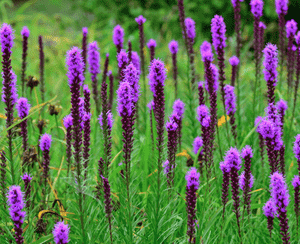
Dense blazing star (Liatris spicata)
Also known as: Prairie gay feather, Button snakewort
Dense blazing star (Liatris spicata), native to eastern North America, belongs to the same family as sunflowers and daisies. It is highly favored by pollinators like bees and butterflies, thus promoting biodiversity. While it can be particular about soil conditions, its presence significantly benefits the local ecosystem by attracting numerous pollinating insects.
In This Article
Attributes of Dense blazing star
Lifespan
Perennial, Annual
Plant Type
Herb
Plant Height
20 cm to 1.8 m
Spread
45 cm
Leaf Color
Green
Flower Size
2.5 cm
Flower Color
Pink Purple White Violet
Images of Dense blazing star
Quickly Identify Dense blazing star
1
Tall perennial herb, reaching 3-6 feet (90-180 cm), forming compact clumps with grass-like foliage.
2
Showy flowers on 6-12 inch (15-30 cm) long spikes, blooming from top down with vibrant colors.
3
Distinctive cypselae fruit with stiff, light brown bristles under 0.2 inches (5 mm) long for wind dispersal.
4
Basal leaves with deep green color, smooth to sparsely hairy, up to 12 inches (30 cm) long.
5
Round stem, green to purplish, 1-2 feet (30-60 cm) tall, unbranched with fine pubescence.
Scientific Classification of Dense blazing star
Phylum
Vascular plants
Class
Dicotyledons
Order
Asters bellflowers fanflowers and allies
Family
Daisy
Genus
Gay feathers
Species
Dense blazing star
Planting and Growing of Dense blazing star
Care Difficulty
Easy
Watering Schedule
Every 4 days
Sunlight Requirements
Full sun
Sunshine Duration
6-10 hours
Ideal Temperature
70-75℉
Soil Type
Potting Mix, Peat Mix
Soil pH
5-7
Fertilizer Type
Balanced
Pruning Season
Spring, Summer
Pruning Area
Branches, Leaves
Pruning Frequency
2 times a year
Repotting Season
Spring
Pot Type
Plastic, Ceramic
 How to Water Dense blazing star?
Liatris spicata requires watering until the soil is evenly moist but not waterlogged. Each session should provide about 250 mL of water, soaking into the soil but avoiding any standing water around the root area. The aim is to support its deep-root system while preventing root rot.
More About Watering Techniques→
What are the symptoms of an underwatered Dense blazing star?
›
What should I do if my Dense blazing star is not getting enough water?
›
What are the symptoms of an overwatered Dense blazing star?
›
How to save an overwatered Dense blazing star?
›
 What Are the Sunlight Requirements for Dense blazing star?
Full sun exposure provides the best flowering for Liatris spicata. Ideal conditions encourage lush, vibrant growth and extended blooming periods that enhance garden appeal.
More About Sunlight Requirements Techniques→
What is the ideal light condition for Liatris spicata?
›
How can I ensure my Liatris spicata receives the ideal sun exposure?
›
What are the benefits of providing ideal sunlight to Liatris spicata?
›
 What Is the Ideal Temperature Range for Dense blazing star?
Liatris spicata thrives in temperatures ranging from 70°F to 75°F. These temperatures provide the optimal conditions for photosynthesis, transpiration, and overall growth, ensuring that the plant maintains its vibrant color and structural integrity. In such an environment, nutrient uptake is maximized, and root development is robust, allowing the Liatris spicata to flourish with minimal stress.
 What Soil is Best for Dense blazing star?
Liatris spicata thrives in well-drained soil. This prevents waterlogging, which can cause root rot. The ability to escape standing water encourages healthier root systems and vigorous growth. This plant prefers soil that is not overly rich. Excessive fertility can promote lanky growth and fewer blooms. Providing moderate fertility ensures the plant focuses energy on vibrant, substantial flowering. Liatris spicata does well in soil that retains moisture but is still aerated. This balanced condition helps maintain consistent moisture without suffocating the roots, promoting overall plant health.
More About Soil→
 How to Fertilize Dense blazing star?
For Liatris spicata, a balanced approach to fertilizer quantity is key. Use a well-balanced 10-10-10 liquid fertilizer and dilute it to half strength. Apply one cup per plant to ensure balanced growth without overburdening the plant with nutrients.
More About Fertilizing Techniques→
 How to Prune Dense blazing star?
During autumn, after the first frost, cut the stems down to about one inch above the soil level. This helps prevent any overwintering pests or diseases, ensuring a healthy start for the next growing season. In spring, restrain from cutting any new green shoots. Only trim brown, dead foliage to allow new shoots to gain strength and flourish throughout the season.
More About Pruning Techniques→
 How to Propagate Dense blazing star plant?
1
Start by collecting seeds from mature Liatris spicata flowers. Clean and dry the seeds thoroughly to prevent mold development during germination. Store seeds in a cool, dry place until the sowing season.
2
Fill a seed tray with potting mix and sprinkle the Liatris spicata seeds evenly on top. Lightly cover with more potting mix to ensure contact with soil. Maintain moisture, but avoid waterlogging, to aid germination.
3
When dividing, gently dig up the entire Liatris spicata plant. Shake off excess soil and use a sharp knife to split the roots into sections, ensuring each has a viable root system and shoot. Replant each section promptly.
 How to Repot Dense blazing star plant?
1
Repotting is necessary when Liatris spicata outgrows its pot, indicated by roots coming through drainage holes, or if the plant's growth significantly slows. Spring and Autumn are the ideal seasons for repotting because they coincide with Liatris's active growth periods, ensuring quicker adaptation to the new environment.
2
Choose a pot that is slightly larger than the existing one, with good drainage holes. The new pot should accommodate the root system comfortably without excessive space, which can retain water and cause root rot. A wider pot allows for spreading stems, supporting the plant's upright growth habit.
3
Opt for a well-draining garden soil enriched with organic matter. Such soil mimics Liatris spicata's native habitat, promoting healthy root growth and preventing waterlogging. A well-draining medium facilitates nutrient uptake, propelling vigorous flowering and foliage development.
Learn More About Dense blazing star Diseases
Anthracnose
Bacterial Leaf Spot
Bacterial Soft Rot
Bacterial Wilt
Crown Gall
Cyst Nematode
Damping-off
Downy Mildew
Drought Stress
Fusarium Wilt
Gray Mold
Leaf Spot
Mosaic
Nutrient Deficiency
Nutrient Toxicity
Powdery Mildew
Root Rot
Root-knot Nematode
Rusts
Sooty Mold
Spider Mites
Temperature Stress
Thrips Damage
White Mold



