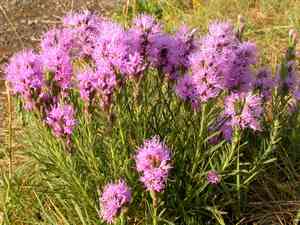
Dotted Gayfeather (Liatris punctata)
Also known as: Narrow-Leaved Blazingstar
Dotted Gayfeather (Liatris punctata) thrives in arid conditions due to its extensive taproot system, which allows it to draw moisture from deep within the soil. This deep rooting, along with its resilient, narrow leaves, significantly enhances its drought resistance. The plant's attractive pinkish-lavender blooms typically emerge from late summer through early fall.
In This Article
Attributes of Dotted Gayfeather
Lifespan
Perennial
Plant Type
Herb
Plant Height
14 cm to 85 cm
Spread
15 cm to 30 cm
Leaf Color
Green Blue
Flower Size
2.5 cm
Flower Color
Purple Pink
Images of Dotted Gayfeather
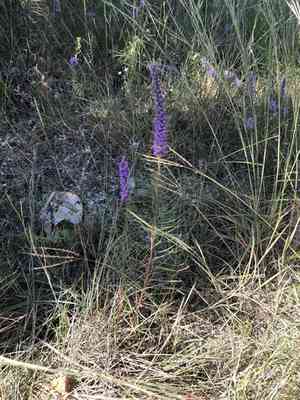
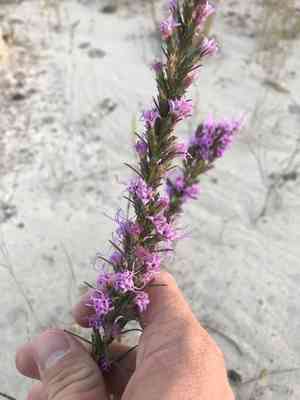
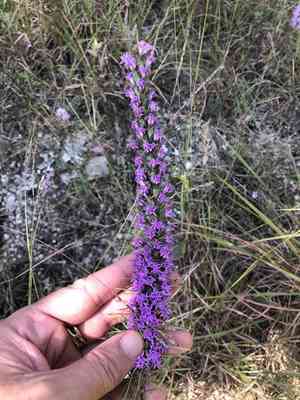
Quickly Identify Dotted Gayfeather
1
Look for narrow, grass-like leaves and tall spikes of densely packed, small purple flowers. The stems are typically unbranched and hairy.
Scientific Classification of Dotted Gayfeather
Phylum
Vascular plants
Class
Dicotyledons
Order
Asterales
Family
Daisy
Genus
Gay feathers
Species
Dotted Gayfeather
Planting and Growing of Dotted Gayfeather
Care Difficulty
Easy
Watering Schedule
Every 2 days
Sunlight Requirements
Full sun
Sunshine Duration
4-6 hours
Ideal Temperature
60-80℉
Soil Type
Potting Mix, Peat Mix
Soil pH
6.5-7.5
Fertilizer Type
Balanced
Pruning Season
Spring, Summer
Pruning Area
Branches, Leaves
Pruning Frequency
2 times a year
Repotting Season
Spring
Pot Type
Plastic, Ceramic
 How to Water Dotted Gayfeather?
Liatris punctata thrives with deep, less frequent watering. When watering, aim for about 250 ml per session, ensuring that water reaches the root zone. This method encourages deep root systems and drought tolerance, consistent with its native habitat.
What are the symptoms of an underwatered Dotted Gayfeather?
›
What should I do if my Dotted Gayfeather is not getting enough water?
›
What are the symptoms of an overwatered Dotted Gayfeather?
›
How to save an overwatered Dotted Gayfeather?
›
 What Are the Sunlight Requirements for Dotted Gayfeather?
Liatris punctata benefits from full sun conditions. Full sun ensures that the plant receives enough energy for optimal growth, resulting in a healthy, lush display and vibrant flowers.
More About Sunlight Requirements Techniques→
What type of sunlight does it prefer?
›
How to provide ideal light conditions?
›
What are the benefits of ideal light exposure?
›
 What Is the Ideal Temperature Range for Dotted Gayfeather?
Liatris punctata thrives in a temperature range of 60°F to 80°F. This range ensures that the plant can photosynthesize effectively and maintain strong cellular functions, contributing to healthy growth and vibrant flowering.
 What Soil is Best for Dotted Gayfeather?
Liatris punctata thrives in well-drained soils, a crucial requirement to prevent root rot. This feature allows the plant roots to access oxygen properly, promoting healthier and stronger growth. This plant benefits from soils that provide moderate fertility. A soil rich in organic matter but not overly fertile ensures that the plant is not overly stimulated to grow too quickly, maintaining its natural resilience. Liatris punctata requires soils that support effective aeration. Proper aeration helps in maintaining root health by ensuring a constant supply of oxygen, which is vital for metabolic processes in plant cells.
 How to Fertilize Dotted Gayfeather?
Liatris punctata, commonly known as dotted blazing star, thrives with modest fertilization. Use a balanced liquid fertilizer diluted to half-strength, applying approximately 200 ml per plant. Solid fertilizers should also be applied sparingly, ensuring not to overwhelm the plant's natural resilience.
 How to Prune Dotted Gayfeather?
After the Liatris punctata has finished flowering, typically in late summer or early autumn, trim away the spent flower stalks. This helps channel the plant’s energy into root development and next year’s growth instead of seed production. Use pruning to maintain the desired shape of your Liatris punctata. Remove any leggy growth to keep the plant compact and bushy. This not only enhances aesthetic appeal but also promotes better structural integrity against wind damage. In early spring, before new growth begins, remove old foliage that has died back over the winter. This clears space for fresh shoots and prevents blockages that can hinder sun and air exposure.
More About Pruning Techniques→
 How to Propagate Dotted Gayfeather plant?
1
Before planting seeds or divisions of Liatris punctata, prepare the soil by tilling and ensuring it is well-draining. The ideal soil pH should be slightly acidic to neutral. Mix in organic compost to improve soil fertility and provide a nutrient-rich environment for the young plants.
2
For seed propagation, scatter the seeds on the surface of the prepared soil and lightly cover them with a thin layer of soil. Water them gently to initiate germination, ensuring the soil remains consistently moist but not waterlogged throughout the germination period.
3
For division propagation, carefully dig up the mature Liatris punctata and shake off excess soil. Identify natural divisions within the roots and separate them using a sharp knife or garden shears. Replant the divisions in suitable locations immediately to reduce transplant shock.
 How to Repot Dotted Gayfeather plant?
1
Liatris punctata typically requires repotting every 2 to 3 years. Look for signs like roots growing out of the drainage holes, a slowdown in growth, or soil degradation. These signals indicate it's time for a fresh start in a new pot.
2
Opt for a pot that is one size larger than the current one, ensuring it has sufficient drainage holes. A larger pot allows roots to expand freely, facilitating robust growth and preventing root rot by promoting adequate drainage.
3
Select a well-draining, sandy soil mix to avoid waterlogging, which Liatris punctata dislikes. This type of soil mimics its natural environment, ensuring the roots receive the necessary aeration and preventing diseases.
Learn More About Dotted Gayfeather Diseases
Anthracnose
Bacterial Leaf Spot
Bacterial Soft Rot
Bacterial Wilt
Chemical Injury
Crown Gall
Cyst Nematode
Damping-off
Drought Stress
Fusarium Wilt
Gray Mold
Leaf Spot
Mosaic
Nutrient Deficiency
Nutrient Toxicity
Powdery Mildew
Root Rot
Root-knot Nematode
Rusts
Sooty Mold
Spider Mites
Temperature Stress
Thrips Damage
White Mold



