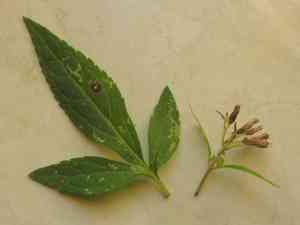
Rocky mountain blazing star (Liatris ligulistylis)
Also known as: Strap-style gayfeather
The New England aster (Symphyotrichum novae-angliae) is common in the central United States and Canada. It features larger leaves at the base and smaller ones along the stem. A single stalk can produce up to 21 vibrant purple flowers, attracting monarch butterflies and bleeding flower moths.
In This Article
Attributes of Rocky mountain blazing star
Lifespan
Perennial
Plant Type
Herb
Plant Height
30 cm to 91 cm
Spread
30 cm to 45 cm
Leaf Color
Green
Flower Size
2.5 cm
Flower Color
Purple Pink Red
Images of Rocky mountain blazing star
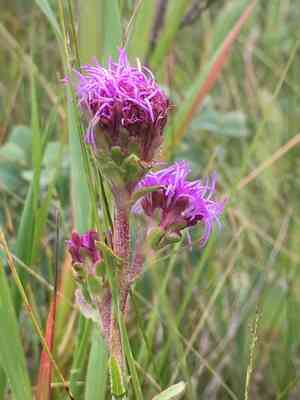
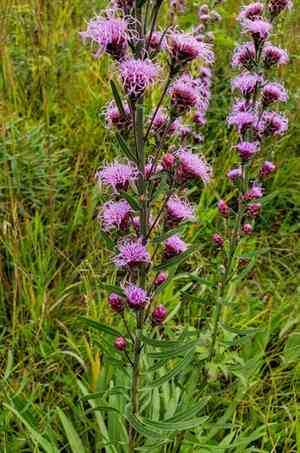
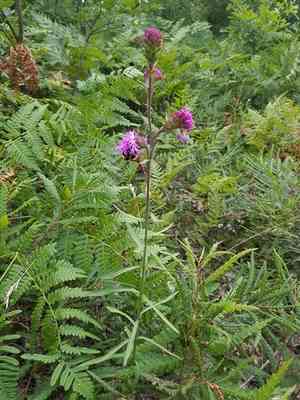
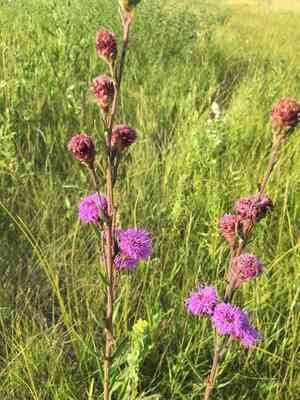
Quickly Identify Rocky mountain blazing star
1
Showy pinkish-purple floral spikes with fluffy thistle-like disc flowers.
2
Distinctive cypselae fruit with ring of barbed hairs for dispersal.
3
Stems are tall with green coloration and fine whitish hairs, slightly fuzzy texture.
4
Leaves transition from linear to oblanceolate, featuring whitish hairs and midribs.
5
Upright stem reaching 2-3 feet (60-90 cm), forming clumps through corm propagation.
Scientific Classification of Rocky mountain blazing star
Phylum
Vascular plants
Class
Dicotyledons
Order
Asterales
Family
Daisy
Genus
Gay feathers
Species
Rocky mountain blazing star
Planting and Growing of Rocky mountain blazing star
Care Difficulty
Easy
Watering Schedule
Every 4 days
Sunlight Requirements
Full sun
Sunshine Duration
6-8 hours
Ideal Temperature
65-75℉
Soil Type
Potting Mix, Peat Mix
Soil pH
6.5-7.5
Fertilizer Type
Balanced
Pruning Season
Spring, Summer
Pruning Area
Branches, Leaves
Pruning Frequency
2 times a year
Repotting Season
Spring
Pot Type
Plastic, Ceramic
 How to Water Rocky mountain blazing star?
When watering Liatris ligulistylis, aim to thoroughly saturate the soil. It's key to ensure the water seeps around the roots, but not to the point of standing water. The principle is to moisten the soil deeply but allow the top few inches to dry out between watering to mimic the plant's natural prairie habitat.
What are the symptoms of an underwatered Rocky mountain blazing star?
›
What should I do if my Rocky mountain blazing star is not getting enough water?
›
What are the symptoms of an overwatered Rocky mountain blazing star?
›
How to save an overwatered Rocky mountain blazing star?
›
 What Are the Sunlight Requirements for Rocky mountain blazing star?
Liatris ligulistylis flourishes in full sun, ideally receiving 6 to 8 hours of sunlight. Proper lighting ensures robust flowering and healthy growth, essential for its ornamental and ecological roles.
More About Sunlight Requirements Techniques→
What is the best lighting for Liatris ligulistylis?
›
How can I ensure Liatris ligulistylis gets enough sunlight?
›
What are the benefits of optimal sunlight for Liatris ligulistylis?
›
 What Is the Ideal Temperature Range for Rocky mountain blazing star?
The ideal temperature range for growing Liatris ligulistylis is between 65°F and 75°F. This range provides a conducive environment for optimal growth, ensuring robust foliage and vibrant blooms. The stable temperature within this range supports enzymatic processes and nutrient assimilation necessary for the plant's health.
 What Soil is Best for Rocky mountain blazing star?
Liatris ligulistylis flourishes in well-draining soil that ensures roots are exposed to oxygen. This type of soil prevents root rot and promotes vigorous growth. A soil that is neither too rich nor too poor in nutrients is ideal. It promotes healthy blooms without excessive foliage growth, striking a perfect balance. While well-draining, the soil should retain enough moisture to sustain the plant between waterings. This encourages strong root development and drought resistance.
 How to Fertilize Rocky mountain blazing star?
Liatris ligulistylis benefits from moderate fertilization. When using liquid fertilizer, mix 1 tablespoon of a balanced 10-10-10 fertilizer per gallon of water. For slow-release granules, apply at a rate of about 2 pounds per 100 square feet. Ensure even distribution to avoid over-concentration.
 How to Prune Rocky mountain blazing star?
Begin by identifying any dead, diseased, or damaged stems. These are typically brown or black in color and feel brittle to the touch. Cut these back to the ground level using sharp shears. After the flowering period, trim the flower stalks down to the base. This encourages new growth and prepares the plant for the next blooming season. Shape the plant by trimming any uneven or overly tall stems. This not only maintains the plant's aesthetic appeal but also ensures that each part of the plant receives adequate sunlight and air circulation.
More About Pruning Techniques→
 How to Propagate Rocky mountain blazing star plant?
1
For seed propagation, ensure the soil is light, well-draining, and enriched with organic matter. This provides an optimal environment for seed germination and root development.
2
Scatter the seeds over the prepared soil and cover them lightly. Seeds should be sown 1 inch apart. Ensure they are not buried too deep, which may inhibit germination.
3
For division propagation, dig up the plant carefully, avoiding damage to the roots. Separate the plant into sections with a sharp spade, each section should have roots and some foliage.
 How to Repot Rocky mountain blazing star plant?
1
Liatris ligulistylis signals it's time to repot when roots poke out from the drainage holes or if growth slows noticeably. Spring and autumn provide the best seasons for repotting due to mild temperatures and active root growth periods.
2
Opt for a pot that is one to two inches larger in diameter than the current one. Ensure it has adequate drainage holes to prevent water stagnation, which helps in promoting healthy root development and avoids root rot, keeping your plant thriving.
3
A well-draining loamy soil mixture is ideal as it provides balanced moisture retention and drainage. This type of soil offers a nutrient-rich environment and prevents waterlogging, thereby ensuring the plant’s roots remain healthy and robust.
Learn More About Rocky mountain blazing star Diseases
Anthracnose
Bacterial Leaf Spot
Bacterial Wilt
Crown Gall
Cyst Nematode
Damping-off
Downy Mildew
Drought Stress
Fusarium Wilt
Gray Mold
Leaf Spot
Mosaic
Nutrient Deficiency
Nutrient Toxicity
Powdery Mildew
Root Rot
Root-knot Nematode
Rusts
Sooty Mold
Spider Mites
Temperature Stress
Thrips Damage
White Mold



