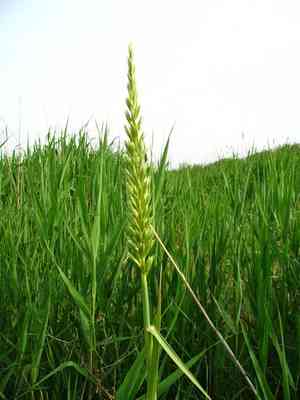
Mammoth wild rye (Leymus racemosus)
Also known as: Siberian lyme grass
Crop expansion faces multiple challenges, prompting scientists to explore wheat's evolutionary relatives to bolster its resistance to biotic and abiotic stresses. Leymus racemosus is one such relative that has demonstrated significant potential for enhancing modern wheat cultivars.
In This Article
Attributes of Mammoth wild rye
Lifespan
Perennial
Plant Type
Grass
Plant Height
100 to 200 cm
Spread
40 to 60 cm
Leaf Color
Bluish-green
Flower Size
1 to 3 cm
Flower Color
Green transitioning to tan as it matures
Images of Mammoth wild rye


Quickly Identify Mammoth wild rye
1
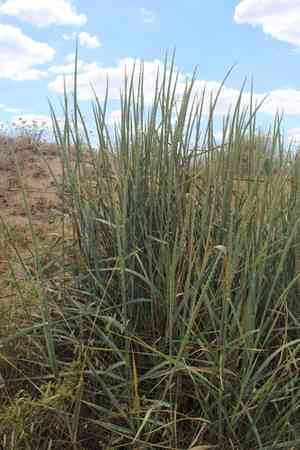
Robust clump-forming habit in cool climates.
2
Long, arching steel-blue leaves, 8-16 inches (20-40 cm) long.
3
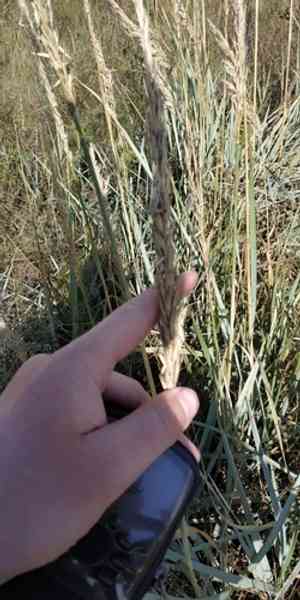
Distinctive tall spikes with hairy florets, 6-14 inches (15-35 cm) tall.
4
Versatile in saline-rich soils with rapid spread.
5
Linear leaves with parallel venation, smooth texture, and glossy appearance.
Scientific Classification of Mammoth wild rye
Phylum
Vascular plants
Class
Monocotyledons
Order
Poales
Family
Grass
Genus
Wildryes
Species
Mammoth wild rye
Planting and Growing of Mammoth wild rye
Care Difficulty
Easy
Watering Schedule
Every 2 days
Sunlight Requirements
Full sun
Sunshine Duration
6-8 hours
Ideal Temperature
59-77℉
Soil Type
Potting Mix, Peat Mix
Soil pH
6.5-7.5
Fertilizer Type
Balanced
Pruning Season
Spring, Summer
Pruning Area
Branches, Leaves
Pruning Frequency
2 times a year
Repotting Season
Spring
Pot Type
Plastic, Ceramic
 How to Water Mammoth wild rye?
The watering amount for Leymus racemosus should be around 500 ml per session. This amount ensures that the roots are adequately moistened without causing waterlogging. The soil should be damp but not soggy, following the principle of keeping the first few centimeters of the soil moist.
What are the symptoms of an underwatered Mammoth wild rye?
›
What should I do if my Mammoth wild rye is not getting enough water?
›
What are the symptoms of an overwatered Mammoth wild rye?
›
How to save an overwatered Mammoth wild rye?
›
 What Are the Sunlight Requirements for Mammoth wild rye?
Leymus racemosus thrives in full sun for about 6 to 8 hours daily. This light intensity ensures lush, dense growth and robust stems, enhancing its visual appeal as a garden staple.
What is the ideal lighting for Leymus racemosus?
›
How to achieve the ideal lighting conditions?
›
What are the benefits of providing ideal lighting?
›
 What Is the Ideal Temperature Range for Mammoth wild rye?
The ideal temperature range for Leymus racemosus is between 59°F and 77°F. This range supports optimal growth and allows the plant to thrive, maintaining its vibrant color and structural integrity. Keeping the temperature consistently within this range will help ensure healthy development and minimize stress on the plant.
 What Soil is Best for Mammoth wild rye?
Leymus racemosus thrives in well-drained soil, which prevents waterlogging and root rot. This promotes healthy root development, ensuring the plant accesses essential nutrients efficiently. This plant prefers soils with moderate fertility levels. Excessive nutrients can lead to overly rapid growth, which might compromise structural stability. Moderate fertility ensures balanced growth. While it doesn't require excessive moisture, having soil that can retain moderate moisture benefits Leymus racemosus during dry spells, offering a stable environment for sustained growth.
 How to Fertilize Mammoth wild rye?
Leymus racemosus requires a balanced nutrient supply, but over-fertilizing should be avoided. Typically, you would use around 25 grams of balanced granular fertilizer per square meter when applying slow-release options. Liquid fertilizers should be diluted to half strength and applied moderately.
 How to Prune Mammoth wild rye?
Begin by examining your Leymus racemosus for dead or damaged stems. These should be removed first to improve air circulation and allow sunlight to reach all parts of the plant. Gradually shape the plant by trimming back overgrown sections. Focus on maintaining a natural contour, which will help in controlling its spread and encourage even growth. Avoid cutting more than one-third of the plant at a time.
More About Pruning Techniques→
 How to Propagate Mammoth wild rye plant?
1
Harvest seeds from mature plants during late summer. Ensure the seeds are completely dry before storing. Store them in a cool, dry place until you are ready to sow them in the spring or early summer.
2
Prepare a well-draining soil mix with a combination of sandy soil and organic compost. This environment replicates the natural habitat of Leymus racemosus and helps in the better establishment of seedlings.
3
Sow seeds evenly on the surface of the prepared soil, gently covering them with a thin layer of soil. Water lightly to avoid displacing the seeds, maintaining a damp environment for germination.
 How to Repot Mammoth wild rye plant?
1
Leymus racemosus shows signs of needing repotting when roots start growing out of drainage holes or the soil no longer retains moisture. The best time for this is during the spring or autumn to minimize stress on the plant.
2
Select a pot that is one size larger than the current one, with good drainage holes to prevent waterlogging. A terracotta pot is optimal as it allows for evaporation and prevents root rot in damp conditions.
3
Use a well-draining sandy loam soil mixed with organic matter like compost. This provides the roots with necessary nutrients and ensures water doesn’t accumulate excessively, promoting healthier growth.
Toxicity
None
WARNING
The judgment on toxicity and danger is for reference only. We DO NOT GUARANTEE any accuracy of such judgment. Therefore, you SHALL NOT rely on such judgment. It is IMPORTANT TO SEEK PROFESSIONAL ADVICE in advance when necessary.



