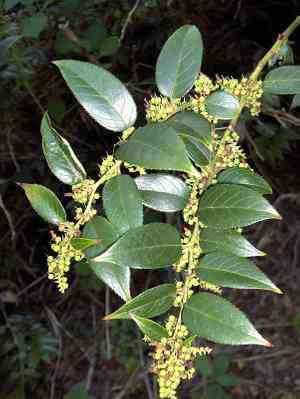
Mountain doghobble (Leucothoe fontanesiana)
Also known as: Drooping leucothoe, Switch ivy, Drooping laurel
Mountain doghobble (Leucothoe fontanesiana) is a native shrub from the southeastern United States. Popular as an ornamental plant, it produces charming strings of urn-shaped flowers in the spring.
Attributes of Mountain doghobble
Images of Mountain doghobble
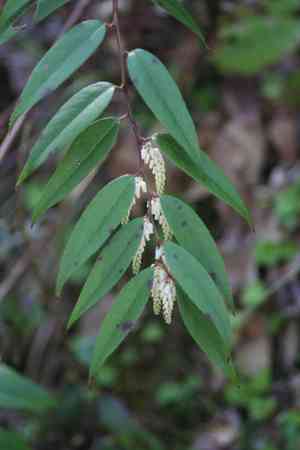
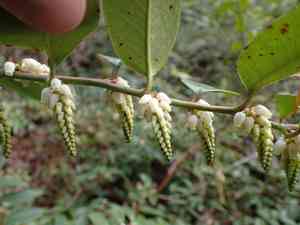
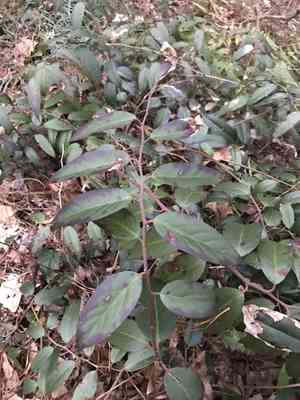
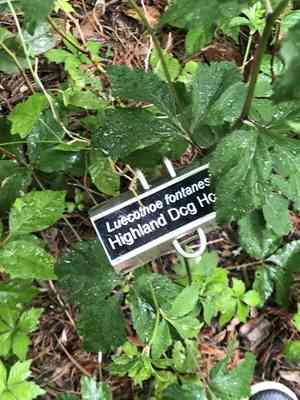
Quickly Identify Mountain doghobble
Scientific Classification of Mountain doghobble
Planting and Growing of Mountain doghobble
 How to Water Mountain doghobble?
 What Are the Sunlight Requirements for Mountain doghobble?
 What Is the Ideal Temperature Range for Mountain doghobble?
 What Soil is Best for Mountain doghobble?
 How to Fertilize Mountain doghobble?
 How to Prune Mountain doghobble?
 How to Propagate Mountain doghobble plant?
 How to Repot Mountain doghobble plant?
Toxicity of Mountain doghobble
Is Mountain doghobble toxic to humans?
Mountain doghobble is a highly toxic plant that can have dire consequences if consumed. Its flowers and leaves contain andromedotoxin, which may result in excessive salivation, nasal discharge, headaches, muscle weakness, lowered blood pressure, a tingling sensation, profuse sweating, and gastrointestinal problems such as abdominal pain, vomiting, and diarrhea. In severe cases, ingestion can lead to a comatose state or even death. Owing to its high toxicity, only a small quantity of leaves or flowers is needed to trigger serious side effects.
Is Mountain doghobble toxic to cat?
Mountain doghobble is highly toxic to felines. The risk arises when a cat consumes any part of this plant, as all its components are deemed harmful. Following ingestion, cats can suffer from severe physical distress, potentially leading to life-threatening conditions. It is crucial that if a cat has been exposed to mountain doghobble, pet owners must obtain prompt veterinary assistance to maximize the likelihood of recovery.
Is Mountain doghobble toxic to dog?
Mountain doghobble presents a significant toxicity threat to dogs. Consumption of any part of this plant can result in poisoning. Dog owners must remain alert since all components of mountain doghobble are harmful, and ingestion may occur unintentionally during outdoor excursions. Poisoning symptoms can manifest as vomiting, diarrhea, excessive salivation, lethargy, and in severe instances, seizures or unconsciousness. It is essential for dog owners to closely supervise their pets and ensure they cannot access mountain doghobble. Should a dog be suspected of ingesting any portion of mountain doghobble, prompt veterinary care is vital for the animal's health and safety.



