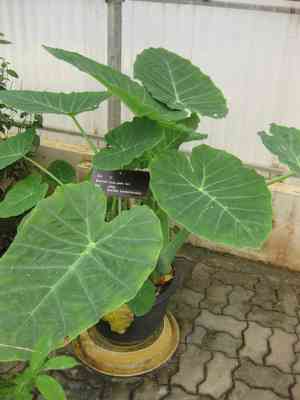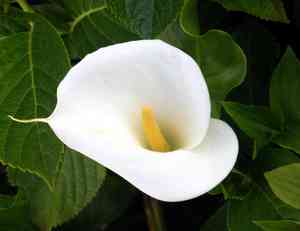
Laosy Giant(Leucocasia gigantea)

Laosy Giant (Leucocasia gigantea)

Also known as: Laos giant elephant ear, Thai Giant, Giant Colocasia

A fully grown Laosy Giant can grow up to 2.5 meters in height. The leaves of this plant can span between 1.2 to 1.5 meters in width. Unlike other "elephant ear" plants like Alocasia, the Laosy Giant and its close relatives have leaves that are more rounded and tend to point downward, while Alocasia leaves typically point upward.

Attributes of Laosy Giant

Lifespan
Perennial
Plant Type
Herb
Plant Height
1.5 m to 3 m
Spread
1.5 m to 3.5 m
Leaf Color
Green
Flower Size
1 cm to 2 cm
Flower Color
White

ForwardPlant - Identify plants with a snap

Identify and diagnose plants, get toxicity alerts, and explore safety guides for all types of fungi.

Try for Free

Images of Laosy Giant

Laosy Giant(Leucocasia gigantea)

Quickly Identify Laosy Giant

1
Identifying Leucocasia gigantea involves looking for its large, heart-shaped leaves that can grow up to several feet in length and its robust, herbaceous stem.

Scientific Classification of Laosy Giant

Phylum
Vascular plants
Class
Monocotyledons
Order
Water plantains and allies
Family
Arum
Genus
Thailand Giant
Species
Laosy Giant

Planting and Growing of Laosy Giant

Care Difficulty
Moderate
Watering Schedule
Every 4 days
Sunlight Requirements
Partial sun
Sunshine Duration
6-10 hours
Ideal Temperature
65-80℉
Soil Type
Potting Mix, Peat Mix
Soil pH
6.5-7.5
Fertilizer Type
Balanced
Pruning Season
Spring, Summer
Pruning Area
Branches, Leaves
Pruning Frequency
2 times a year
Repotting Season
Spring
Pot Type
Plastic, Ceramic

water icon How to Water Laosy Giant?

Leucocasia gigantea enjoys ample water, but avoid creating a waterlogged environment. The soil should be moist but not soggy. Aim to thoroughly soak the root ball during each watering session, ensuring that water drains through the soil.
What are the symptoms of an underwatered Laosy Giant?
What should I do if my Laosy Giant is not getting enough water?
What are the symptoms of an overwatered Laosy Giant?
How to save an overwatered Laosy Giant?

sunlight icon What Are the Sunlight Requirements for Laosy Giant?

Sunlight Requirements: Partial sun, Full shade
Duration of light: 4 to 6 hours
Leucocasia gigantea flourishes in partial sun to full shade conditions, which help maintain its lush foliage. Sufficient light ensures healthy growth, rich color, and improved resistance to environmental stressors.
What is the best place to position my Leucocasia gigantea for optimal growth?
How can I provide the ideal light conditions indoors?
What benefits does appropriate sunlight provide to my Leucocasia gigantea?
More About Sunlight Requirements Techniques

temperature icon What Is the Ideal Temperature Range for Laosy Giant?

Ideal Temperature: 65 ~ 80℉
Leucocasia gigantea thrives in temperatures ranging from 65°F to 80°F. Within this range, the plant experiences optimal growth and development, ensuring vibrant foliage and robust health. This range mimics the tropical climates from which the plant originates, where it benefits from warm and consistent conditions.

soil icon What Soil is Best for Laosy Giant?

Soil type: Loam, Sandy loam, Peat soil
Soil PH: 6.5 ~ 7.5
Leucocasia gigantea thrives in well-draining soil, which prevents water stagnation and root rot. This characteristic soil helps maintain proper hydration levels and allows for air circulation around the roots, promoting vigorous growth. Despite the need for drainage, the soil should retain some moisture to mimic the plant's natural habitat. This helps keep the plant hydrated and supports the lush, leafy foliage characteristic of Leucocasia gigantea. A nutrient-rich soil is vital for Leucocasia gigantea, providing essential minerals and nutrients for healthy growth. This prevents deficiencies and supports the plant's robust development and foliage coloration.

fertilize icon How to Fertilize Laosy Giant?

Fertilizer type: Balanced
For Leucocasia gigantea, it is essential to use a balanced fertilizer like a 10-10-10 NPK. For liquid fertilizers, dilute it to half the recommended strength, applying approximately 200ml per application. For slow-release fertilizers, use around 5 grams per pot or square foot, ensuring an even distribution in the soil.

prune icon How to Prune Laosy Giant?

Pruning Time: Spring, Summer, Autumn
Use sharp and clean garden shears or scissors to ensure a smooth cut and prevent infection. Having the right tools makes the process efficient and safe for both you and the plant. Examine the plant carefully to find old, discolored, or damaged leaves. Removing these is crucial as they can harbor pests or diseases that may affect the health of the entire plant. Cut leaves at the base, close to the main stem, while avoiding cutting into the stem itself. This method promotes better healing and reduces the risk of infection at the cutting site. More About Pruning Techniques

propagate icon How to Propagate Laosy Giant plant?

Propagate Time: Spring,Late spring,Early spring
1
The ideal time for division propagation of Leucocasia gigantea is during Spring, ensuring the plant is not actively growing. This minimizes stress and maximizes the plant's ability to heal and establish new roots.
2
Gently remove the plant from its pot and carefully inspect the root system. Identify natural separations in the rhizomes and use a sharp knife or pruners to divide the plant into sections, each containing a healthy root system and shoot.
3
Place each division into a pot with sterile potting mix, ensuring the rhizomes are covered but the shoots are above the soil line. Firmly press the soil around each section to eliminate air pockets and water thoroughly.
More About Propagating Techniques

repot icon How to Repot Laosy Giant plant?

Repotting frequency: Every 1-2 years
1
Leucocasia gigantea shows signs for repotting when its roots start poking through drainage holes or when its growth significantly slows. Notice when the plant becomes top-heavy, indicating it has outgrown the current pot. Early spring and summer are ideal as the plant is actively growing, aiding in recovery post-repotting.
2
Choose a pot that is one size larger than the current one, with good drainage. A pot with sufficient depth supports root expansion, preventing root-bound conditions that stifle growth. A slightly larger pot allows ample space for root growth while also improving soil aeration.
3
Opt for a well-draining potting mix with ingredients like perlite and peat. This ensures adequate moisture retention without waterlogging. A well-balanced medium supports healthy root systems, enhancing nutrient uptake and avoiding root rot by promoting effective drainage and aeration.

ForwardPlant - Identify plants with a snap

Find the best spots for them to optimize their health, simply using your phone.

Try for Free

Toxicity of Laosy Giant

Is Laosy Giant toxic to humans?

The laosy Giant is toxic both upon contact with the plant and when ingested. The severity of poisoning can range from mild to severe, and in cases of substantial consumption, it can be fatal. The most toxic parts of this plant are its leaves and stems. It contains calcium oxalate crystals, which lead to irritation in the mouth and esophagus. If the sap comes into contact with the eyes, it can cause intense stinging and burning that can last for hours. Additional symptoms include intense burning sensations in the tongue, lips, and mouth, as well as swelling of the tongue, lips, and eyes, alongside diarrhea, nausea, and vomiting. Children are particularly vulnerable to poisoning since this plant is often found in residential gardens.

Identify toxic plants for your safety

Learn which plants are harmful to you and your pets, and make informed choices for a safer home!

Try for Free
WARNING
The judgment on toxicity and danger is for reference only. We DO NOT GUARANTEE any accuracy of such judgment. Therefore, you SHALL NOT rely on such judgment. It is IMPORTANT TO SEEK PROFESSIONAL ADVICE in advance when necessary.
More About Toxic Techniques