Sericea lespedeza(Lespedeza cuneata)

Sericea lespedeza (Lespedeza cuneata)

Also known as: Chinese bushclover, Sericea

Kudzu (Pueraria montana var. lobata) is a legume related to the pea, originating from Asia and Australia. This plant has become an invasive species in several regions outside its native habitat.

Attributes of Sericea lespedeza

Lifespan
Perennial
Plant Type
Herb, Shrub
Plant Height
61 cm to 1.2 m
Spread
30 cm to 45 cm
Leaf Color
Green Silver
Flower Size
2.5 cm
Flower Color
White Purple Cream

PlantJoy - Identify plants with a snap

Identify and diagnose plants, get toxicity alerts, and explore safety guides for all types of fungi.

Try for Free

Images of Sericea lespedeza

Sericea lespedeza(Lespedeza cuneata)

Quickly Identify Sericea lespedeza

1
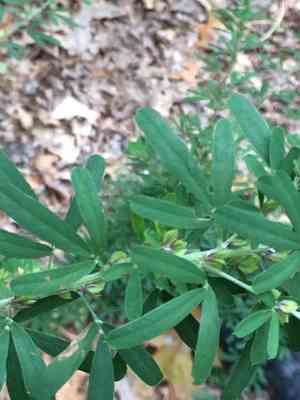
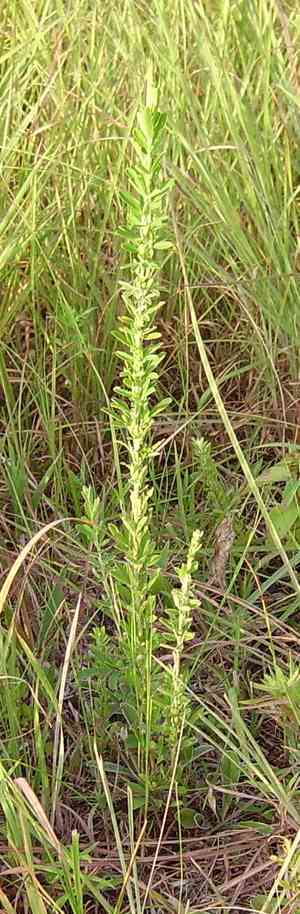
Robust perennial reaching 6 feet (1.8 meters) with bushy appearance.
2
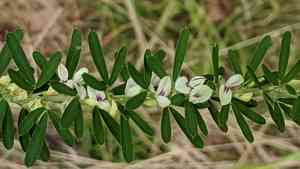
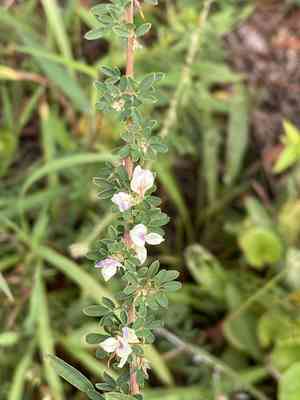
Creamy white to pale yellow flowers with central purple spots.
3
Small legume pods with single seeds, bean-like shape.
4
Compound leaves with 3 oblong leaflets, pointed tips, and grayish-green hair-covered surface.
5
Gray-green stem with fine hairs, herbaceous to semi-woody, reaching 2-4 feet (60-120 cm).

Scientific Classification of Sericea lespedeza

Phylum
Vascular plants
Class
Dicotyledons
Order
Fabales
Family
Legume
Genus
Bush clovers
Species
Sericea lespedeza

Planting and Growing of Sericea lespedeza

Care Difficulty
Easy
Watering Schedule
Every 2 days
Sunlight Requirements
Full sun
Sunshine Duration
6-10 hours
Ideal Temperature
65-77℉
Soil Type
Potting Mix, Peat Mix
Soil pH
6.5-7.5
Fertilizer Type
Balanced
Pruning Season
Spring, Summer
Pruning Area
Branches, Leaves
Pruning Frequency
2 times a year
Repotting Season
Spring
Pot Type
Plastic, Ceramic

water icon How to Water Sericea lespedeza?

Lespedeza cuneata prefers its soil to be moderately moist. It's essential not to overwater, as excessive moisture can lead to root problems. Ideally, water the soil until it feels consistently moist to a depth of approximately two inches, ensuring that the roots have access to adequate moisture but are not drowning.
What are the symptoms of an underwatered Sericea lespedeza?
What should I do if my Sericea lespedeza is not getting enough water?
What are the symptoms of an overwatered Sericea lespedeza?
How to save an overwatered Sericea lespedeza?

sunlight icon What Are the Sunlight Requirements for Sericea lespedeza?

Sunlight Requirements: Full sun
Duration of light: 12 to 14 hours
Lespedeza cuneata thrives in full sun conditions, ideally 12 to 14 hours. Adequate sunlight ensures successful photosynthesis, promoting vigorous growth, abundant flowering, and enhancing the plant’s resilience against pests and diseases.
What type of sunlight does Lespedeza cuneata prefer?
How can I ensure Lespedeza cuneata gets adequate light?
What happens if Lespedeza cuneata receives ideal light?

temperature icon What Is the Ideal Temperature Range for Sericea lespedeza?

Ideal Temperature: 65 ~ 77℉
Lespedeza cuneata thrives best in a temperature range between 65°F and 77°F. This range provides a stable environment for active growth, photosynthesis, and overall plant health. Temperatures within this range encourage strong root development, robust foliage growth, and optimal flowering conditions.

soil icon What Soil is Best for Sericea lespedeza?

Soil type: Sandy soil, Loam, Clay soil
Soil PH: 6.5 ~ 7.5
Lespedeza cuneata thrives in well-drained soils. Proper drainage allows excess water to escape, preventing root rot and promoting healthy growth. This is crucial for maintaining plant vigor and resilience against pests and diseases. Ensuring your soil is rich in nutrients will help Lespedeza cuneata to establish itself and grow robustly. Incorporating organic matter such as compost can significantly enhance soil fertility, providing essential elements for photosynthesis and energy production. The soil should retain moderate moisture to keep the plant hydrated, but not waterlogged. This balance prevents the plant from experiencing drought stress while also avoiding issues like mold or mildew, which can disturb plant development.

fertilize icon How to Fertilize Sericea lespedeza?

Fertilizer type: Balanced
Lespedeza cuneata generally thrives with a balanced approach to fertilization. Use a liquid fertilizer diluted to half its strength to avoid nutrient burn, applying roughly 1 liter for established plants. For solid fertilizers, apply according to package instructions, distributing evenly across the soil surface.

prune icon How to Prune Sericea lespedeza?

Pruning Time: Spring, Summer
Start by examining the plant's structure, identifying dead or damaged branches, which should be removed first to prevent disease and encourage vibrant new growth. Focus on pruning back to outward-facing nodes. This encourages the plant to develop a well-spaced, bushy form, enhancing its aesthetics and flowering potential.

propagate icon How to Propagate Sericea lespedeza plant?

Propagate Time: Spring,Early summer
1
Start by soaking the seeds in warm water for 24 hours to soften the seed coat. This will help in breaking dormancy and increasing the germination rate.
2
Select healthy stems from the mother plant, and cut them to about 4-6 inches in length. Ensure the cut is made at a 45-degree angle to increase the surface area for root development.
3
Fill pots or trays with a well-draining rooting medium. A mixture of sand and peat is ideal. Ensure the medium is moist but not waterlogged before inserting seeds or cuttings.

repot icon How to Repot Sericea lespedeza plant?

Repotting frequency: Every 2-3 years
1
Lespedeza cuneata should be repotted when its roots become densely packed or when you notice a slowdown in growth. Yellowing leaves and frequent wilting are strong indicators. Spring or early summer, during active growth, is optimal for providing new space to flourish.
2
Select a pot that is about 2 inches wider in diameter than the current one. This allows the roots to spread comfortably without drowning in excess soil. A pot with ample drainage is crucial to prevent waterlogging, which is harmful to the plant.
3
Opt for well-draining loamy soil to provide a balance of moisture retention and drainage. This type of soil prevents water stagnation, thereby protecting the roots from rotting, and promotes healthy, robust growth of Lespedeza cuneata.

PlantJoy - Identify plants with a snap

Find the best spots for them to optimize their health, simply using your phone.

Try for Free

Toxicity of Sericea lespedeza

Is Sericea lespedeza toxic to cat?

Sericea lespedeza is categorized as having a mild level of toxicity for cats. While it is not extremely poisonous, consuming large quantities could lead to health complications. Every part of the plant contains toxic properties, indicating that any exposure to it could cause discomfort in cats. Pet owners must be alert to prevent their animals from eating sericea lespedeza. If a cat consumes any part of this plant, it may show common symptoms of illness, making it essential to take prompt action by contacting a veterinary clinic to guarantee their health.

Is Sericea lespedeza toxic to dog?

Sericea lespedeza presents a mild toxicity risk to dogs. Although not extremely toxic, consuming large amounts can result in poisoning. Dogs may encounter toxins by eating any part of the plant, as all sections are regarded as potentially dangerous. The symptoms of poisoning from sericea lespedeza can vary, but they may include gastrointestinal distress, lethargy, or other signs of unease. It is vital for dog owners to keep a close eye on their pets and prevent them from consuming plants that are not part of their usual diet. If a dog ingests sericea lespedeza, seeking veterinary assistance promptly is crucial to ensure the best possible health outcome for the pet.

Identify toxic plants for your safety

Learn which plants are harmful to you and your pets, and make informed choices for a safer home!

Try for Free
WARNING
The judgment on toxicity and danger is for reference only. We DO NOT GUARANTEE any accuracy of such judgment. Therefore, you SHALL NOT rely on such judgment. It is IMPORTANT TO SEEK PROFESSIONAL ADVICE in advance when necessary.
More About Toxic Techniques