
Shrub lespedeza (Lespedeza bicolor)
Also known as: Bush clover, Silky bush-clover, Chinese bush-clover, Shrubby lespedeza
Shrub lespedeza (Lespedeza bicolor), a bushy and flowering legume, was initially introduced in various regions to enhance wildlife habitats and for ornamental gardening. Today, it is recognized as an invasive species.
In This Article
Attributes of Shrub lespedeza
Lifespan
Perennial
Plant Type
Shrub
Plant Height
1 m to 3 m
Spread
1.8 m to 2.5 m
Leaf Color
Green Blue
Flower Size
2.5 cm
Flower Color
Purple Pink
Images of Shrub lespedeza

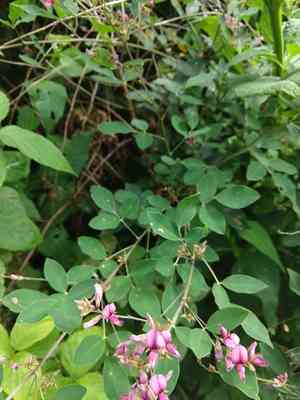


Quickly Identify Shrub lespedeza
1
Trifoliate leaves with ovate to lanceolate leaflets, up to 2 inches (5 cm) long.
2
Small, rosy-purple pea flowers in racemes, about 1.2 cm (0.5 inches) long.
3
Distinctive glossy black flat pods, about 1/3 inch long containing a single black seed.
4
Erect stem with gray-green color, 0.2-0.6 inches (0.5-1.5 cm) in diameter.
5
Deciduous plant reaching 3 to 10 feet (1 to 3 meters) in height and width.
Scientific Classification of Shrub lespedeza
Phylum
Vascular plants
Class
Dicotyledons
Order
Legumes, milkworts and allies
Family
Legume
Genus
Bush clovers
Species
Shrub lespedeza
Planting and Growing of Shrub lespedeza
Care Difficulty
Easy
Watering Schedule
Every 2 days
Sunlight Requirements
Full sun
Sunshine Duration
4-6 hours
Ideal Temperature
60-75℉
Soil Type
Potting Mix, Peat Mix
Soil pH
5.5-7.5
Fertilizer Type
Balanced
Pruning Season
Spring, Summer
Pruning Area
Branches, Leaves
Pruning Frequency
2 times a year
Repotting Season
Spring
Pot Type
Plastic, Ceramic
 How to Water Shrub lespedeza?
When watering Lespedeza bicolor, aim to provide about 500 milliliters of water each time. The key is to ensure the soil is thoroughly moistened but not soggy, aiming for a consistency resembling a wrung-out sponge. This volume allows the roots to absorb sufficient moisture without waterlogging the soil, promoting healthy growth.
What are the symptoms of an underwatered Shrub lespedeza?
›
What should I do if my Shrub lespedeza is not getting enough water?
›
What are the symptoms of an overwatered Shrub lespedeza?
›
How to save an overwatered Shrub lespedeza?
›
 What Are the Sunlight Requirements for Shrub lespedeza?
Lespedeza bicolor flourishes in full to partial sun, ideally within six to eight hours daily. Adequate light ensures healthy growth and prolific flowering, enhancing its ornamental value.
More About Sunlight Requirements Techniques→
How much sunlight is ideal?
›
How to achieve ideal sunlight?
›
What are the benefits of ideal lighting?
›
 What Is the Ideal Temperature Range for Shrub lespedeza?
For optimal growth, Lespedeza bicolor thrives in temperatures ranging from 60°F to 75°F. This temperature range ensures that the plant's metabolic processes can function efficiently, allowing for robust growth and flowering. Maintaining these temperatures helps to mimic the plant's native environment, supporting healthy development and disease resistance.
 What Soil is Best for Shrub lespedeza?
Lespedeza bicolor thrives in well-drained soils, preventing waterlogging and root rot. The freedom for roots to breathe enhances plant growth and overall health. While not overly demanding, Lespedeza bicolor benefits from soils with moderate fertility, supplying essential nutrients for vibrant foliage and robust flowering. A soil composition that retains some moisture allows Lespedeza bicolor to remain hydrated, especially in drier climates, promoting vigorous growth.
 How to Fertilize Shrub lespedeza?
Lespedeza bicolor thrives with moderate fertilization. Each application should include a balanced formula such as a 10-10-10 NPK mix. For liquid fertilizers, dilute according to package instructions and apply until the soil is moist but not waterlogged. For slow-release fertilizers, use about 1 to 2 tablespoons per square foot of soil, ensuring it is evenly distributed.
 How to Prune Shrub lespedeza?
During the first spring after planting, prune your Lespedeza bicolor to establish a strong framework and desired shape. Cut back up to one-third of the plant's overall size, focusing on removing any spindly or crossing branches. In autumn, after the blooming period ends, trim back the stems to just above a leaf node to encourage next year’s growth. This helps control the size and enhances the flower show for the following season.
More About Pruning Techniques→
 How to Propagate Shrub lespedeza plant?
1
Harvest seeds from mature Lespedeza bicolor plants once they are fully ripe. Dry the seeds before storing them in a cool, dry place until you're ready to sow.
2
Take 4-6 inch cuttings from healthy branches ensuring to make the cut just below a leaf node. Dip the cut end in rooting hormone before planting it in a potting mix.
3
Divide the roots during early spring when the plant is still dormant. Each division should have a healthy mix of roots and shoots for successful establishment.
 How to Repot Shrub lespedeza plant?
1
Lespedeza bicolor should be repotted when you notice the roots are circling the bottom of the pot or if growth seems stunted. This usually occurs every 2-3 years. Repot during spring or autumn when the plant is not actively flowering.
2
Select a pot that is one size larger than the current one. Ensure it has drainage holes to prevent waterlogging, which can lead to root rot. A slightly larger pot allows room for root growth, promoting healthier plant development.
3
Opt for a well-draining loamy mixture to ensure proper drainage. Loamy soil retains moisture yet drains well, minimizing the risk of waterlogged roots. It provides a balanced environment, aiding nutrient uptake and fostering vigorous growth.
Learn More About Shrub lespedeza Diseases
Anthracnose
Bacterial Leaf Spot
Bacterial Wilt
Crown Gall
Cyst Nematode
Damping-off
Downy Mildew
Drought Stress
Fusarium Wilt
Gray Mold
Leaf Curl
Leaf Spot
Mosaic
Nutrient Deficiency
Nutrient Toxicity
Powdery Mildew
Root Rot
Root-knot Nematode
Rusts
Sooty Mold
Spider Mites
Temperature Stress
Thrips Damage
White Mold



