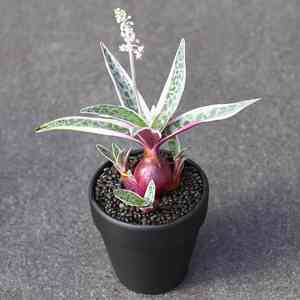
Silver squill(Ledebouria socialis)

Silver squill (Ledebouria socialis)

Also known as: Violet squill

Silver squill (Ledebouria socialis) is a perennial plant native to South Africa. Silver squill is a common plant cultivated for ornamental purposes and grows well with minimal maintenance. The latter word in the Latin name Ledebouria socialis means "growing in colonies."

Attributes of Silver squill

Lifespan
Perennial
Plant Type
Succulent, Herb
Plant Height
15 cm to 25 cm
Spread
15 cm to 25 cm
Leaf Color
Green
Flower Size
2.5 cm
Flower Color
Green White Purple

PlantJoy - Identify plants with a snap

Identify and diagnose plants, get toxicity alerts, and explore safety guides for all types of fungi.

Try for Free

Images of Silver squill

Silver squill(Ledebouria socialis)

Quickly Identify Silver squill

1
Distinctive bulbous growth above soil surface.
2
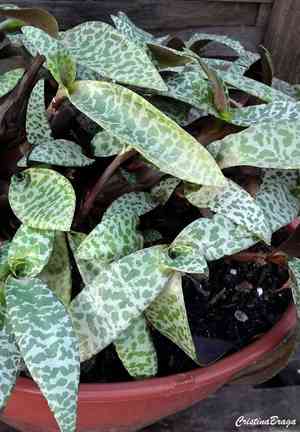
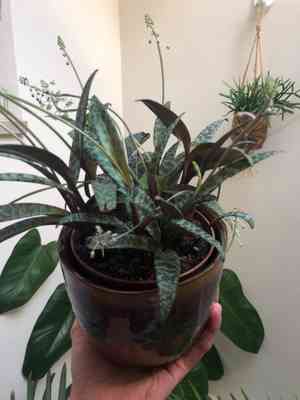
Fleshy, lance-shaped leaves with gray-purple color and green blotches.
3
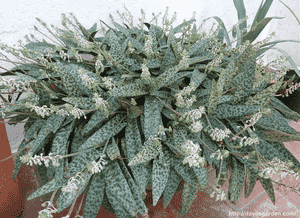
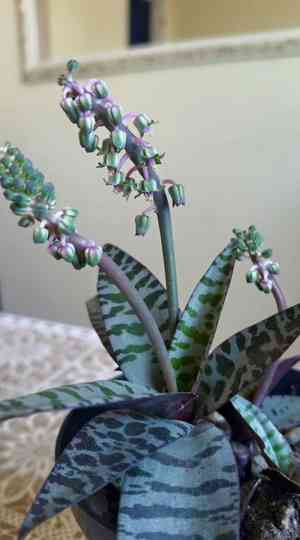
Delicate pink stalks supporting small clusters of green and white flowers.
4
Purple stamens on flowers.
5
Hardiness to about 25 degrees F (-4 degrees C).

Scientific Classification of Silver squill

Phylum
Vascular plants
Class
Monocotyledons
Order
Asparagales
Family
Asparagus
Genus
Ledebouria
Species
Silver squill

Planting and Growing of Silver squill

Care Difficulty
Easy
Watering Schedule
Every 3 days
Sunlight Requirements
Partial sun
Sunshine Duration
6-10 hours
Ideal Temperature
60-75℉
Soil Type
Potting Mix, Peat Mix
Soil pH
6.5-7.5
Fertilizer Type
Balanced
Pruning Season
Spring, Summer
Pruning Area
Branches, Leaves
Pruning Frequency
2 times a year
Repotting Season
Spring
Pot Type
Plastic, Ceramic

water icon How to Water Silver squill?

For Ledebouria socialis, watering should be thorough but infrequent. When watering, ensure the soil is evenly moist but not soggy; the classic finger test is beneficial. Pour around 100 ml per watering, observing that excess water drains away, preventing standing water.
What are the symptoms of an underwatered Silver squill?
What should I do if my Silver squill is not getting enough water?
What are the symptoms of an overwatered Silver squill?
How to save an overwatered Silver squill?
More About Watering Techniques

sunlight icon What Are the Sunlight Requirements for Silver squill?

Sunlight Requirements: Partial sun
Duration of light: 2-4 hours
Partial sunlight exposure is ideal for Ledebouria socialis, benefiting from a few hours of gentle light. This ensures optimal growth and retains the plant’s vibrant aesthetics.
How much light is ideal for Ledebouria socialis?
What should I do to ensure suitable lighting for Ledebouria socialis?
What are the benefits of providing ideal light for Ledebouria socialis?
More About Sunlight Requirements Techniques

temperature icon What Is the Ideal Temperature Range for Silver squill?

Ideal Temperature: 60 ~ 75℉
Ledebouria socialis thrives best in temperatures ranging from 60°F to 75°F. Within these conditions, the plant maintains robust growth and vibrant foliage. These temperatures mimic the natural climate of its native habitat in South Africa, providing an environment that encourages optimal metabolic processes and reduces stress on the plant.

soil icon What Soil is Best for Silver squill?

Soil type: Sandy loam, Loam
Soil PH: 6.5 ~ 7.5
Ledebouria socialis thrives in well-drained soil to prevent waterlogging, which can cause root rot. The plant benefits from good drainage as it ensures root aeration, preventing diseases while promoting healthy growth. This plant prefers soil with moderate fertility, allowing it to access essential nutrients without the risk of excessive salt build-up. Balanced nutrition from moderate fertilization fosters robust foliage and vibrant blooms. Using nutrient-rich soil is crucial for Ledebouria socialis to support its growth cycle. Regularly replenishing soil nutrients enhances the plant's vigor and maintains its distinctive spotted leaf patterns. More About Soil

fertilize icon How to Fertilize Silver squill?

Fertilizer type: Balanced
For Ledebouria socialis, it's essential to provide a balanced and diluted liquid fertilizer at half-strength. Too much fertilizer can burn the roots, so always start conservatively. A typical recommendation is 1 teaspoon per gallon of water, but a quarter teaspoon will suffice due to its low nutrient requirements.

prune icon How to Prune Silver squill?

Pruning Time: Spring, Summer
Begin by examining your plant for any dead, yellowing, or damaged leaves. Use clean, sharp scissors or pruning shears to gently remove these leaves to promote healthier growth. Cut close to the bulb without damaging it. Remove any spent flower stalks by cutting them at the base. Always aim for a tidy, natural look after pruning.

propagate icon How to Propagate Silver squill plant?

Propagate Time: Spring, Early spring
1
Choose robust, disease-free plants for propagation to ensure the new plants have the best start. Examine the bulbs for signs of rot or pest damage, which could affect the new plants.
2
Use well-draining soil, as Ledebouria socialis prefers not to sit in water. A cactus or succulent mix with added perlite can help achieve the right consistency.
3
Plant each bulb division at a depth where the neck is slightly above the soil line. Spacing is important to allow for adequate airflow to prevent fungal infections.
More About Propagating Techniques

repot icon How to Repot Silver squill plant?

Repotting frequency: Every 2 to 3 years
1
Repot your Ledebouria socialis when you notice the plant becoming root-bound, where roots start to circle the bottom of the pot, or when the soil retains too much water. Early spring is the perfect season as the plant is starting its active growth, ensuring it can quickly adapt to the fresh soil environment.
2
Choose a shallow pot with plenty of drainage holes for your Ledebouria socialis. Ensure it is just a size bigger than the current one. This allows for sufficient root expansion without risk of waterlogging. The pot's size and material should aid in moisture management and provide stability for the growing plant.
3
Opt for a well-draining cactus mix to prevent root rot. This soil mix typically includes perlite or pumice, which enhances aeration and drainage, ensuring the bulbous roots of the Ledebouria socialis stay healthy by minimizing moisture retention.
More About Repotting Techniques

PlantJoy - Identify plants with a snap

Find the best spots for them to optimize their health, simply using your phone.

Try for Free

Toxicity of Silver squill

Is Silver squill toxic to humans?

Silver squill possesses a mild toxicity throughout all its components, particularly in its latex. Contact with the latex may result in a rash; therefore, it is advisable to wear gloves when handling, pruning, or engaging with this plant. Ingesting the plant can lead to irritation of the mouth, throat, and the entire digestive system, leading to symptoms such as a sore mouth and throat, swelling, nausea, vomiting, abdominal pain, and diarrhea. Make sure to wash the hands of anyone in your home who interacts with this plant using soap and water.

Is Silver squill toxic to cat?

Silver squill presents a moderate toxicity risk to felines. When consumed in large quantities, every part of the plant harbors toxic substances that can be detrimental. If a cat ingests a notable amount of silver squill, it may show general symptoms of physical distress or discomfort, signaling potential poisoning. If there is suspicion that a cat has eaten silver squill, it is crucial to obtain prompt veterinary assistance to ensure appropriate care and avoid any potential complications.

Is Silver squill toxic to dog?

Silver squill is regarded as having a mild toxic effect on dogs. Canines may suffer from poisoning if they ingest this plant in substantial quantities. Every part of the silver squill is deemed toxic, and consumption can result in a range of symptoms. Dog owners should be alert for potential signs of poisoning, which may encompass vomiting, diarrhea, lethargy, or other unusual behaviors. If a dog has ingested silver squill, it is essential to obtain prompt veterinary assistance to guarantee the optimal outcome for the pet.

Identify toxic plants for your safety

Learn which plants are harmful to you and your pets, and make informed choices for a safer home!

Try for Free
WARNING
The judgment on toxicity and danger is for reference only. We DO NOT GUARANTEE any accuracy of such judgment. Therefore, you SHALL NOT rely on such judgment. It is IMPORTANT TO SEEK PROFESSIONAL ADVICE in advance when necessary.
More About Toxic Techniques