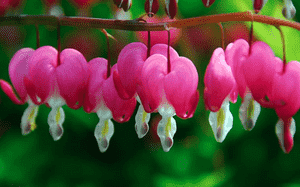
Bleeding heart(Lamprocapnos spectabilis)

Bleeding heart (Lamprocapnos spectabilis)

Also known as: Lady-in-a-bath, Bleeding heart Flower

The bleeding heart (Lamprocapnos spectabilis) is a flowering plant in the poppy family, native to Siberia, China, Korea, and Japan. Often known as the Japanese bleeding heart, it thrives as an ornamental plant, preferring moist soil and ample sunlight.

Attributes of Bleeding heart

Lifespan
Perennial
Plant Type
Herb
Plant Height
30 cm to 60 cm
Spread
45 cm
Leaf Color
Green
Flower Size
2 cm
Flower Color
White Pink Red

PlantJoy - Identify plants with a snap

Identify and diagnose plants, get toxicity alerts, and explore safety guides for all types of fungi.

Try for Free

Images of Bleeding heart

Bleeding heart(Lamprocapnos spectabilis)

Quickly Identify Bleeding heart

1
Ornamental raceme-like blooms with 7-15 heart-shaped pink to white petals.
2
Biternately compound leaves with coarsely lobed, toothed leaflets; upper green, undersides glaucous.
3
Thick, succulent stems reaching 23-36 inches; simple branching pattern from central point.
4
Oblong capsule fruits containing 2-8 black, smooth seeds; mature in April-June.
5
Distinctive stature, 2-3 feet tall and wide; may yellow and recede after flowering.

Scientific Classification of Bleeding heart

Phylum
Vascular plants
Class
Dicotyledons
Order
Ranunculales
Family
Poppy
Genus
Bleeding heart
Species
Bleeding heart

Planting and Growing of Bleeding heart

Care Difficulty
Easy
Watering Schedule
Every 2 days
Sunlight Requirements
Partial sun
Sunshine Duration
6-10 hours
Ideal Temperature
60-75℉
Soil Type
Potting Mix, Peat Mix
Soil pH
6.5-7.5
Fertilizer Type
Balanced
Pruning Season
Spring, Summer
Pruning Area
Branches, Leaves
Pruning Frequency
2 times a year
Repotting Season
Spring
Pot Type
Plastic, Ceramic

water icon How to Water Bleeding heart?

Water the Lamprocapnos spectabilis consistently by providing approximately 500ml of water each session. Ensure the soil is moist but never waterlogged, allowing the top inch to dry out between waterings. This keeps the roots healthy without causing rot.
What are the symptoms of an underwatered Bleeding heart?
What should I do if my Bleeding heart is not getting enough water?
What are the symptoms of an overwatered Bleeding heart?
How to save an overwatered Bleeding heart?
More About Watering Techniques

sunlight icon What Are the Sunlight Requirements for Bleeding heart?

Sunlight Requirements: Partial sun, Full shade
Duration of light: 3-5 hours of sunlight
Partial shade, providing the benefits of vibrant foliage and prolonged blooming periods, ensures that Lamprocapnos spectabilis thrives with healthy growth patterns and color vibrancy.
What is the ideal lighting environment?
How to achieve the ideal lighting conditions?
What benefits arise from ideal lighting?
More About Sunlight Requirements Techniques

temperature icon What Is the Ideal Temperature Range for Bleeding heart?

Ideal Temperature: 60 ~ 75℉
The ideal temperature range for Lamprocapnos spectabilis, also known as the bleeding heart plant, falls between 60°F and 75°F. This range provides the right amount of warmth for its growth while avoiding the stress conditions that might arise from temperatures that are either too low or too high. Maintaining this temperature range helps in sustaining optimal photosynthesis, nutrient absorption, and overall plant health.

soil icon What Soil is Best for Bleeding heart?

Soil type: Loam, Sandy loam
Soil PH: 6.5 ~ 7.5
Lamprocapnos spectabilis thrives in well-drained soil because it prevents waterlogging, which can lead to root rot. Ensuring the soil drains well improves root health and supports the plant's lush growth. This plant benefits from a soil rich in organic matter, which provides essential nutrients required for its vivid flowering. A fertile substrate enhances its overall vigor and blooming potential. While the soil needs to be well-drained, retaining some moisture is crucial to prevent the plant from drying out. Consistent moisture levels help maintain its lush foliage and vibrant blossoms. More About Soil

fertilize icon How to Fertilize Bleeding heart?

Fertilizer type: Balanced
For Lamprocapnos spectabilis, applying a balanced 10-10-10 liquid fertilizer diluted to half strength is recommended. Apply approximately 1 liter per plant during the growing season to ensure healthy growth without overwhelming the roots. More About Fertilizing Techniques

prune icon How to Prune Bleeding heart?

Pruning Time: Spring, Summer, Autumn
In early spring, just as new growth begins, cut back the plant to just above the ground level. This encourages lush new growth and prepares the plant for the blooming season. After the blooming season, remove spent flowers and any yellowing leaves to direct energy back into healthy growth and prepare the plant for the next cycle. More About Pruning Techniques

propagate icon How to Propagate Bleeding heart plant?

Propagate Time: Early spring, Spring, Late spring
1
Before propagation, ensure the mother plant is healthy and free from diseases. If using division propagation, water the plant well the day before to reduce stress during the division process.
2
Dig up the plant carefully, and gently separate its roots by hand or with pruning shears. Each divided section should contain roots and shoots to ensure they can establish as independent plants. Replant divisions promptly in suitable soil.
3
Select healthy root sections during the dormant season, cut them into 5-10cm segments, and plant them in containers filled with a moist, well-draining potting mix. Keep the root cuttings warm and moist until they develop shoots.
More About Propagating Techniques

repot icon How to Repot Bleeding heart plant?

Repotting frequency: Every 2-3 years
1
Lamprocapnos spectabilis should be repotted in spring when you observe signs such as roots growing out of the drainage holes or the plant not thriving as expected. It’s important to choose this time because the plant is in its active growth phase, making it more resilient to the changes associated with repotting.
2
Select a new pot that is one size larger than the current one, with proper drainage holes to prevent waterlogging. The right pot size ensures that the roots have enough room to expand and the soil can dry out between waterings, reducing the risk of root rot.
3
Use a well-draining potting mix composed of garden soil, peat, and perlite. Such a mixture facilitates adequate drainage and aeration, which is crucial for preventing waterlogged roots and promoting healthy growth.
More About Repotting Techniques

PlantJoy - Identify plants with a snap

Find the best spots for them to optimize their health, simply using your phone.

Try for Free

Toxicity of Bleeding heart

Is Bleeding heart toxic to humans?

Bleeding hearts can exhibit mild toxicity upon contact and moderate to severe toxicity when ingested. Every part of this plant is infused with a variety of isoquinolone alkaloids. For individuals who touch the plant, these compounds can lead to mild contact dermatitis, presenting symptoms like redness, itchiness, and skin swelling. If ingested, these same compounds can lead to severe illness, potentially resulting in symptoms such as vomiting, diarrhea, lethargy, convulsions, and impaired breathing. Despite their hazardous nature, bleeding hearts are favored as ornamental plants, prompting gardeners to exercise caution and wear gloves during handling. Fortunately, the plant has nearly no edible look-alikes, making incidents of human ingestion quite rare.

Is Bleeding heart toxic to cat?

The bleeding heart plant poses a toxicity risk to cats. If a cat inadvertently consumes any part of the bleeding heart, it can lead to poisoning since all portions of this plant are harmful. Following ingestion, cats may display symptoms of physical discomfort and distress. To reduce these hazards, cat owners must ensure that bleeding heart is stored securely away from their pets and remain alert for any abnormal behavior. Should there be a suspicion that a cat has ingested bleeding heart, it is crucial to obtain immediate veterinary assistance to safeguard the feline's health and well-being.

Is Bleeding heart toxic to dog?

Bleeding heart is recognized as a toxic species harmful to dogs. If dogs consume any portion of this plant, they risk poisoning, as every part is deemed toxic. Ingesting even minor quantities of bleeding heart can lead to various symptoms, which may encompass vomiting, diarrhea, excessive drooling, lethargy, and irregular heart rate. Therefore, it is essential for dog owners to remain watchful and restrict their pets from entering areas where bleeding heart grows to prevent accidental ingestion. Should a dog ingest any part of the bleeding heart plant, it is vital to pursue immediate veterinary assistance to safeguard the pet's health.

Identify toxic plants for your safety

Learn which plants are harmful to you and your pets, and make informed choices for a safer home!

Try for Free
WARNING
The judgment on toxicity and danger is for reference only. We DO NOT GUARANTEE any accuracy of such judgment. Therefore, you SHALL NOT rely on such judgment. It is IMPORTANT TO SEEK PROFESSIONAL ADVICE in advance when necessary.
More About Toxic Techniques

