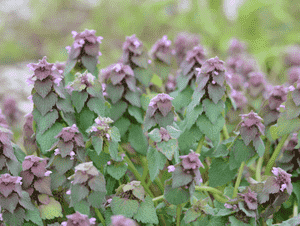
Purple dead-nettle (Lamium purpureum)
Also known as: Purple Dead Nettle, Red Dead-nettle
Lamb's quarters (Chenopodium album) is an herbaceous annual weed frequently seen in meadows, wastelands, gardens, and along roadsides and woodland edges. Native to Asia, this plant thrives in sunny environments. Despite its weed status, lamb's quarters can be identified by its distinctive triangular leaves and is sometimes used as a leafy green.
In This Article
Attributes of Purple dead-nettle
Lifespan
Annual, Perennial, Biennial
Plant Type
Herb
Plant Height
5 cm to 30 cm
Spread
20 cm
Leaf Color
Purple
Flower Size
1.02 cm to 2 cm
Flower Color
Purple Lavender
Images of Purple dead-nettle
Quickly Identify Purple dead-nettle
1
Square stems distinguish purple dead-nettle from round-stemmed plants, aiding in easy plant identification.
2
Heart-shaped leaves with a purple tint atop provide a unique visual cue for purple dead-nettle.
3
Distinctive hooded top petal on purplish flowers in whorls at leaf axils characterize purple dead-nettle.
4
Opposite leaf pairs with lower petioles set purple dead-nettle apart from similar species.
5
Leaves exhibit crowded, overlapping arrangement, with wavy to serrated margins and pronounced veins.
Scientific Classification of Purple dead-nettle
Phylum
Vascular plants
Class
Dicotyledons
Order
Lamiales
Family
Mint
Genus
Dead-nettles
Species
Purple dead-nettle
Planting and Growing of Purple dead-nettle
Care Difficulty
Easy
Watering Schedule
Every 3 days
Sunlight Requirements
Partial sun
Sunshine Duration
6-10 hours
Ideal Temperature
60-70℉
Soil Type
Potting Mix, Peat Mix
Soil pH
6.5-7.5
Fertilizer Type
Balanced
Pruning Season
Spring, Summer
Pruning Area
Branches, Leaves
Pruning Frequency
2 times a year
Repotting Season
Spring
Pot Type
Plastic, Ceramic
 How to Water Purple dead-nettle?
When watering Lamium purpureum, it's essential to ensure that the soil is moist but not waterlogged. Aim for about 250 milliliters per watering, soaking until the top 2 inches of soil feel damp to the touch, without pooling excess water.
What are the symptoms of an underwatered Purple dead-nettle?
›
What should I do if my Purple dead-nettle is not getting enough water?
›
What are the symptoms of an overwatered Purple dead-nettle?
›
How to save an overwatered Purple dead-nettle?
›
 What Are the Sunlight Requirements for Purple dead-nettle?
Partial sun provides conditions that emulate its natural habitat, promoting balanced energy intake, lush growth, and pest resistance for Lamium purpureum. Full shade can be acceptable but may slow growth.
What lighting conditions are best for growth?
›
How can I ensure optimal lighting for my plant?
›
What benefits does ideal lighting bring?
›
 What Is the Ideal Temperature Range for Purple dead-nettle?
The ideal temperature range for growing Lamium purpureum is between 60°F and 70°F. This range provides an optimal environment that mimics the plant's native habitat, ensuring healthy growth and development. Within this range, Lamium purpureum experiences balanced metabolic rates which enhance photosynthesis and nutrient uptake. Furthermore, these temperatures are conducive to root expansion and bloom formation.
 What Soil is Best for Purple dead-nettle?
Lamium purpureum thrives in well-drained soil, preventing waterlogging and ensuring roots can access essential nutrients and oxygen, enhancing the plant's overall health and growth. For optimal growth, this plant prefers a nutrient-rich medium. A fertile soil ensures the plant has access to essential minerals, promoting vibrant foliage and robust flowering. The soil should maintain moderate moisture. It shouldn't dry out completely or stay overly wet, which helps prevent stress and supports consistent growth patterns.
 How to Fertilize Purple dead-nettle?
For Lamium purpureum, use a balanced 10-10-10 liquid fertilizer at a dilution of half-strength to avoid nutrient burn. Apply 100 ml around the base of the plant, ensuring you do not overwater in the process.
 How to Prune Purple dead-nettle?
Begin by inspecting your Lamium purpureum for any dead, damaged, or diseased stems and leaves. Carefully snip these off at the base using a pair of clean, sharp pruning shears, encouraging new growth and preventing potential pest issues. Trim back any overgrown or unruly stems to maintain a neat, bushy appearance. This not only enhances the aesthetic appeal of the plant but also allows more light and air to penetrate, promoting a healthier structure overall. For Lamium purpureum, light pruning can stimulate new growth and a lush, full appearance. Pinch back the tips of the stems to encourage a more compact form, enhancing its vibrant display during flowering seasons.
 How to Propagate Purple dead-nettle plant?
1
Fill a seed tray with a sterile seed-starting mix. Scatter the Lamium purpureum seeds on the surface and lightly cover them with a thin layer of soil. Keep the soil moist and place the tray in a warm location until the seeds germinate.
2
Select a healthy stem and make a clean cut using pruning shears below a leaf node. Place the cutting in a glass of water or directly into moist soil and keep it in a warm, bright location until roots develop.
3
Carefully dig up a mature Lamium purpureum plant and gently separate the root clumps. Replant the divisions in well-prepared soil, ensuring each has enough space to grow and establish.
 How to Repot Purple dead-nettle plant?
1
Lamium purpureum, or purple dead-nettle, signals the need for repotting when its roots begin curling out of the drainage holes. Another sign can be a noticeable slowdown in growth despite adequate sunlight and watering. Newer plants may benefit from repotting in early spring, as this gives them a fresh start with nutrients just before an active growth spurt.
2
Selecting the right pot for Lamium purpureum involves considering drainage and size. The pot should have ample drainage holes to prevent root rot and should be slightly larger than the current one, allowing space for root expansion. A pot that is too large may retain excess moisture and lead to problems. Opting for terracotta can also aid in moisture regulation.
3
For repotting Lamium purpureum, choose well-draining, nutrient-rich soil. The soil should strike a balance between moisture retention and drainage, preventing waterlogging while allowing the roots access to moisture. Adding some organic matter like compost can enhance soil fertility, promoting robust growth. This kind of soil ensures healthier root development without the risk of rot.



